
11, MAY 2026 - CURRENT AFFAIRS
Modi’s Appeal Amid Iran War: Economic Nationalism, Energy Security & Strategic Challenges
Why in News?
- Prime Minister Narendra Modi has urged citizens to adopt austerity measures — Work From Home (WFH), reduced foreign travel, lower fuel consumption, and responsible spending — amid the escalating Iran conflict and disruptions in the Strait of Hormuz.
- The appeal aims to conserve fuel, reduce import dependence, save foreign exchange, and maintain macroeconomic stability as global oil prices surge.
Background of the Crisis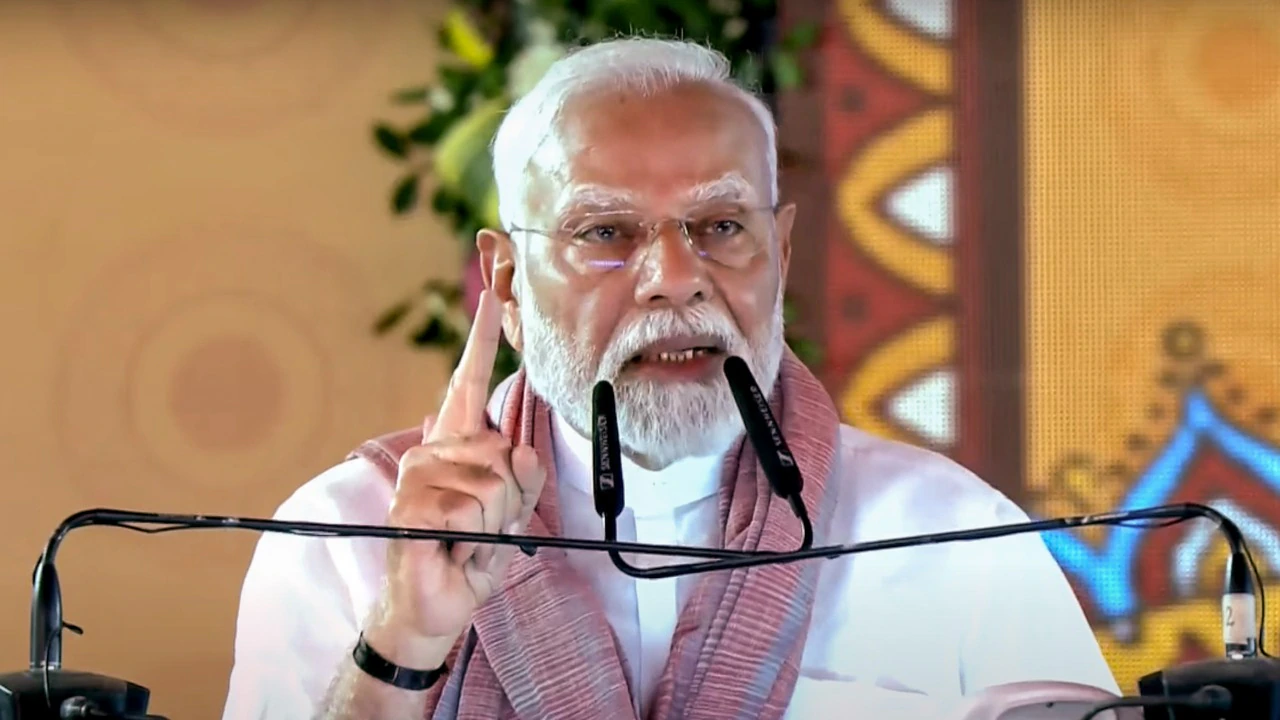
- Geopolitical Trigger
- Ongoing conflict involving Iran, Israel, and the US has disrupted shipping through the Strait of Hormuz — a critical chokepoint handling nearly one-fifth of global oil trade.
- India’s Vulnerability
- India imports over 85–90% of its crude oil requirements.
- A large share of these imports passes through the Strait of Hormuz.
- Rising global crude prices directly impact inflation, current account deficit, and fiscal health.
Key Elements of PM Modi’s Appeal
- Short-term Behavioural Changes
- Promote WFH culture.
- Encourage public transport, metro use, and carpooling.
- Reduce unnecessary foreign travel.
- Advise farmers to optimise fertiliser usage.
- Broader Message
- Link patriotism and responsible citizenship with economic resilience.
- Prepare society psychologically for a prolonged global energy crisis.
Impact of Rising Oil Prices on India
- Inflationary Pressure
- Higher transport and production costs → rise in food, fuel, and essential commodity prices.
- Current Account Deficit (CAD)
- Increased oil import bill widens CAD and puts pressure on the rupee.
- Fiscal Stress
- Higher subsidies on LPG and fertilisers.
- Possible reduction in fuel taxes, leading to revenue loss.
- Market Reaction
- Stock markets witnessed volatility following the PM’s remarks.
Significance of the Appeal
- Economic Nationalism
- Promotes collective responsibility and sustainable consumption during crises.
- Energy Security Focus
- Highlights India’s heavy dependence on imported oil and the need for diversification.
- Strategic Preparedness
- Prepares the economy for prolonged global disruptions and supply chain shocks.
Way Forward
- Accelerate energy diversification (renewables, green hydrogen, solar & wind).
- Expand Strategic Petroleum Reserves (SPR) capacity.
- Strengthen domestic manufacturing and reduce import dependence.
- Promote public transport and electric mobility.
- Enhance diplomatic engagement in West Asia for stable energy supplies.
UPSC CSE & State PCS Relevance Prelims
- Key terms: Strait of Hormuz, Current Account Deficit, Strategic Petroleum Reserves, Economic Nationalism
- Facts: India imports >85% crude oil; Hormuz handles ~20% global oil trade
GS-3 (Economy)
- Impact of global geopolitical shocks on inflation, CAD, fiscal health, and energy security.
GS-2 (IR)
- West Asia conflict and its implications for India’s foreign and energy policy.
Essay / Interview
- “Geopolitics and Economic Resilience: Managing Global Energy Shocks in an Interconnected World”
- “Economic Nationalism in Times of Crisis: The Role of Responsible Citizenship.”
MCQs (Prelims Standard)
- The Strait of Hormuz is strategically important because it handles approximately what percentage of global oil trade?
(a) 10%
(b) 20%
(c) 30%
(d) 40%
Answer: (b)
- With reference to India’s energy security, consider the following statements:
- India imports over 85% of its crude oil requirements.
- Rising global oil prices can widen the Current Account Deficit.
Which of the statements given above is/are correct?
(a) 1 only
(b) 2 only
(c) Both 1 and 2
(d) Neither
Answer: (c)
- Which of the following is NOT part of Prime Minister Modi’s recent appeal?
(a) Work From Home
(b) Reduced foreign travel
(c) Increased fertiliser usage
(d) Responsible spending habits
Answer: (c)
- The Prime Minister’s appeal is primarily aimed at:
(a) Increasing oil imports
(b) Conserving fuel and reducing import dependence
(c) Promoting foreign travel
(d) Reducing public transport usage
Answer: (b)
Mains Questions
- “Geopolitical tensions in West Asia pose serious challenges to India’s energy security and macroeconomic stability.” Discuss the impact of rising oil prices and the significance of PM Modi’s austerity appeal. (15 marks / 250 words)
- Examine the vulnerabilities in India’s energy import dependence and suggest long-term measures for achieving energy resilience. (10 marks / 150 words)
- “Economic nationalism and responsible citizenship are crucial during global crises.” Analyse this statement in the context of India’s response to the Iran conflict. (15 marks / 250 words)
- Essay (250 marks) “From Global Shocks to National Resilience: India’s Energy Security Strategy in an Uncertain World.”
India–Trinidad and Tobago Hold Talks to Expand Bilateral Cooperation
Why in News?
- India’s External Affairs Minister held comprehensive talks with the Prime Minister of Trinidad and Tobago to explore new initiatives for strengthening bilateral cooperation. The meeting focused on trade, energy, diaspora linkages, and development partnership in the Caribbean region.
About Trinidad and Tobago
- Location
- Island country in the southeastern West Indies, Caribbean Sea.
- Consists of two main islands — Trinidad and Tobago — and several smaller islands.
- Lies close to the South American continent, northeast of Venezuela and northwest of Guyana.
- Significance
- 5th largest island country in the West Indies.
- Most industrialised and prosperous nation in the Caribbean.
- Geography
- Trinidad is crisscrossed by mountain ranges; the Northern Range is a continuation of the Andes.
- Features beautiful waterfalls (e.g., Blue Basin and Maracas Falls).
- Home to the Pitch Lake — one of the world’s largest natural asphalt deposits.
- History & Polity
- Achieved independence from the United Kingdom in 1962.
- Became a republic in 1976.
- Capital: Port of Spain (on the northwestern coast of Trinidad).
- Demography & Culture
- Ethnic makeup: Roughly equal proportion of descendants of enslaved Africans and Indo-Trinidadians (East Indians) brought as indentured labourers in the 19th century.
- Official language: English; widely spoken: Trinidad English (creole), with some French-derived creole, Spanish, and Caribbean Hindustani.
Significance of the Talks
- Strengthening Ties
- Trinidad and Tobago has a significant Indian-origin population, providing strong people-to-people linkages.
- Cooperation in energy, trade, agriculture, and capacity building.
- Strategic Importance
- Enhances India’s outreach in the Caribbean and Latin America.
- Supports India’s broader engagement with the Global South and CARICOM nations.
- Development Partnership
- Potential for collaboration in renewable energy, climate resilience, and skill development.
UPSC CSE & State PCS Relevance
Prelims
- Key terms: Trinidad and Tobago, Caribbean, Pitch Lake, Indo-Trinidadians, CARICOM
- Facts: Capital – Port of Spain; Independence – 1962; Republic – 1976; Major ethnic groups – African and Indian origin
GS-2 (International Relations)
- India’s foreign policy towards Caribbean nations, diaspora diplomacy, and South-South cooperation.
GS-1 (Geography)
- Physical and human geography of the West Indies and Caribbean region.
Essay / Interview
- “Diaspora as a Bridge: India’s Cultural and Economic Engagement with Trinidad and Tobago”
- “Strengthening Ties with the Caribbean: Opportunities for India in the Global South.”
MCQs (Prelims Standard)
- Trinidad and Tobago is located in which region?
(a) Southeast Asia
(b) Southeastern West Indies, Caribbean
(c) East Africa
(d) South Pacific
Answer: (b)
- With reference to Trinidad and Tobago, consider the following statements:
- It is the most industrialised nation in the Caribbean.
- It became a republic in 1976.
- Its capital is Port of Spain.
Which of the statements given above is/are correct?
(a) 1 only
(b) 1 and 2 only
(c) 2 and 3 only
(d) 1, 2 and 3
Answer: (d)
- The Pitch Lake, one of the world’s largest natural asphalt deposits, is located in:
(a) Guyana
(b) Trinidad and Tobago
(c) Jamaica
(d) Barbados
Answer: (b)
- The Indian-origin population in Trinidad and Tobago is primarily descended from:
(a) Indentured labourers brought in the 19th century
(b) Traders in the 16th century
(c) Refugees in the 20th century
(d) Diplomats posted after independence
Answer: (a)
Mains Questions
- “The Indian diaspora forms an important bridge in India’s foreign policy towards the Caribbean.” Discuss with special reference to India–Trinidad and Tobago relations. (15 marks / 250 words)
- Examine the strategic and economic importance of the Caribbean region for India’s Act East and Global South outreach. (10 marks / 150 words)
- “Cultural linkages and development cooperation are key pillars of India’s engagement with small island developing states.” Analyse this statement in the context of recent India–Trinidad and Tobago talks. (15 marks / 250 words)
- Essay (250 marks) “Diaspora Diplomacy: Leveraging Cultural Ties for Strategic Partnerships in the Global South.”
Rare Gecko Cyrtodactylus varadgirii Spotted in Aarey Forest, Mumbai
Why in News?
- A relatively uncommon gecko species, Cyrtodactylus varadgirii (Giri’s Geckoella), has been spotted in Mumbai’s Aarey Forest by wildlife enthusiasts and a researcher. The sighting highlights the rich but understudied biodiversity of urban green spaces and the importance of conserving fragmented habitats like Aarey.
About Cyrtodactylus varadgirii
- Taxonomy & Naming
- A species of gecko in the family Gekkonidae.
- Named after noted herpetologist Varad Giri.
- Characteristics
- Nocturnal, insectivorous, and terrestrial.
- Lives in dense leaf litter on the forest floor.
- Distribution
- Endemic to India.
- Found in parts of western and central India — Maharashtra, Gujarat, and Madhya Pradesh.
- First discovered in 2016.
- Habitat Preferences
- One of the widely distributed but poorly known ground-dwelling geckos.
- Unusual among relatives: associated with both natural forests and open/human-modified landscapes, including urban green spaces.
- Research Gap
- Except for occurrence records (mostly during monsoon), information on its natural history, behaviour, and ecology remains highly understudied.
Significance of the Sighting
- Biodiversity Value
- Demonstrates that urban forests like Aarey can support rare and endemic species.
- Highlights the need for protecting green corridors in cities.
- Conservation Message
- Raises awareness about lesser-known reptiles and the importance of citizen science in documenting biodiversity.
- Scientific Importance
- Adds to limited knowledge of the species’ distribution and adaptability.
UPSC CSE & State PCS Relevance
Prelims
- Key terms: Cyrtodactylus varadgirii, Giri’s Geckoella, Endemic Species, Gekkonidae, Aarey Forest
- Facts: First discovered 2016; Nocturnal & terrestrial; Endemic to western & central India
GS-3 (Environment & Biodiversity)
- Urban biodiversity, conservation of endemic species, and role of citizen science.
GS-1 (Geography)
- Biodiversity hotspots and distribution patterns in India.
Essay / Interview
- “Urban Green Spaces as Biodiversity Refuges: The Case of Aarey Forest and Rare Species Sightings”
- “From Discovery to Conservation: The Importance of Documenting Lesser-Known Indian Wildlife.”
MCQs (Prelims Standard)
- Cyrtodactylus varadgirii is commonly known as:
(a) Northern House Gecko
(b) Giri’s Geckoella
(c) Tokay Gecko
(d) Fan-throated Lizard
Answer: (b)
- With reference to Cyrtodactylus varadgirii, consider the following statements:
- It is endemic to India.
- It is primarily found in western and central India.
- It is a diurnal species.
Which of the statements given above is/are correct?
(a) 1 only
(b) 1 and 2 only
(c) 2 and 3 only
(d) 1, 2 and 3
Answer: (b)
- The gecko was first discovered in which year?
(a) 2012
(b) 2016
(c) 2019
(d) 2022
Answer: (b)
- Which of the following best describes the habitat preference of Cyrtodactylus varadgirii?
(a) Dense evergreen forests only
(b) Leaf litter on forest floor and human-modified landscapes
(c) Desert regions
(d) Mangrove swamps
Answer: (b)
Mains Questions
- “Urban forests like Aarey play a critical role in conserving biodiversity amid rapid urbanisation.” Discuss with special reference to the recent sighting of Cyrtodactylus varadgirii. (15 marks / 250 words)
- Examine the importance of citizen science in documenting and conserving lesser-known species in India. (10 marks / 150 words)
- “Fragmented habitats and urban green spaces are vital for the survival of endemic reptiles.” Analyse the ecological significance and conservation challenges of species like Giri’s Geckoella. (15 marks / 250 words)
- Essay (250 marks) “Hidden Biodiversity in Urban Jungles: The Need to Protect Green Spaces for Wildlife Conservation.”
India–Brazil Agree to Expand Trade Agreement with MERCOSUR Bloc
Why in News?
- India and Brazil have agreed to significantly expand their existing trade agreement with the MERCOSUR bloc. This development aims to deepen economic ties, boost bilateral trade, and strengthen India’s engagement with South American markets amid global supply chain shifts.
About MERCOSUR Group
- Full Form & Nature
- Southern Common Market (MERCOSUR – from Spanish initials).
- A major South American regional economic organisation and customs union.
- Establishment
- Created in 1991 by the Treaty of Asunción.
- Became a full customs union in January 1995.
- Objectives
- Free movement of goods, services, capital, and people among member states.
- Promotion of economic integration and coordinated policies.
- Membership
- Full Members: Argentina, Brazil, Paraguay, Uruguay (founding members); Bolivia (joined later).
- Venezuela: Joined later but suspended since December 2016.
- Associate Members: Chile, Colombia, Ecuador, Guyana, Peru, Suriname.
- Headquarters
- Montevideo, Uruguay.
- Official Languages
- Spanish and Portuguese.
- Governance
- Common Market Council: Highest decision-making body (foreign and economic ministers); decisions by consensus.
- Rotating Presidency: Every six months among full members.
India–MERCOSUR Trade Relations
- Preferential Trade Agreement (PTA)
- Signed in 2004 — India’s first PTA with a Latin American bloc.
- Covers tariff concessions on a limited number of products.
- Recent Development
- Agreement to significantly expand the PTA, aiming for greater market access, investment flows, and cooperation in sectors like agriculture, pharmaceuticals, and renewable energy.
Significance
- For India
- Diversifies export markets and reduces dependence on traditional partners.
- Enhances access to South American resources and consumer markets.
- Supports broader engagement with Latin America under India’s Act East and Global South outreach.
- For MERCOSUR
- Strengthens economic ties with one of the world’s fastest-growing major economies.
- Promotes South-South cooperation.
- Strategic Context
- Aligns with India’s push for resilient supply chains and new trade partnerships amid global geopolitical uncertainties.
UPSC CSE & State PCS Relevance
Prelims
- Key terms: MERCOSUR, Treaty of Asunción, Common Market Council, Preferential Trade Agreement (PTA), South-South Cooperation
- Facts: Created 1991; Full members include Argentina, Brazil, Paraguay, Uruguay; Headquarters – Montevideo
GS-2 (International Relations)
- India’s economic diplomacy with Latin America and regional blocs.
GS-3 (Economy)
- Trade agreements, export diversification, and South-South economic cooperation.
Essay / Interview
- “South-South Cooperation in a Multipolar World: India’s Expanding Engagement with Latin America”
- “From Bilateral to Bloc-Level Partnerships: The Strategic Importance of India–MERCOSUR Trade Ties.”
MCQs (Prelims Standard)
- MERCOSUR is a regional economic organisation of which continent?
(a) Africa
(b) South America
(c) Southeast Asia
(d) Europe
Answer: (b)
- With reference to MERCOSUR, consider the following statements:
- It was created by the Treaty of Asunción in 1991.
- Its headquarters is in Montevideo, Uruguay.
- Venezuela is a full member without any suspension.
Which of the statements given above is/are correct?
(a) 1 only
(b) 1 and 2 only
(c) 2 and 3 only
(d) 1, 2 and 3
Answer: (b)
- India signed a Preferential Trade Agreement (PTA) with MERCOSUR in which year?
(a) 1998
(b) 2004
(c) 2010
(d) 2015
Answer: (b)
- Which of the following is NOT a full member of MERCOSUR?
(a) Argentina
(b) Brazil
(c) Chile
(d) Paraguay
Answer: (c) (Chile is an associate member.)
Mains Questions
- “Expanding trade ties with regional blocs like MERCOSUR is crucial for India’s economic diplomacy.” Discuss the significance of the recent India–Brazil agreement to deepen the PTA with MERCOSUR. (15 marks / 250 words)
- Examine the structure and objectives of MERCOSUR and its relevance for India’s engagement with Latin America. (10 marks / 150 words)
- “South-South cooperation offers new avenues for trade and development in a multipolar world.” Analyse this statement with reference to India–MERCOSUR relations. (15 marks / 250 words)
- Essay (250 marks) “From Global North to Global South: The Rising Importance of Regional Economic Blocs in India’s Foreign Trade Strategy.”
Litchi Stink Bug Damage: Union Agriculture Ministry Forms Expert Task Force
Why in News?
- The Union Ministry of Agriculture and Farmers Welfare has constituted a special expert task force to study and address the damage caused to litchi crops by the litchi stink bug. This step comes amid growing concerns over pest attacks affecting one of India’s important horticultural crops, particularly in major producing states.
About Litchi
- Scientific Profile
- A delicious, juicy fruit belonging to the Sapindaceae family.
- Climatic Requirements
- Sub-tropical fruit that thrives in moist sub-tropical climate.
- Can be grown up to an altitude of 800 m.
- Prefers deep, well-drained loamy soil rich in organic matter with pH 5.0–7.0.
- Sensitive to frost in winter and dry heat in summer.
- Prolonged rain during flowering interferes with pollination.
- Distribution in India
- India is the second largest producer of litchi in the world after China.
- Major producing states: Bihar, West Bengal, Uttar Pradesh, Jharkhand, and Assam.
Significance of the Initiative
- Agricultural Protection
- The task force will study the extent of damage, recommend control measures, and suggest preventive strategies for farmers.
- Economic Importance
- Litchi is a high-value fruit contributing significantly to farmer incomes, especially in eastern and northern states.
- Pest management is crucial for maintaining production and export potential.
- Broader Context
- Highlights the increasing threat of pests and diseases to horticultural crops amid climate change and changing cropping patterns.
UPSC CSE & State PCS Relevance
Prelims
- Key terms: Litchi Stink Bug, Sapindaceae, Sub-tropical Fruit, Litchi Producing States
- Facts: India – 2nd largest producer after China; Major states – Bihar, West Bengal, UP, Jharkhand, Assam
GS-3 (Agriculture)
- Crop protection, pest management, and challenges in horticulture.
GS-3 (Environment)
- Impact of pests on biodiversity and agricultural sustainability.
Essay / Interview
- “Pest Management and Climate Resilience: Safeguarding India’s Horticultural Crops”
- “From Farm to Market: Ensuring Sustainability of High-Value Fruits like Litchi.”
MCQs (Prelims Standard)
- Litchi belongs to which botanical family?
(a) Rutaceae
(b) Sapindaceae
(c) Anacardiaceae
(d) Rosaceae
Answer: (b)
- Which of the following is the largest producer of litchi in the world?
(a) India
(b) China
(c) Thailand
(d) Vietnam
Answer: (b)
- With reference to litchi cultivation, consider the following statements:
- It thrives best under a moist sub-tropical climate.
- It can be grown up to an altitude of 800 m.
- Prolonged rain during flowering is beneficial for pollination.
Which of the statements given above is/are correct?
(a) 1 only
(b) 1 and 2 only
(c) 2 and 3 only
(d) 1, 2 and 3
Answer: (b)
- Which state is the leading producer of litchi in India?
(a) Uttar Pradesh
(b) Bihar
(c) West Bengal
(d) Jharkhand
Answer: (b)
Mains Questions
- “Pest attacks on high-value horticultural crops like litchi pose a serious challenge to Indian agriculture.” Discuss the issue and suggest measures for effective pest management. (15 marks / 250 words)
- Examine the climatic and soil requirements for litchi cultivation and its economic importance for eastern and northern states of India. (10 marks / 150 words)
- “Climate change and emerging pests are threatening traditional fruit crops in India.” Analyse this statement with special reference to litchi. (15 marks / 250 words)
- Essay (250 marks) “Protecting Horticultural Wealth: Strategies for Sustainable Fruit Production in a Changing Climate.”
Sabarmati River Runs Dry in Ahmedabad Due to Vasna Barrage Repairs
Why in News?
- The Sabarmati River in Ahmedabad has become completely dry after authorities halted water flow from the Vasna Barrage for repair works on its gates. This has caused inconvenience to residents and highlighted the seasonal nature of the river and issues related to urban water management.
About Sabarmati River
- Origin & Course
- A monsoon-fed, west-flowing river.
- Originates from Dhebar Lake in the Aravalli Range, Udaipur district, Rajasthan.
- Flows southwest through Rajasthan and Gujarat before emptying into the Gulf of Khambhat (Arabian Sea).
- Length
- Total length: 371 km.
- Rajasthan: 48 km; Gujarat: 323 km.
- Basin
- Bounded by Aravalli Hills (north and northeast), Rann of Kutch (west), and Gulf of Khambhat (south).
- Major part of the basin is under agriculture (74.68%).
- Major Cities
- Flows north-south through Ahmedabad, bisecting the city into western and eastern halves.
- Also passes through Gandhinagar.
- Tributaries
- Wakal, Harnav, Hathmati, Watrak, and Madhumati rivers.
Significance
- Ecological & Urban Role
- Vital for Ahmedabad’s water supply, irrigation, and urban ecology.
- The Sabarmati Riverfront project has transformed parts of the river into a major urban attraction.
- Seasonal Nature
- Being monsoon-fed, the river often runs dry or has very low flow during non-monsoon months, especially when barrages are closed for maintenance.
- Broader Concern
- Highlights challenges of river management, urban water security, and balancing maintenance needs with continuous flow in Indian rivers.
UPSC CSE & State PCS Relevance
Prelims
- Key terms: Sabarmati River, Vasna Barrage, Gulf of Khambhat, Aravalli Range, Monsoon-fed River
- Facts: Origin – Dhebar Lake (Udaipur); Length – 371 km; Major cities – Ahmedabad & Gandhinagar
GS-1 (Geography)
- Drainage systems of India, west-flowing rivers, and urban river management.
GS-3 (Environment & Disaster Management)
- River conservation, urban ecology, and sustainable water management.
Essay / Interview
- “Urban Rivers in India: From Neglect to Revival – The Case of Sabarmati”
- “Balancing Development and Ecology: Challenges in Managing Monsoon-fed Rivers.”
MCQs (Prelims Standard)
- The Sabarmati River originates from:
(a) Pushkar Lake
(b) Dhebar Lake
(c) Govind Ballabh Pant Sagar
(d) Chilika Lake
Answer: (b)
- With reference to the Sabarmati River, consider the following statements:
- It is a monsoon-fed west-flowing river.
- It flows through Rajasthan and Gujarat.
- It empties into the Gulf of Khambhat.
Which of the statements given above is/are correct?
(a) 1 only
(b) 1 and 2 only
(c) 2 and 3 only
(d) 1, 2 and 3
Answer: (d)
- Which of the following is NOT a tributary of the Sabarmati River?
(a) Hathmati
(b) Watrak
(c) Mahi
(d) Wakal
Answer: (c)
- The Sabarmati River passes through which major Indian city?
(a) Jaipur
(b) Ahmedabad
(c) Indore
(d) Surat
Answer: (b)
Mains Questions
- “Monsoon-fed rivers like the Sabarmati face unique challenges in urban settings.” Discuss the geographical features of the Sabarmati River and issues related to its management in Ahmedabad. (15 marks / 250 words)
- Examine the ecological and economic importance of west-flowing rivers in western India. (10 marks / 150 words)
- “Urban river rejuvenation projects must balance development with ecological sustainability.” Analyse this statement with reference to the Sabarmati Riverfront project. (15 marks / 250 words)
- Essay (250 marks) “Rivers in Peril: Managing Urban Waterways for Sustainable Cities in India.”
Oman’s Sohar & Salalah Ports Facilitate Vital India–GCC Food Exports
Why in News?
- Oman’s strategically located Sohar and Salalah ports in the Indian Ocean are playing a key role in facilitating food exports from India to six GCC nations (Gulf Cooperation Council).
- This development highlights Oman’s growing importance as a logistics and trade hub for India in the Gulf region amid global supply chain challenges.
About Oman
- Location
- Situated in the Arabian Peninsula, Western Asia.
- Strategically located at the mouth of the Persian Gulf.
- Borders
- Land borders: UAE (northwest), Saudi Arabia (west), Yemen (southwest).
- Maritime boundaries: Arabian Sea (south and east), Gulf of Oman (northeast).
- Offshore territories: Maşīrah Island and Al-Ḩallāniyyah Island.
- Capital
- Muscat
- Geographical Features
- Climate: Dry desert; hot and humid along the coast; hot and dry interior; strong southwest summer monsoon (May–September) in the far south.
- Highest Point: Mount Shams (9,777 feet).
- Major Port: Port of Salalah (largest in Oman).
- Desert: Shares the Rub’ al-Khali (Empty Quarter) with Saudi Arabia and Yemen.
- Natural Resources
- Rich in petroleum, natural gas, copper, asbestos, marble, limestone, chromium, and gypsum.
Significance for India–Oman Relations
- Trade & Logistics Hub
- Sohar and Salalah ports serve as vital gateways for Indian food exports (rice, pulses, spices, etc.) to GCC countries.
- Enhances supply chain efficiency and reduces dependence on longer routes.
- Strategic Partnership
- Oman is a key pillar of India’s Gulf policy.
- Strong defence and security cooperation, including access to Duqm port.
- Large Indian expatriate community in Oman.
- Economic Cooperation
- Supports India’s energy security (Oman is a reliable oil and LNG supplier).
- Promotes connectivity under India’s Act West and Indo-Pacific vision.
UPSC CSE & State PCS Relevance
Prelims
- Key terms: Oman, Sohar & Salalah Ports, GCC, Arabian Peninsula, Rub’ al-Khali Desert, Mount Shams
- Facts: Capital – Muscat; Borders UAE, Saudi Arabia, Yemen; Major resources – petroleum & natural gas
GS-2 (International Relations)
- India’s strategic partnerships in the Gulf, maritime connectivity, and economic diplomacy.
GS-1 (Geography)
- Physical geography of West Asia and strategic importance of ports in the Indian Ocean.
Essay / Interview
- “Oman as a Strategic Bridge: India’s Expanding Footprint in the Gulf and Indian Ocean”
- “Ports, Trade and Geopolitics: The Role of Oman in India’s West Asia Policy.”
MCQs (Prelims Standard)
- Which of the following ports of Oman are facilitating Indian food exports to GCC countries?
(a) Muscat and Duqm
(b) Sohar and Salalah
(c) Sur and Khasab
(d) Masirah and Al Hallaniyah
Answer: (b)
- With reference to Oman, consider the following statements:
- It shares borders with UAE, Saudi Arabia, and Yemen.
- Mount Shams is its highest point.
- It is a member of the Gulf Cooperation Council (GCC).
Which of the statements given above is/are correct?
(a) 1 only
(b) 1 and 2 only
(c) 2 and 3 only
(d) 1, 2 and 3
Answer: (d)
- The capital of Oman is:
(a) Riyadh
(b) Muscat
(c) Doha
(d) Abu Dhabi
Answer: (b)
- Which desert does Oman share with Saudi Arabia and Yemen?
(a) Thar Desert
(b) Rub’ al-Khali (Empty Quarter)
(c) Gobi Desert
(d) Kalahari Desert
Answer: (b)
Mains Questions
- “Oman serves as a vital strategic partner for India in the Gulf and Indian Ocean region.” Discuss the importance of Oman in India’s foreign policy with special reference to trade, energy, and connectivity. (15 marks / 250 words)
- Examine the geographical and economic significance of Oman and its ports in facilitating trade between India and GCC countries. (10 marks / 150 words)
- “Stable and cooperative relations with Gulf nations are crucial for India’s energy security and economic growth.” Analyse this statement in the context of recent India–Oman engagements. (15 marks / 250 words)
- Essay (250 marks) “From Gulf to Global South: India’s Strategic Engagement with West Asia in the 21st Century.”
World Lupus Day: Raising Awareness on Chronic Autoimmune Disease
Why in News?
- Every year, World Lupus Day is observed globally on 10 May to raise awareness about lupus, a chronic autoimmune disease. The day highlights the challenges faced by patients, the need for early diagnosis, and support for research into better treatments.
About Lupus Disease
- Definition
- A chronic autoimmune disease in which the immune system mistakenly attacks healthy tissues and organs.
- Causes widespread inflammation and damage to multiple body systems.
- Affected Organs
- Joints, skin, kidneys, blood cells, brain, heart, and lungs.
- Causes
- Exact cause unknown.
- Linked to a combination of genetic, environmental, and hormonal factors.
- Much more common in women than men.
- Mostly affects people between 20–40 years, but can occur in children and older adults.
- Types of Lupus
- Systemic Lupus Erythematosus (SLE): Most common (70% of cases); can be mild or severe and affect many organs.
- Discoid Lupus: Causes a persistent red rash.
- Subacute Cutaneous Lupus: Causes sores after sun exposure.
- Drug-induced Lupus: Caused by certain medicines; usually resolves after stopping the drug.
- Neonatal Lupus: Rare; affects newborns due to antibodies from the mother.
- Symptoms
- Vary widely and occur in flare-ups followed by periods of remission.
- Common symptoms: Joint pain, skin rashes, fever, fatigue, mouth sores, headaches, swollen glands, confusion, blood clots.
- If untreated, can cause serious damage to kidneys, heart, lungs, and brain.
- Treatment
- No cure available.
- Managed through medicines (immunosuppressants, anti-inflammatory drugs) and lifestyle changes.
Significance of World Lupus Day
- Raises global awareness about this often-misdiagnosed disease.
- Promotes early detection and better support systems for patients.
- Highlights the need for more research into causes and effective treatments.
UPSC CSE & State PCS Relevance
Prelims
- Key terms: Lupus, Autoimmune Disease, Systemic Lupus Erythematosus (SLE), World Lupus Day (10 May)
- Facts: More common in women (20–40 years); Affects multiple organs; No cure but manageable
GS-3 (Science & Technology / Health)
- Public health issues, autoimmune diseases, and awareness campaigns.
GS-2 (Governance)
- Role of government and international organisations in health awareness.
Essay / Interview
- “Invisible Illnesses: The Growing Burden of Autoimmune Diseases in Modern Society”
- “Public Health Awareness Campaigns: From Polio to Lupus – Lessons in Disease Management.”
MCQs (Prelims Standard)
- World Lupus Day is observed every year on:
(a) 10 April
(b) 10 May
(c) 10 June
(d) 10 July
Answer: (b)
- With reference to Lupus, consider the following statements:
- It is an autoimmune disease.
- It primarily affects men more than women.
- Systemic Lupus Erythematosus is the most common type.
Which of the statements given above is/are correct?
(a) 1 only
(b) 1 and 3 only
(c) 2 and 3 only
(d) 1, 2 and 3
Answer: (b)
- Which of the following is NOT a common symptom of Lupus?
(a) Joint pain
(b) Skin rashes
(c) Persistent high fever with cough
(d) Fatigue
Answer: (c)
- Lupus is caused by:
(a) Bacterial infection
(b) Viral attack on immune system
(c) Immune system attacking healthy tissues
(d) Genetic mutation only
Answer: (c)
Mains Questions
- “Lupus remains one of the most misunderstood autoimmune diseases despite affecting millions worldwide.” Discuss the nature of the disease, its challenges, and the importance of awareness campaigns like World Lupus Day. (15 marks / 250 words)
- Examine the impact of autoimmune diseases on public health and the need for early diagnosis and research in India. (10 marks / 150 words)
- “Chronic illnesses like lupus require a multi-dimensional approach involving medical, social, and policy interventions.” Analyse this statement. (15 marks / 250 words)
- Essay (250 marks) “Invisible Battles: Living with Autoimmune Diseases in the 21st Century.”
PM MITRA Park Inaugurated at Warangal, Telangana
Why in News?
- Prime Minister Narendra Modi inaugurated the PM MITRA Park at Warangal, Telangana — one of the seven approved mega textile hubs under the Pradhan Mantri Mega Integrated Textile Region and Apparel (PM MITRA) scheme. This marks a significant step towards developing world-class textile infrastructure and promoting integrated textile value chains in India.
About PM MITRA Parks
- Full Form
- Pradhan Mantri Mega Integrated Textile Region and Apparel (PM MITRA) Parks.
- Objective
- Create integrated mega textile hubs that bring spinning, weaving, dyeing, printing, garmenting, and other processes under one roof.
- Reduce logistics costs, improve efficiency, and make Indian textiles globally competitive.
- Types
- Can be developed as Greenfield (new development) or Brownfield (upgradation of existing sites).
- Approved Parks
- Seven parks in: Tamil Nadu (Virudhunagar), Telangana (Warangal), Gujarat, Karnataka, Madhya Pradesh, Uttar Pradesh (Lucknow), and Maharashtra.
- Nodal Ministry
- Ministry of Textiles.
Key Features of PM MITRA Parks
- Integrated Value Chain
- All stages of textile production (from fibre to garment) in a single location.
- Infrastructure Planning
- 50% area for manufacturing.
- 20% for utilities.
- 10% for commercial development.
- Development Model
- Developed through a Special Purpose Vehicle (SPV) in Public-Private Partnership (PPP) mode.
- State Government and Central Government jointly own the SPV.
- Financial Support
- Central assistance: Up to ₹800 crore per Greenfield park and ₹500 crore per Brownfield park.
- States provide land and augmented utility infrastructure.
Significance
- Economic Impact
- Boosts employment in the textile and apparel sector (one of India’s largest employers).
- Attracts investment and promotes exports.
- Atmanirbhar Bharat
- Strengthens domestic manufacturing and reduces dependence on imports.
- Supports the vision of making India a global textile hub.
- Regional Development
- Promotes balanced industrial growth across states, including in backward regions.
UPSC CSE & State Relevance
Prelims
- Key terms: PM MITRA Parks, Greenfield vs Brownfield, Special Purpose Vehicle (SPV), Integrated Textile Value Chain
- Facts: 7 approved parks; Central assistance up to ₹800 crore (Greenfield)
GS-3 (Economy & Industry)
- Textile sector development, industrial infrastructure schemes, and employment generation.
GS-2 (Governance)
- Centre-State collaboration through PPP models and special purpose vehicles.
Essay / Interview
- “Mega Textile Parks and India’s Ambition to Become a Global Manufacturing Hub”
- “Integrated Industrial Development: The Role of Schemes like PM MITRA in Atmanirbhar Bharat.”
MCQs (Prelims Standard)
- The PM MITRA Parks Scheme is implemented by which ministry?
(a) Ministry of Commerce
(b) Ministry of Textiles
(c) Ministry of Heavy Industries
(d) Ministry of MSME
Answer: (b)
- With reference to PM MITRA Parks Scheme, consider the following statements:
- They can be developed as Greenfield or Brownfield projects.
- Central assistance is up to ₹800 crore for Greenfield parks.
- They are developed through a Special Purpose Vehicle in PPP mode.
Which of the statements given above is/are correct?
(a) 1 only
(b) 1 and 2 only
(c) 2 and 3 only
(d) 1, 2 and 3
Answer: (d)
- What percentage of area in PM MITRA Parks Scheme is allocated for manufacturing activity?
(a) 30%
(b) 40%
(c) 50%
(d) 60%
Answer: (c)
- How many PM MITRA Parks Scheme have been approved so far?
(a) 5
(b) 7
(c) 9
(d) 12
Answer: (b)
Mains Questions
- “PM MITRA Parks represent a transformative step in India’s textile sector.” Discuss the objectives, features, and expected impact of the scheme. (15 marks / 250 words)
- Examine the role of integrated textile hubs in enhancing India’s export competitiveness and employment generation. (10 marks / 150 words)
- “Public-Private Partnership models are crucial for large-scale industrial infrastructure development.” Analyse this statement with reference to the PM MITRA scheme. (15 marks / 250 words)
- Essay (250 marks) “From Fibre to Fashion: Building a Self-Reliant and Globally Competitive Indian Textile Industry.”
Two Indian Vultures from Melghat Tiger Reserve Spotted Near Bhopal After 1,000 km Flight
Why in News?
- Two Indian Vultures (long-billed vultures) released in Melghat Tiger Reserve (MTR), Maharashtra’s Amravati district, have been spotted near Bhopal, Madhya Pradesh, after covering a flight distance of over 1,000 km.
- This remarkable sighting highlights the species’ long-distance dispersal capability and underscores the importance of vulture conservation and habitat connectivity in Central India.
About Indian Vulture
- Scientific Name
- Gyps indicus (also called Long-billed Vulture).
- Classification
- Belongs to the family Accipitridae (includes eagles and hawks).
- Part of the “Old World vultures” group.
- Habitat & Distribution
- Endemic to India, Pakistan, and Nepal.
- Found in savannas, open habitats, villages, cities, and cultivated areas.
- Population Decline
- Suffered a catastrophic 97–99% decline primarily due to the veterinary drug diclofenac.
- Vultures were poisoned after consuming carcasses of cattle treated with the drug, leading to kidney failure.
- Features
- Bulky, medium-sized bird with a small, mostly bald head, long featherless neck, dark eyes, and yellowish beak.
- Light brown body feathers, broad wings, and short tail feathers.
- Large wingspan enables long-distance flight with minimal energy.
- Conservation Status
- IUCN Red List: Critically Endangered.
About Melghat Tiger Reserve
- Location
- Situated in Amravati district, Maharashtra.
- Perched on the southern offshoot of the Satpura Hill Range (Gavilgarh Hills).
- Significance
- First tiger reserve in Maharashtra.
- Home to endangered species including Sloth Bear, Indian Gaur, Sambar, Leopard, Nilgai, Dhole, Hyena, and the critically endangered Forest Owlet.
- Flora & Fauna
- Dominated by tropical dry deciduous forests with teak, Ain, Haldu, and Bamboo.
- Rivers: Tapti and its tributaries (Khandu, Khapra, Sipna, Gadga, Dolar).
Significance of the Sighting
- Conservation Success
- Demonstrates the effectiveness of vulture conservation and release programmes.
- Highlights the need for habitat connectivity across states.
- Ecological Role
- Vultures are nature’s scavengers, preventing the spread of diseases by cleaning carcasses.
- Their decline had led to increased feral dog populations and disease risks.
- Broader Concern
- Despite recovery efforts, vulture populations remain critically low, requiring continued monitoring and protection from diclofenac and other threats.
UPSC CSE & State PCS Relevance
Prelims
- Key terms: Indian Vulture (Gyps indicus), Melghat Tiger Reserve, Critically Endangered, Diclofenac, Forest Owlet
- Facts: First tiger reserve in Maharashtra; Sighting after 1,000+ km flight
GS-3 (Environment & Biodiversity)
- Conservation of critically endangered species, scavenger ecology, and habitat connectivity.
GS-1 (Geography)
- Protected areas in Central India and Satpura-Maikal landscape.
Essay / Interview
- “Role of Scavengers in Ecosystem Health: The Case of Vulture Conservation in India”
- “Connecting Habitats for Wildlife: Lessons from Long-Distance Vulture Movements.”
MCQs (Prelims Standard)
- The Indian Vulture is classified as:
(a) Endangered
(b) Critically Endangered
(c) Vulnerable
(d) Near Threatened
Answer: (b)
- With reference to Melghat Tiger Reserve, consider the following statements:
- It is the first tiger reserve in Maharashtra.
- It is located in the Satpura Hill Range.
- It is home to the critically endangered Forest Owlet.
Which of the statements given above is/are correct?
(a) 1 only
(b) 1 and 2 only
(c) 2 and 3 only
(d) 1, 2 and 3
Answer: (d)
- The primary cause of the massive decline in the Indian Vulture population was:
(a) Habitat loss
(b) Diclofenac poisoning
(c) Hunting
(d) Climate change
Answer: (b)
- Which of the following is NOT a major threat to vultures in India?
(a) Veterinary drug diclofenac
(b) Electrocution by power lines
(c) Lack of food due to carcass disposal regulations
(d) Excessive rainfall
Answer: (d)
Mains Questions
- “Vultures play a critical ecological role as nature’s cleaners.” Discuss the conservation challenges faced by Indian Vultures and measures needed for their recovery. (15 marks / 250 words)
- Examine the importance of protected areas like Melghat Tiger Reserve in conserving high-altitude and scavenging bird species. (10 marks / 150 words)
- “Long-distance movements of vultures highlight the need for habitat connectivity across states.” Analyse this statement with reference to the recent sighting in Madhya Pradesh. (15 marks / 250 words)
- Essay (250 marks) “Silent Scavengers: The Ecological and Cultural Importance of Vultures in India.”

