
11th March Current Affairs
Why in News? 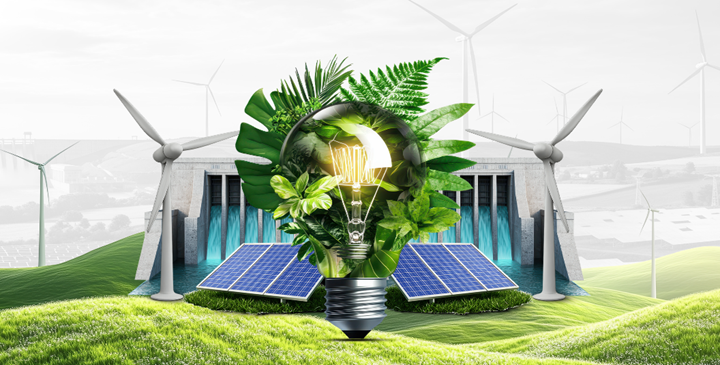
- The ongoing West Asia conflict (U.S.-Israel-Iran escalation since early March 2026) has once again exposed India’s structural vulnerability in energy security, particularly its heavy dependence on imported crude oil and LPG from the Persian Gulf region.
- With Iran threatening to block or disrupt the Strait of Hormuz (through which ~20% of global seaborne oil and significant LNG passes), freight insurance premiums have surged 10–15 times, tanker movements have slowed, and global Brent crude prices crossed $115/barrel.
- Simultaneously, domestic LPG availability concerns surfaced in several states (Maharashtra, Karnataka, Uttar Pradesh) due to:
- Delayed arrivals of imported LPG cargoes
- High international spot prices
- Prioritization of household cylinders over commercial/industrial demand
These twin pressures have intensified the national conversation around accelerating India’s green energy transition, strategic petroleum reserves, import diversification, and clean cooking alternatives. The issue has been debated in Parliament, featured in NITI Aayog reviews, and figured prominently in the Economic Survey 2025–26 discussions on energy resilience.
Drivers of Current Energy Stress
- Geopolitical Risk in Strait of Hormuz Iran’s threats to close the strait (in retaliation to strikes on its energy infrastructure) can choke 17–20 million barrels/day of oil and significant LNG flows.
- Shipping & Insurance Crisis War-risk premiums surged 10–15× → many tankers avoiding Gulf → delayed arrivals of LPG and crude cargoes.
- Domestic LPG Demand Surge Winter demand peak + commercial recovery post-COVID → inventory drawdown faster than anticipated.
- Limited SPR & Buffer Capacity Current SPR covers only ~10 days; commercial stocks add another 40–45 days → total buffer ~50–55 days at best.
- Global LNG Spot Price Volatility Middle East tensions + Europe’s winter demand → Asian spot LNG prices rose sharply.
- Underdeveloped Domestic Gas & Biofuel Alternatives PNG/CNG penetration still low outside major cities; biogas & bio-LPG scale-up slow.
India’s Green Energy Strategy & Progress
- Renewable Energy Targets
- 500 GW non-fossil fuel capacity by 2030
- 50% cumulative electric power capacity from non-fossil sources by 2030 (already achieved in 2025)
- Flagship Missions
- National Green Hydrogen Mission (₹19,744 crore outlay)
- PM Surya Ghar Muft Bijli Yojana (rooftop solar)
- Offshore Wind Energy targets (30 GW by 2030)
- Electric Mobility Push
- FAME-III scheme (2025–30) under finalization
- EV sales crossed 2 million units in 2025
- Biofuels & Clean Cooking
- 20% ethanol blending achieved ahead of schedule
- SATAT scheme for CBG (Compressed Biogas) scaled up
Long-term Implications & Strategic Lessons
- Inflation & CAD Pressure Every $10 rise in crude adds ~₹1.5–2 lakh crore to import bill → widens CAD & fuels inflation.
- Accelerated Energy Transition Conflict acts as a “forcing function” for renewables & diversification.
- Geopolitical Realignment Deepening energy ties with U.S., Russia, Africa, Latin America.
- Domestic Production Push ONGC/OIL exploration in KG Basin, Mumbai High revival.
- Strategic Petroleum Reserve Expansion Target: 90-day cover by 2030 (current ~10 days SPR + commercial stocks).
Policy Challenges & Suggested Reforms
- Fast-track SPR Phase-II & Phase-III (Visakhapatnam, Padur, Chandikhol, etc.)
- Long-term LNG contracts with U.S., Qatar, Australia
- Aggressive green hydrogen & CBG scale-up
- Rationalize LPG subsidies → redirect to clean cooking alternatives
- Strengthen naval presence in IOR for energy route security
- Diversify suppliers: West Africa, Latin America, U.S. shale
Prelims
- Energy security → Strait of Hormuz, SPR, import dependence
- Schemes → National Green Hydrogen Mission, PM Surya Ghar
- Targets → 500 GW non-fossil by 2030
GS-2
- India’s foreign policy in energy diplomacy
- Federalism in energy distribution
GS-3
- Energy security & renewable energy
- Economic impact of geopolitical shocks
- Sustainable development & climate goals
Essay / Interview
- “Geopolitical Disruptions as Catalysts for India’s Energy Transition”
- “Balancing Energy Security with Net-Zero Ambitions”
- The Strait of Hormuz is critical for global energy trade because it handles approximately what percentage of seaborne oil?
(a) 10%
(b) 20%
(c) 30%
(d) 40%
Answer: (b)
- India’s current Strategic Petroleum Reserve (SPR) capacity provides cover for approximately how many days of consumption?
(a) 5–10 days
(b) 20–30 days
(c) 50–60 days
(d) 90+ days
Answer: (a)
- Which of the following is India’s flagship mission for promoting green hydrogen?
(a) National Solar Mission
(b) National Green Hydrogen Mission
(c) FAME-III
(d) SATAT
Answer: (b)
- India’s non-fossil fuel electricity capacity target by 2030 is:
(a) 300 GW
(b) 400 GW
(c) 500 GW
(d) 600 GW
Answer: (c)
- “Geopolitical tensions in West Asia repeatedly expose India’s energy vulnerabilities.” Discuss the current crisis and suggest long-term measures to build energy resilience. (15 marks / 250 words)
- Analyse the role of the National Green Hydrogen Mission in reducing India’s dependence on imported fossil fuels. (10 marks / 150 words)
- “Diversification of energy sources and routes is as important as domestic production for India’s energy security.” Critically examine in light of recent West Asia disruptions. (15 marks / 250 words)
- Essay (250 marks) “From Crisis to Opportunity: How West Asia Conflicts Are Accelerating India’s Green Energy Transition”
Why in News?
- On March 10, 2026, the Union Cabinet approved the extension of the Jal Jeevan Mission (JJM) to 2028, acknowledging that the scheme has been stuck at around 81% coverage since 2025. Launched in 2019 with a target of providing functional household tap connections (FHTC) to all rural households by 2024, the mission has achieved partial success but faced delays due to COVID-19 disruptions, funding shortages, and regional disparities.
- The extension includes a new digital framework named "Sujalam Bharat," which assigns a unique Sujal ID to every village for mapping the complete drinking water supply system from source to tap.
- This decision comes amid growing concerns over rural water security, exacerbated by climate change-induced droughts in states like Maharashtra and Karnataka. The Cabinet's move aligns with the National Water Policy 2012 and SDG 6 (Clean Water and Sanitation), while addressing criticisms from opposition parties and the Supreme Court (2025 PIL on water access). It also coincides with the 16th Finance Commission's recommendations for increased grants to water-stressed regions.
Drivers of Extension & Challenges 
- Incomplete Coverage
- Stuck at 81% since 2025; last 20% in remote, arid, or conflict-prone areas.
- Geopolitical & Climate Factors
- West Asia conflict disrupts material imports (pipes, pumps); droughts exacerbate scarcity.
- Funding & Implementation Gaps
- State contributions delayed; convergence with MGNREGA/AMRUT partial.
- Quality & Sustainability Issues
- 15% FHTCs non-functional; source sustainability (groundwater depletion) concerns.
- Digital & Mapping Needs
- Lack of uniform data; "Sujalam Bharat" aims for real-time monitoring.
- Socio-Economic Imperatives
- Rural health (diarrheal diseases down 20%); gender equality (women's time savings).
- Policy Alignment
- Supports Har Ghar Jal by 2028; integrates with Swachh Bharat 2.0.
Long-term Socio-economic & Environmental Consequences
- Health Improvements
- Reduced water-borne illnesses (cholera, typhoid down 25%); better nutrition.
- Economic Productivity
- Women/girls save 2-3 hours/day; rural GDP boost 1-2% via time reallocation.
- Gender Empowerment
- Frees women for education/work; aligns with SDG 5.
- Environmental Sustainability
- Overexploitation risks (groundwater); promotes rainwater harvesting.
- Urban-Rural Equity
- Bridges gap; but urban migration if rural water fails.
- Fiscal Strain
- Additional ₹1.5 lakh crore needed; potential CAD impact if imports rise.
- Climate Resilience
- Drought-prone areas benefit; but changing monsoons challenge sustainability.
Policy Challenges & Suggested Reforms
- Funding Augmentation: Increase convergence with MGNREGA (asset creation); 16th FC grants for water.
- Digital Implementation: Roll out "Sujalam Bharat" app for grievance redressal; AI for predictive maintenance.
- Quality Assurance: Mandatory testing under BIS standards; community-led monitoring.
- State Capacity Building: Train 1 lakh Jal Sahiyas; federal incentives for high-performers.
- Sustainability Focus: Integrate with Atal Bhujal Yojana; promote solar pumps.
- Inclusivity: Prioritize SC/ST, women-headed households; address Northeast challenges.
- Global Learning: Collaborate with WHO/UNICEF for best practices.
Prelims
- Schemes: Jal Jeevan Mission, Har Ghar Jal
- Targets: 100% FHTC by 2028
- Bodies: MoJS, CDSCO (quality)
GS-1 (Society & Geography)
- Rural water access; gender impacts
GS-2 (Polity & Governance)
- Federalism in water (Schedule 7); SDG 6
- Welfare schemes implementation
GS-3 (Economy & Environment)
- Water security; climate adaptation
- Infrastructure funding
Essay / Interview
- “Jal Jeevan Mission: Transforming Rural India’s Water Landscape.”
- “Challenges in Achieving Universal Water Access.”
- Jal Jeevan Mission was originally targeted to achieve 100% FHTC by:
(a) 2022
(b) 2024
(c) 2026
(d) 2028
Answer: (b)
- The new digital framework under JJM is named:
(a) Har Ghar Jal
(b) Sujalam Bharat
(c) Atal Bhujal
(d) AMRUT 2.0
Answer: (b)
- India's rural households covered under JJM as of 2025 are approximately:
(a) 10 crore
(b) 12.5 crore
(c) 14.5 crore
(d) 16.5 crore
Answer: (c)
- JJM primarily focuses on providing:
(a) Irrigation water
(b) Industrial water
(c) Functional household tap connections
(d) Groundwater recharge
Answer: (c)
- “The extension of Jal Jeevan Mission to 2028 reflects both achievements and persistent challenges in rural water supply.” Discuss. (15 marks / 250 words)
- Analyse the role of digital mapping in enhancing the sustainability of water supply schemes like JJM. (10 marks / 150 words)
- “Geopolitical tensions and climate change necessitate a resilient water security framework for India.” Critically evaluate in the context of JJM's progress. (15 marks / 250 words)
- Essay (250 marks) “Water Security in Rural India: The Journey of Jal Jeevan Mission Towards Sustainability and Equity.”
Why in News? 
- NASA’s Centre for Near-Earth Object Studies (CNEOS) officially announced on March 8, 2026, that asteroid 2024 YR4 no longer poses any collision risk to the Moon on December 22, 2032.
- The asteroid, discovered in late 2024, had initially generated significant global concern because early orbital models gave it a 3.8% to 4.3% probability of striking the lunar surface — one of the highest probabilities ever recorded for a near-Earth object (NEO) in the short term.
- High-precision observations using the James Webb Space Telescope (JWST) in February 2026 provided conclusive data, showing the asteroid will safely pass the Moon at a distance of approximately 21,200 km. This update also reconfirmed that 2024 YR4 poses no threat to Earth for at least the next century.
- The episode has been hailed as a major success story of modern planetary defence and demonstrates the rapid improvement in NEO tracking capabilities.
Significance of the Event
- Planetary Defence Milestone First time a relatively high-probability lunar impact scenario was conclusively ruled out using advanced space-based telescopes.
- Rapid Refinement of Risk Probability dropped from ~4% to 0% within months — showcases the power of continuous observation and improved modelling.
- Public Communication NASA maintained high transparency, regularly updating the public via the CNEOS Sentry Risk Table, reducing panic.
- Technological Achievement JWST’s infrared capabilities allowed precise tracking of a faint, dark asteroid that ground-based telescopes found extremely difficult to observe.
- Global Implications Reinforces the importance of international cooperation in planetary defence (NASA, ESA, ISRO, etc.).
Long-term Implications
- Strengthening Global NEO Monitoring Encourages countries to invest more in space-based observatories and early-warning systems.
- India’s Role Reinforces the relevance of ISRO’s NISAR mission (with NASA) and the proposed Indian Planetary Defence Programme.
- Policy Push Likely to accelerate global discussions on asteroid deflection technologies (e.g., NASA’s DART mission follow-ups).
- Public Awareness Increases scientific literacy regarding near-Earth objects and reduces sensationalism around asteroid threats.
Prelims
- Near-Earth Objects (NEOs)
- James Webb Space Telescope (JWST)
- Centre for Near-Earth Object Studies (CNEOS)
- Planetary Defence
GS-3 (Science & Technology + Environment)
- Space technology and its applications
- Disaster management & early warning systems
- International scientific collaboration
Essay / Interview
- “Planetary Defence: The Next Frontier of Global Security”
- “From Science Fiction to Scientific Reality: Managing Asteroid Threats”
- Asteroid 2024 YR4 was recently in the news because:
(a) It was the largest asteroid discovered in 2024
(b) Initial models showed a notable chance of lunar impact in 2032, later ruled out
(c) It was successfully deflected by NASA’s DART mission
(d) It carried water ice confirmed by ISRO
Answer: (b)
- Which telescope was primarily used to refine the trajectory of asteroid 2024 YR4?
(a) Hubble Space Telescope
(b) James Webb Space Telescope
(c) Chandra X-ray Observatory
(d) Spitzer Space Telescope
Answer: (b)
- The James Webb Space Telescope is particularly useful for observing asteroids because:
(a) It operates in visible light only
(b) It has powerful infrared capabilities to observe faint, dark objects
(c) It is located on the Moon
(d) It can deflect asteroids
Answer: (b)
- CNEOS, which issued the final update on asteroid 2024 YR4, is a centre under:
(a) ESA
(b) NASA
(c) ISRO
(d) CNSA
Answer: (b)
- “Recent developments in tracking near-Earth objects like asteroid 2024 YR4 demonstrate significant progress in planetary defence.” Discuss the importance of such capabilities for global security. (15 marks / 250 words)
- Examine the role of the James Webb Space Telescope in enhancing our understanding and monitoring of potentially hazardous asteroids. (10 marks / 150 words)
- “Planetary defence is no longer science fiction but a strategic necessity.” In light of recent asteroid tracking successes, suggest a roadmap for India to strengthen its contribution in this field. (15 marks / 250 words)
- Essay (250 marks) “From DART to JWST: The Evolution of Humanity’s Planetary Defence Capabilities and India’s Strategic Role”
Why in News?
- On March 9, 2026, the Union Ministry of Ports, Shipping and Waterways approved a ₹117.54 crore project for the comprehensive renovation and structural strengthening of the iconic Bascule Bridge at Syama Prasad Mookerjee Port (formerly Kolkata Port), under the Sagarmala Programme.
- The bridge, a movable bascule-type structure built in 1926, is a critical link connecting the port’s Kidderpore and Garden Reach docks and facilitates both road and rail traffic while allowing large vessels to pass through the Hooghly River.
The project aims to: 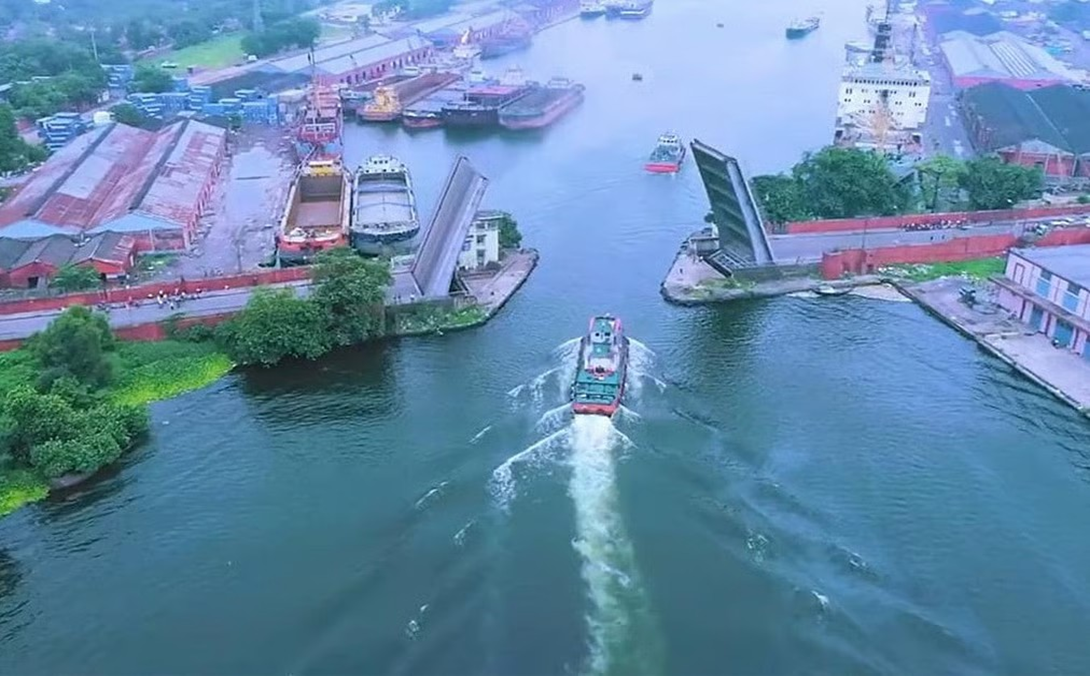
- Restore structural integrity after decades of wear
- Upgrade mechanical and electrical systems
- Enhance load-bearing capacity for modern traffic
- Ensure uninterrupted operation of the port, which handles ~18–20 million tonnes of cargo annually
This decision comes amid the port’s push to increase capacity under the National Maritime Development Programme and reflects the government’s focus on modernizing critical maritime infrastructure.
About Bascule Bridges – Technical & Historical Overview
- Definition: A bascule bridge (from French “bascule” = seesaw) is a movable bridge with one or more sections (leaves) that rotate vertically around a horizontal axis to provide clearance for ships.
- Working Principle:
- Counterweight (usually heavier than the leaf) balances the span.
- Pulley/chain or hydraulic/electric system provides mechanical advantage.
- Energy required is significantly reduced due to counterbalance.
- Types:
- Single-leaf
- Double-leaf (most common for wider channels)
- Rare triple/quadruple-leaf
- Historical Context:
- Medieval origins in Europe for defensive castle drawbridges.
- Modern rolling bascule design pioneered by William Scherzer (USA) in late 19th century.
- World’s Longest Double-Leaf Bascule: Broadway Bridge, Portland, Oregon, USA.
Strategic & Economic Significance of the Bascule Bridge
- Maritime Connectivity Critical for vessel movement in the Hooghly River; allows ships up to ~10,000 DWT to pass when raised.
- Port Efficiency Syama Prasad Mookerjee Port handles ~700–750 vessels/year; bridge downtime directly affects turnaround time.
- Urban-Rural Linkage Connects Kolkata city with Garden Reach industrial area and Howrah side.
- Heritage Value 100-year-old engineering marvel; part of Kolkata’s industrial heritage.
- Sagarmala Linkage Part of ₹1.5 lakh crore port modernization under Sagarmala Phase II & III.
Challenges in Renovation & Operation
- Heritage vs. Modernization Balancing structural safety with preservation of original design.
- Minimal Disruption Bridge must remain operational during renovation (night shifts planned).
- Technical Complexity Counterweight replacement, hydraulic system upgrade in saline environment.
- Funding & Timeline Risks Cost overruns possible due to unforeseen corrosion damage.
- Climate & Environmental Factors Hooghly tidal action and monsoon corrosion accelerate wear.
Prelims
- Infrastructure: Sagarmala Programme, Bascule Bridge
- Geography: Hooghly River, Kolkata Port
- Heritage: 100-year-old movable bridge
GS-1 (Geography & Society)
- Port-led development
- Urban connectivity & heritage conservation
GS-2 (Governance)
- Centre-State coordination in port infrastructure
- Sagarmala implementation
GS-3 (Economy & Infrastructure)
- Maritime sector modernization
- Economic impact of port efficiency
- Sustainable infrastructure
Essay / Interview
- “Modernizing Heritage Infrastructure: The Case of Kolkata’s Bascule Bridge”
- “Sagarmala Programme and India’s Maritime Renaissance”
- The Bascule Bridge is located at which Indian port?
(a) Jawaharlal Nehru Port
(b) Syama Prasad Mookerjee Port, Kolkata
(c) Paradip Port
(d) Cochin Port
Answer: (b)
- The recently approved renovation cost of the Bascule Bridge is:
(a) ₹75.50 crore
(b) ₹117.54 crore
(c) ₹150 crore
(d) ₹200 crore
Answer: (b)
- Bascule bridges primarily use which mechanism to lift the span?
(a) Hydraulic piston
(b) Counterweight & pulley system
(c) Electric winch only
(d) Floating pontoon
Answer: (b)
- The Bascule Bridge at Kolkata was commissioned in:
(a) 1905
(b) 1926
(c) 1947
(d) 1955
Answer: (b)
- “Renovation of century-old infrastructure like the Bascule Bridge is essential for India’s maritime and urban connectivity.” Discuss the strategic importance of the project and challenges involved. (15 marks / 250 words)
- Analyse the role of the Sagarmala Programme in modernizing India’s port infrastructure with reference to recent initiatives. (10 marks / 150 words)
- “Balancing heritage conservation with modern functionality is a key challenge in infrastructure development.” Critically examine in the context of the Bascule Bridge renovation project. (15 marks / 250 words)
- Essay (250 marks) “From Colonial Legacy to Modern Necessity: The Strategic Renewal of India’s Historic Maritime Infrastructure”
Why in News?
- In the first week of March 2026, birdwatchers and ornithologists documented the sighting of a male Blue-and-White Flycatcher (Cyanoptila cyanomelana) on Pavagadh Hills, Panchmahal district, Gujarat. This is believed to be the first confirmed record of the species in Gujarat and one of the very few sightings in western India.
- The bird, normally a long-distance migrant breeding in Japan, Korea, northeast China and the Russian Far East, and wintering in Southeast Asia (Vietnam, Thailand, Cambodia, Sumatra, Borneo), was photographed and video-recorded by members of the Gujarat Birds group.
The sighting is considered extraordinary because: 
- The species is extremely rare west of its normal wintering/migration corridor.
- Gujarat lies far outside its typical vagrancy range.
- Pavagadh’s dry-deciduous forest and rocky grassland provided an unusual stopover habitat.
The record has been submitted to eBird India and is under review by the Bombay Natural History Society (BNHS) rarities committee. It highlights increasing vagrancy patterns possibly linked to climate change and extreme weather events affecting migratory routes.
About Blue-and-White Flycatcher – Biological & Ecological Profile
- Scientific Name: Cyanoptila cyanomelana
- Common Names: Japanese Flycatcher, Blue-and-White Flycatcher
- Family: Muscicapidae (Old World Flycatchers)
- Size: ~13–14 cm; small, slim songbird
- Plumage (Adult Male):
- Upperparts, wings & tail: brilliant cobalt-blue
- Chin, throat, breast, flanks: velvety black
- Belly & vent: pure white
- Bill: black; eyes: dark brown
- Female / Immature: Grey-brown upperparts, rufous-brown wing edges, greyish throat with creamy patches, whitish belly
- Voice: Sharp “tzik” call; melodious song during breeding season
- Breeding Range: Japan, Korea, northeast China, Russian Far East (taiga & submontane forests)
- Wintering Range: Southeast Asia (Vietnam, Cambodia, Thailand, Malay Peninsula, Sumatra, Borneo)
- Habitat: Wooded lowlands, submontane forests, scrub, plantations; up to ~1,200 m
- Behaviour: Insectivorous; sallies from perch to catch flying insects; territorial in breeding season
- Migration: Long-distance migrant; crosses East China Sea & South China Sea
Significance of the Gujarat Sighting
- Range Extension / Vagrancy Record First credible record from Gujarat and western India; significantly west of normal passage.
- Climate & Migration Insight Possible westward displacement due to cyclones, changing wind patterns or climate-induced shifts in wintering grounds.
- Biodiversity Monitoring Value Demonstrates effectiveness of citizen science (eBird, Gujarat Birds group) in documenting rare migrants.
- Eco-Tourism Potential Pavagadh already a popular site; birding can add niche tourism value if responsibly managed.
- Conservation Message Reinforces need to protect stopover habitats even outside core range.
Challenges & Conservation Context
- Habitat Loss in Wintering Grounds (SE Asia deforestation)
- Climate Change altering migratory timing & routes
- Illegal Bird Trade in parts of range (though not major for this species)
- Pavagadh Threats → tourism pressure, quarrying, invasive species
Prelims
- Species: Blue-and-White Flycatcher (Cyanoptila cyanomelana)
- Family: Muscicapidae
- Migration: East Asian – Southeast Asian flyway
- IUCN: Least Concern
- Sighting Location: Pavagadh Hills, Gujarat
GS-1 (Geography)
- Western India ornithology
- Avian migratory routes
GS-3 (Environment & Ecology)
- Vagrancy & climate change
- Citizen science in biodiversity monitoring
- Stopover habitat importance
Essay / Interview
- “Climate Change and Shifting Bird Migration Patterns in India”
- “Role of Citizen Science in Documenting Rare Avian Vagrants”
- The Blue-and-White Flycatcher (Cyanoptila cyanomelana) primarily breeds in which region?
(a) Western Ghats
(b) Japan, Korea, northeast China & Russian Far East
(c) Himalayas
(d) Southeast Asia
Answer: (b)
- The recent sighting of Blue-and-White Flycatcher was reported from:
(a) Silent Valley NP, Kerala
(b) Pavagadh Hills, Gujarat
(c) Namdapha NP, Arunachal Pradesh
(d) Great Rann of Kutch
Answer: (b)
- The Blue-and-White Flycatcher belongs to the family:
(a) Accipitridae
(b) Muscicapidae
(c) Phasianidae
(d) Corvidae
Answer: (b)
- The IUCN Red List status of Blue-and-White Flycatcher is:
(a) Vulnerable
(b) Endangered
(c) Near Threatened
(d) Least Concern
Answer: (d)
- “Vagrant bird sightings like the Blue-and-White Flycatcher in Gujarat provide valuable insights into changing migration patterns.” Discuss the ecological significance and possible causes of such extralimital records. (15 marks / 250 words)
- Explain the importance of citizen science platforms like eBird in documenting rare and migratory bird species in India. (10 marks / 150 words)
- “Climate change is altering avian migratory routes across the globe.” Critically examine the statement with reference to recent unusual bird sightings in India. (15 marks / 250 words)
- Essay (250 marks) “From Core Range to Vagrancy: Climate Change, Migration Shifts and the Expanding Frontiers of Indian Ornithology”
Why in News?
On 10 March 2026, the Karnataka High Court (Division Bench comprising Justice M. Nagaprasanna and Justice K. V. Aravind) passed an interim order in a public interest litigation (PIL) directing the State Government of Karnataka to ensure that no ground-level activities of any kind are carried out inside the Sharavathi Lion-Tailed Macaque Sanctuary (SLTMS) and its Eco-Sensitive Zone (ESZ) until further orders.
The directive came in response to a PIL filed by wildlife conservationists and local residents alleging: 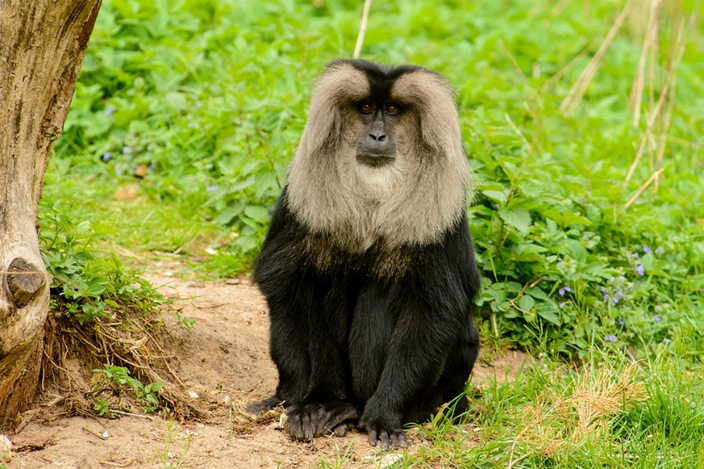
- Continued illegal tree-felling
- Construction of approach roads
- Heavy machinery movement
- Stone quarrying and other non-forest activities
even after the final ESZ notification was issued in 2023 and despite repeated contempt petitions.
The court observed that prima facie the state appeared to be violating both the Wildlife (Protection) Act, 1972 and the ESZ Notification, and emphasized the precautionary principle given the presence of the endangered Lion-tailed Macaque (Macaca silenus) — a species endemic to the Western Ghats and listed in Schedule I of the Wildlife Protection Act.
Legal & Notification Timeline
- 2013–2014: Initial sanctuary notification focusing on Lion-tailed Macaque conservation.
- 2018–2021: Draft ESZ notifications issued under Environment (Protection) Act, 1986.
- 2023: Final ESZ notification published (MoEF&CC) – 187 km² buffer zone.
- 2024–2025: Multiple PILs filed alleging violations (road widening, quarrying, resort construction).
- February 2026: Contempt petition filed after alleged continued work.
- 10 March 2026: Karnataka HC interim stay on all ground activities.
Significance of the Order
- Precautionary Principle Upheld Court invoked the principle even before final hearing, citing irreversible harm to LTMs and rainforest ecosystem.
- Strengthening ESZ Compliance Reinforces that ESZ notifications are not mere guidelines but have statutory force.
- Judicial Activism on Western Ghats Follows a series of High Court and Supreme Court interventions (Gadgil Report, Kasturirangan Report legacy).
- Biodiversity vs. Development Tension Classic conflict between linear projects (roads, power lines) and protected area integrity.
Conservation & Ecological Importance
- Lion-tailed Macaque
- IUCN Endangered; Schedule I (WPA 1972)
- Endemic to Western Ghats rainforests
- Highly arboreal, frugivorous; extremely sensitive to habitat fragmentation
- Sharavathi Valley
- One of the last contiguous low-elevation rainforest tracts in the Western Ghats
- High endemism in amphibians, reptiles, and plants
- Hydrological Role
- Origin of Sharavathi River → major source for Linganamakki & Mani dams (hydropower)
Challenges & Way Forward
Challenges:
- Pressure for infrastructure (Shiradi Ghat tunnel, power lines)
- Human settlements inside ESZ
- Illegal quarrying & timber extraction
- Weak enforcement machinery
Suggested Reforms:
- Immediate constitution of ESZ Monitoring Committee
- Satellite-based real-time monitoring (ISRO-Bhuvan)
- Eco-development committees with local communities
- Strict implementation of the Western Ghats Expert Ecology Panel recommendations
- Integration with National Wildlife Action Plan 2017–2031
Prelims
- Protected Area: Sharavathi Lion-Tailed Macaque Sanctuary
- Species: Lion-tailed Macaque (Macaca silenus) – Schedule I, Endangered
- Legislation: Wildlife (Protection) Act 1972, ESZ Notification 2023
- Geography: Western Ghats, Sharavathi River
GS-1
- Western Ghats biodiversity
- Human–environment conflict in fragile ecosystems
GS-2
- Judicial activism in environmental matters
- Centre–State relations in protected area governance
GS-3
- Biodiversity conservation
- Eco-sensitive zones & sustainable development
- Human–wildlife conflict mitigation
Essay / Interview
- “Judiciary as Guardian of Fragile Ecosystems: The Sharavathi Sanctuary Case”
- “Balancing Development and Conservation in India’s Western Ghats”
- The Sharavathi Lion-Tailed Macaque Sanctuary is located in which state?
(a) Tamil Nadu
(b) Karnataka
(c) Kerala
(d) Goa
Answer: (b)
- The flagship species of Sharavathi Sanctuary is:
(a) Nilgiri Tahr
(b) Lion-tailed Macaque
(c) Nilgiri Langur
(d) Malabar Giant Squirrel
Answer: (b)
- The river that originates near the Sharavathi Sanctuary is:
(a) Periyar
(b) Sharavathi
(c) Netravati
(d) Kali
Answer: (b)
- The recent Karnataka High Court order prohibits:
(a) All tourism activities
(b) Any ground-level activity in the sanctuary and ESZ
(c) Hydropower projects only
(d) Agricultural expansion
Answer: (b)
- “The Karnataka High Court’s stay on activities in Sharavathi Lion-Tailed Macaque Sanctuary underscores the judiciary’s role in protecting fragile ecosystems.” Discuss in light of the Western Ghats conservation challenges. (15 marks / 250 words)
- Explain the ecological significance of the Sharavathi Valley and why the Lion-tailed Macaque is considered an umbrella species for the region. (10 marks / 150 words)
- “Infrastructure development in eco-sensitive zones often conflicts with biodiversity conservation.” Critically examine the issue with reference to recent judicial interventions in the Western Ghats. (15 marks / 250 words)
- Essay (250 marks) “Judicial Safeguards and Community Participation: Balancing Development and Conservation in India’s Western Ghats
Click Here to download the PDF
