12th March Current Affairs
Why in News? 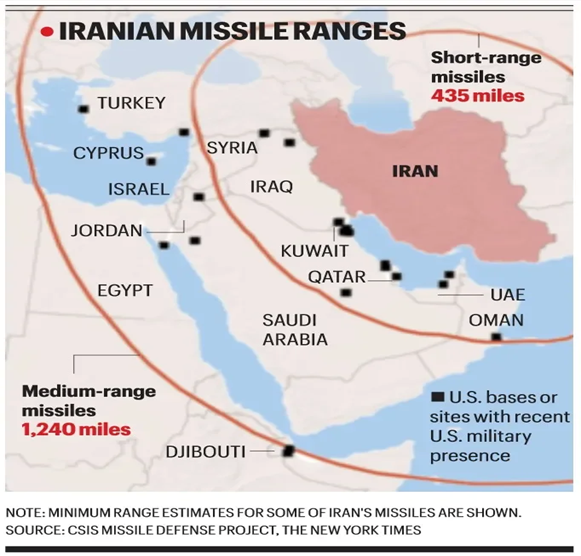
- On March 11, 2026, Iran intensified its response to the U.S.-Israel assault by launching a barrage of drones and missiles that damaged at least 17 U.S. military installations across West Asia, including bases in Iraq, Syria, Jordan, UAE, Saudi Arabia, Kuwait, and Qatar.
- The strikes, part of Iran's "Operation True Promise 5," targeted radar systems, air defense infrastructure, and command facilities, marking the most widespread direct attack on U.S. assets in the region since the conflict's onset. U.S. officials confirmed damage but no major casualties, while Iran claimed the attacks were "proportionate retaliation" for strikes on its oil and nuclear sites.
- This escalation, on the eleventh day of the war, has slowed in pace but become more systematic, raising fears of a broader regional conflagration. The UN Security Council convened an emergency session, with India calling for immediate de-escalation.
- The event underscores the fragility of global energy security (Hormuz threats) and U.S. alliances in the Middle East, aligning with debates on international law under the UN Charter and implications for India's strategic interests in the Indo-Pacific.
Drivers of Iran's Strikes
- Retaliation to U.S.-Israel Actions
- Response to strikes on Iranian oil depots and nuclear sites; aims to deter further aggression.
- Systematic Targeting Strategy
- Focus on degrading U.S. air defense/radar to enable future operations; not mass destruction.
- Proxy Network Activation
- Coordination with Hezbollah, Houthis, and Iraqi militias for multi-front pressure.
- Geopolitical Leverage
- Demonstrates Iran's missile/drone capabilities; signals to Gulf allies hosting U.S. bases.
- Domestic Consolidation
- Boosts regime legitimacy amid new Supreme Leader's transition.
- Economic Warfare
- Indirectly threatens Hormuz; aims to spike global oil prices.
- International Law Defiance
- Claims self-defense under Article 51; ignores proportionality norms.
Long-term Geopolitical & Socio-economic Consequences
- Regional War Risk
- Potential full involvement of Gulf states; escalation to nuclear threshold.
- U.S. Alliance Strain
- Gulf hosts question basing; Abraham Accords tested.
- Global Energy Crisis
- Prolonged disruptions: Oil to $150/barrel; inflation in India/EU.
- Humanitarian Fallout
- Civilian risks in bases; refugee surges from Iraq/Syria.
- Diplomatic Shifts
- Russia/China support Iran; U.S. isolation in UNSC.
- India's Dilemmas
- Oil import costs up ₹20,000 crore; diaspora evacuation plans activated.
- Arms Race Acceleration
- Boosts demand for anti-missile systems (THAAD, Iron Dome).
Policy Challenges & Suggested Reforms
- De-escalation Diplomacy: UNSC resolution; India mediate via SCO/QUAD.
- Energy Diversification: Boost Russia/U.S. imports; accelerate renewables.
- Base Protection: U.S. enhance CENTCOM defenses; cyber countermeasures.
- Humanitarian Aid: Red Cross access; safe corridors.
- Legal Accountability: ICC probe violations; arms embargoes.
- India's Response: SPR drawdown; fuel rationing if prolonged.
Prelims
- Terms: Strait of Hormuz, CENTCOM, Article 51 (UN Charter)
- Bodies: UNSC, Interpol (arms tracking)
GS-2 (IR)
- India-West Asia ties; conflict mediation
GS-3 (Security & Economy)
- Energy security; defense alliances
- Economic impacts of wars
Essay / Interview
- “Escalating Conflicts in West Asia: Global Security Implications.”
- “India's Neutrality in U.S.-Iran Tensions.”
- Iran's strikes on March 11, 2026, damaged U.S. installations in how many countries?
(a) 5
(b) 7
(c) 9
(d) 11
Answer: (b)
- The Al Udeid Air Base, hit in the strikes, is located in:
(a) Iraq
(b) UAE
(c) Qatar
(d) Saudi Arabia
Answer: (c)
- Iran's attacks primarily targeted which U.S. systems?
(a) Naval ships
(b) Radar & air defense
(c) Troop barracks
(d) Oil refineries
Answer: (b)
- The conflict's escalation is on the:
(a) Fifth day
(b) Ninth day
(c) Eleventh day
(d) Fifteenth day
Answer: (c)
- “Iran's retaliatory strikes on U.S. bases signify a new phase in West Asia conflicts.” Discuss drivers and global implications. (15 marks / 250 words)
- Analyse the role of proxy networks in Iran's strategy against U.S. presence in the Middle East. (10 marks / 150 words)
- “Geopolitical conflicts in West Asia pose direct threats to India's energy security.” Critically evaluate India's response options. (15 marks / 250 words)
- Essay (250 marks) “From Proxy Wars to Direct Confrontations: The Evolving Nature of West Asia Conflicts and Global Ramifications.”
Why in News? 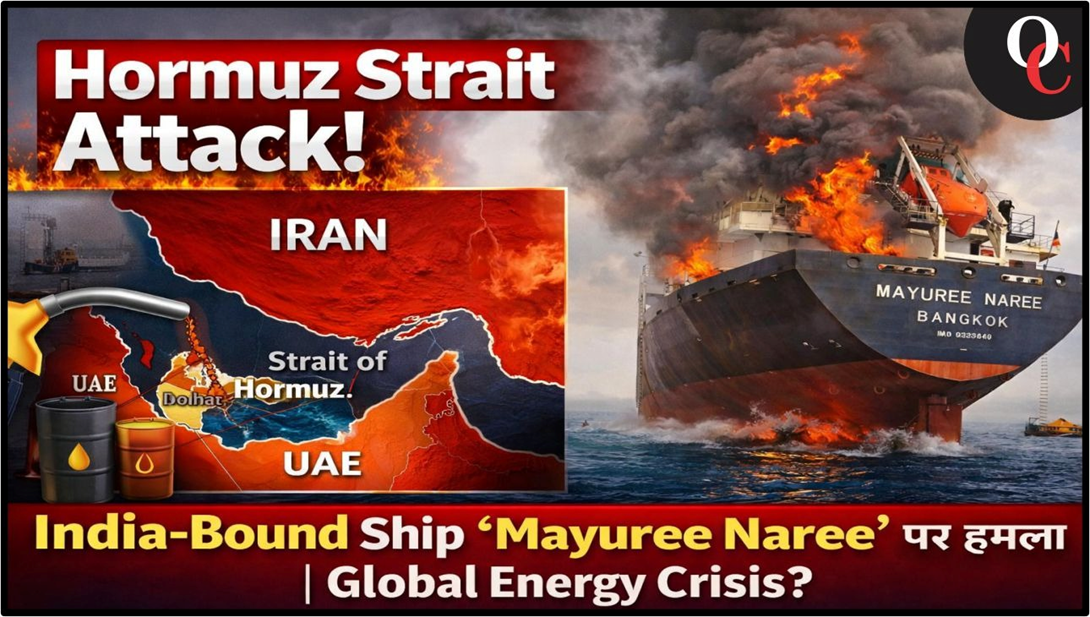
On March 11–12, 2026, Iran launched a coordinated wave of drone and missile attacks across the Persian Gulf and wider West Asia, directly targeting commercial shipping, U.S. naval & air assets, and allied infrastructure in retaliation to ongoing U.S.-Israeli strikes on Iranian military and energy targets. Key incidents include:
- Attack on Thai-flagged cargo ship Mayuree Naree (IMO 9320413) near the Strait of Hormuz, killing three crew members (including Indian nationals) and injuring four.
- Strikes on U.S. Fifth Fleet headquarters in Bahrain, radar installations in Kuwait, UAE, Saudi Arabia, and Jordan.
- Damage to Dubai International Airport vicinity and several embassies/consulates.
The attacks have caused significant panic in global shipping, with war-risk insurance premiums rising 10–15×, many tankers refusing to transit Hormuz, and oil prices surging past $120/barrel. India has lost at least three citizens in the Mayuree Naree incident, prompting the Ministry of External Affairs to issue high-risk travel advisories for the Gulf and activate evacuation protocols.
The International Energy Agency (IEA) announced on March 12 that member countries would unlock 400 million barrels from strategic reserves to stabilize markets. The crisis has now entered its 12th day, with no immediate ceasefire in sight.
Drivers of Iranian Strikes
- Direct Retaliation Response to U.S.-Israel strikes on Iranian oil depots, refineries, and nuclear-related facilities.
- Systematic Degradation of U.S. Presence Targeted radar, communications, and air defense to degrade U.S./allied situational awareness and intercept capability.
- Economic & Energy Leverage Indirect pressure on global oil markets via Hormuz threats and shipping attacks.
- Proxy Coordination Houthis (Yemen), Hezbollah (Lebanon), and Iraqi militias involved in parallel actions.
- Domestic Messaging New Supreme Leader needs to project strength amid internal transition.
- Deterrence Strategy Signal to Gulf monarchies hosting U.S. bases that continued support will have consequences.
Long-term Geopolitical & Economic Consequences
- Global Energy Crisis Prolonged Hormuz disruptions → oil to $150/barrel possible; inflation spike in import-dependent nations (India +3–5%).
- Shipping & Insurance Collapse Tanker avoidance → Cape of Good Hope rerouting adds 15–20 days & 30% costs.
- U.S. Alliance Strain Gulf hosts (UAE, Saudi, Qatar) question safety of U.S. basing; Abraham Accords under pressure.
- India’s Exposure
- 40% oil from Gulf → import bill up ₹25,000–30,000 crore
- 2M+ Indian diaspora in Gulf → evacuation readiness
- Seafood/aqua export panic (Andhra Pradesh) worsens
- Nuclear & Missile Escalation Risk Iran may accelerate weaponization; Israel pre-emptive doctrine activated.
- Diplomatic Realignment Russia/China back Iran; U.S. isolation in UNSC.
Policy Challenges & Suggested Reforms for India
- Immediate: Draw from SPR; activate fuel rationing if needed.
- Short-term: Long-term contracts with U.S., Russia, West Africa; LNG from Australia/Qatar.
- Medium-term: Accelerate 500 GW renewable target; scale green hydrogen & biofuels.
- Strategic: Naval escort for Indian-flagged vessels in IOR; deepen QUAD maritime cooperation.
- Diplomatic: India to lead SCO/G20 de-escalation call; protect diaspora.
Prelims
- Strait of Hormuz (20% global oil)
- IEA Strategic Reserves release mechanism
- India’s oil import sources (Gulf + Russia)
GS-2 (IR)
- India-West Asia balancing act
- Energy diplomacy & neutral stance
GS-3 (Economy & Security)
- Energy security & import dependence
- Impact of geopolitical shocks on CAD & inflation
- Maritime domain awareness
Essay / Interview
- “Geopolitical Chokepoints and India’s Energy Security Dilemma”
- “From Hormuz to Resilience: India’s Path to Energy Independence”
- The Strait of Hormuz is strategically critical because it handles approximately what percentage of global seaborne oil trade?
(a) 10%
(b) 20%
(c) 30%
(d) 40%
Answer: (b)
- In the March 2026 attacks, Iran primarily targeted which types of U.S. assets?
(a) Aircraft carriers
(b) Radar & air defense systems
(c) Troop barracks
(d) Oil tankers
Answer: (b)
- Which agency announced the unlocking of 400 million barrels of oil reserves in response to the crisis?
(a) OPEC
(b) IEA
(c) U.S. EIA
(d) Saudi Aramco
Answer: (b)
- The attacked Thai-flagged vessel in the Strait of Hormuz was named:
(a) Mayuree Naree
(b) Bangkok Naree
(c) Thai Star
(d) Gulf Pride
Answer: (a)
- “The West Asia conflict has once again exposed the fragility of global energy supply chains.” Discuss the implications for India and suggest short-term and long-term policy responses. (15 marks / 250 words)
- Analyse the strategic significance of the Strait of Hormuz in contemporary geopolitics. (10 marks / 150 words)
- “Energy security is now inseparable from national security.” Critically examine this statement in the context of India’s response to the 2026 Hormuz crisis. (15 marks / 250 words)
- Essay (250 marks) “Chokepoints and Conflicts: How West Asia Instability is Reshaping India’s Energy Security Calculus”
Why in News? 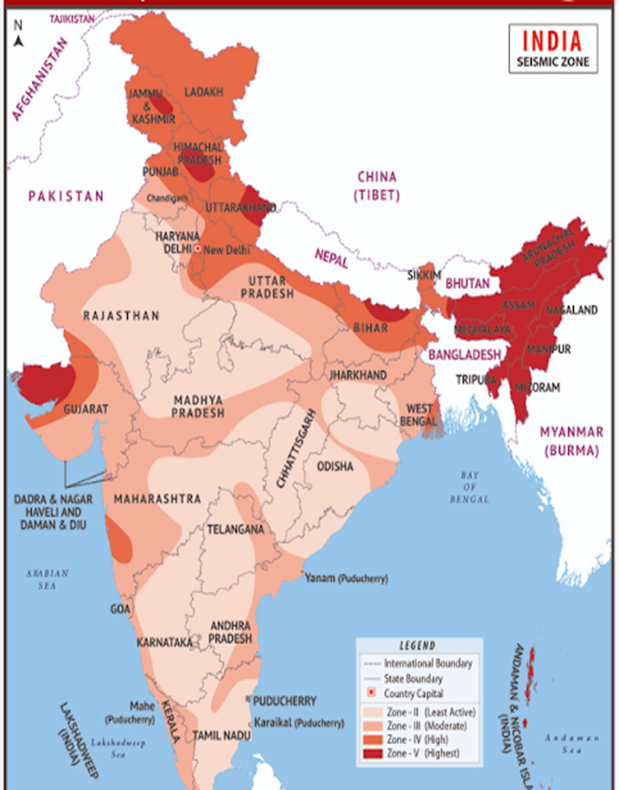
- The Bureau of Indian Standards (BIS) is in the final stages of revising IS 1893 (Criteria for Earthquake Resistant Design of Structures), introducing a more scientific, site-specific seismic zoning framework that replaces the earlier broad zonal system (Zones II to V). This revision, under discussion since 2023, has sparked intense debate among engineers, urban planners, policymakers and the construction industry.
- The new framework moves away from the old probabilistic seismic hazard maps and introduces micro-zonation and site-specific ground motion studies for critical infrastructure.
- While this is expected to significantly enhance structural safety in high-risk areas (Himalayas, Kutch, Northeast, Andaman & Nicobar), it is also expected to increase construction costs by 15–25% in many regions, raising serious questions about affordability, implementation feasibility and impact on housing and infrastructure projects.
- The issue gained prominence after a high-level meeting of the National Disaster Management Authority (NDMA) and Ministry of Housing and Urban Affairs on March 8, 2026, where concerns were raised about the massive cost implications and the need for a “holistic, implementable” framework.
Major Issues & Controversies
- Massive Cost Escalation
- Construction costs in Zone IV & V areas may rise 20–25%.
- Already fragile housing sector (especially affordable housing) will be severely affected.
- Implementation Challenges
- Most states lack detailed micro-zonation maps.
- Shortage of qualified structural engineers in smaller cities and towns.
- Conflict with Urban Expansion
- Many fast-growing cities (Dehradun, Srinagar, Guwahati, Imphal, Ahmedabad) fall in high-risk zones.
- New framework may restrict high-rise development and increase land costs.
- Retrofitting Burden
- Millions of existing buildings may need expensive retrofitting.
- Balancing Safety vs Affordability
- Critics argue the new norms are “too stringent” and may slow down India’s urban infrastructure push.
Long-term Implications
- Positive: Significantly lower earthquake risk, reduced loss of life and property in future events.
- Negative: Higher housing prices → increased urban inequality, slower affordable housing delivery, potential delay in Smart Cities & AMRUT projects.
- Economic: Additional ₹1.5–2 lakh crore burden on construction sector over next decade.
Way Forward (Suggested Reforms)
- Phased implementation (high-risk zones first)
- Government subsidy for retrofitting of old buildings
- Massive capacity building of structural engineers
- Integration of new zoning into RERA and building bye-laws
- Use of performance-based design instead of prescriptive codes
- Public-private partnerships for micro-zonation mapping
Prelims
- IS 1893, Seismic Zones of India
- National Disaster Management Authority (NDMA)
- Western Ghats, Himalayan seismic belt, Kutch
GS-1
- Physical Geography – Seismic zones of India
- Urbanization challenges
GS-3
- Disaster Management
- Infrastructure development
- Economic implications of safety regulations
Essay / Interview
- “Balancing Safety and Development: India’s Seismic Zoning Dilemma”
- “Disaster Resilience in the Age of Rapid Urbanization”
- The Indian Standard code for earthquake resistant design of structures is:
(a) IS 456
(b) IS 1893
(c) IS 875
(d) IS 13920
Answer: (b)
- The highest seismic zone in India as per the current classification is:
(a) Zone IV
(b) Zone V
(c) Zone VI
(d) Zone III
Answer: (b)
- The proposed revision of seismic zoning by BIS primarily aims to shift from:
(a) Broad zoning to micro-zonation and site-specific assessment
(b) Site-specific to broad zoning
(c) Only vertical to only horizontal forces
(d) Concrete to steel structures
Answer: (a)
- Which of the following regions falls in Seismic Zone V?
(a) Deccan Plateau
(b) Kutch, Himalayas, Northeast India
(c) Coastal Maharashtra
(d) Gangetic Plains
Answer: (b)
- “The revision of India’s seismic zoning framework by BIS represents both a scientific advancement and a major policy challenge.” Discuss the key issues involved and suggest a balanced way forward. (15 marks / 250 words)
- Analyse the tension between seismic safety norms and affordable housing/infrastructure development in India. (10 marks / 150 words)
- “Disaster resilience must not come at the cost of development.” Critically examine this statement in light of the proposed changes in IS 1893. (15 marks / 250 words)
- Essay (250 marks) “Earthquake Safety vs Urban Development: India’s Seismic Zoning Dilemma in the 21st Century”
Why in News? 
- The ongoing West Asia conflict (U.S.-Israel-Iran war since early March 2026) has severely disrupted global energy supply chains, particularly through threats to the Strait of Hormuz and skyrocketing tanker insurance premiums.
- In India, this has triggered visible panic buying, long queues at petrol pumps in several cities, hoarding of LPG cylinders, and widespread social media rumours of imminent shortages.
- Critically, government communication has been delayed, inconsistent, and mostly reactive, allowing misinformation to spread unchecked. As of March 12, 2026, oil marketing companies (OMCs) report that panic buying has depleted daily stocks in some urban centres by 30–40%, even though actual physical shortages have not yet materialized.
- The Petroleum Ministry and Petroleum and Natural Gas Regulatory Board (PNGRB) have issued multiple clarifications, but the absence of proactive, unified messaging from the highest levels has been widely criticized.
- This episode once again exposes structural weaknesses in India’s crisis communication strategy and energy security preparedness, especially in handling imported fuel supply shocks.
Drivers of Panic & Policy Missteps
- Geopolitical Trigger Iran’s blockade threats + tanker avoidance → immediate freight & insurance shock → delayed arrivals.
- Poor & Delayed Crisis Communication
- No high-level (PM/CM level) public assurance in first week
- Multiple contradictory statements from officials
- Reliance on press notes instead of direct addresses
- Social Media Amplification
- Viral videos of queues, hoarding, empty pumps
- Rumours of “complete shutdown in 3 days” spread unchecked
- Low Public Trust in Official Channels
- Past experience of sudden fuel price hikes & shortages
- Weak grievance redressal during crises
- Structural Import Dependence
- 85% oil & 40–45% LPG imported → no domestic buffer for panic
- LPG Prioritization Policy
- Household cylinders protected, but commercial/industrial LPG supply squeezed → restaurants/hotels affected
Long-term Strategic & Economic Consequences
- Inflation Spiral
- Every $10 rise in crude → ~₹1.5–2 lakh crore additional import bill → fuel & food inflation
- CAD Widening
- Oil bill surge → CAD may cross 2.5–3% of GDP
- Loss of Public Confidence
- Repeated panic episodes erode trust in government crisis management
- Accelerated Energy Transition Pressure
- Forces faster move to renewables, EVs, green hydrogen, biofuels
- Geopolitical Realignment
- Deepening Russia & U.S. energy ties; Iran relationship strained
- Domestic Production Neglect
- ONGC/OIL exploration remains slow → long-term vulnerability
Policy Challenges & Suggested Reforms
Immediate (Next 30–60 days)
- Unified high-level communication (PM address + daily MoPNG briefing)
- Temporary fuel rationing in panic-hit areas
- SPR drawdown announcement
Short-to-Medium Term (2026–28)
- Long-term crude & LNG contracts (U.S., Russia, West Africa, Australia)
- Expand SPR to 90-day cover by 2030
- Fast-track 500 GW renewable target
- Scale up green hydrogen & CBG for industrial & transport use
Long-term Structural Reforms
- Aggressive domestic exploration (KG Basin, Mumbai High)
- 20% ethanol + 5% biodiesel blending mandate
- Massive EV & induction stove push to reduce LPG demand
- Naval escort for Indian-flagged tankers in IOR
Prelims
- Energy security → Strait of Hormuz, SPR, import dependence
- Schemes → PMUY, National Green Hydrogen Mission
- Targets → 500 GW non-fossil by 2030
GS-2
- India’s foreign policy in energy diplomacy
- Crisis communication & governance
GS-3
- Energy security & renewable energy
- Economic impact of geopolitical shocks
- Sustainable development & climate goals
Essay / Interview
- “Geopolitical Disruptions as Catalysts for India’s Energy Transition”
- “Balancing Energy Security with Net-Zero Ambitions”
- The Strait of Hormuz is strategically critical because it handles approximately what percentage of global seaborne oil trade?
(a) 10%
(b) 20%
(c) 30%
(d) 40%
Answer: (b)
- India’s current Strategic Petroleum Reserve (SPR) capacity provides cover for approximately how many days of consumption?
(a) 5–10 days
(b) 20–30 days
(c) 50–60 days
(d) 90+ days
Answer: (a)
- Which of the following is India’s flagship mission for promoting green hydrogen?
(a) National Solar Mission
(b) National Green Hydrogen Mission
(c) FAME-III
(d) SATAT
Answer: (b)
- India’s non-fossil fuel electricity capacity target by 2030 is:
(a) 300 GW
(b) 400 GW
(c) 500 GW
(d) 600 GW
Answer: (c)
- “Geopolitical tensions in West Asia have repeatedly exposed India’s energy vulnerabilities.” Discuss the current crisis and suggest long-term measures to build energy resilience. (15 marks / 250 words)
- Analyse the role of the National Green Hydrogen Mission in reducing India’s dependence on imported fossil fuels. (10 marks / 150 words)
- “Diversification of energy sources and routes is as important as domestic production for India’s energy security.” Critically examine in light of recent West Asia disruptions. (15 marks / 250 words)
- Essay (250 marks) “From Crisis to Opportunity: How West Asia Conflicts Are Accelerating India’s Green Energy Transition”
Why in News? 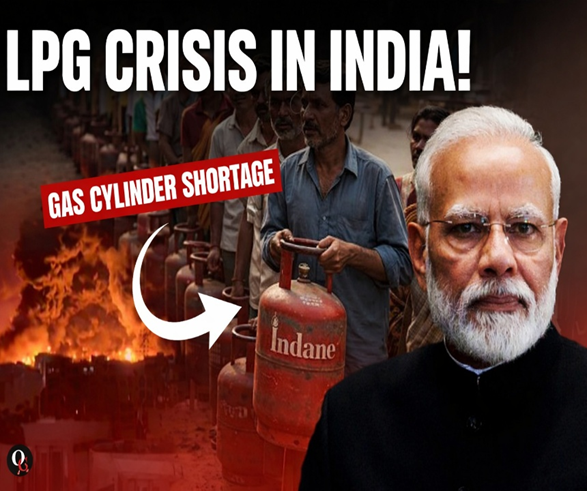
The ongoing war in West Asia (U.S.-Israel vs. Iran since early March 2026) has severely disrupted global LPG and LNG supply chains, with Iran’s threats to the Strait of Hormuz and attacks on shipping leading to:
- Delayed arrivals of LPG cargoes in India
- Spot LPG prices surging 25–35%
- Panic buying & black-marketing of domestic cylinders in Maharashtra, Karnataka, Gujarat, UP, Bihar
- Restaurants, hotels & small industries facing acute shortages
As of March 12, 2026, India’s LPG stocks have dipped to critically low levels in several states despite no complete physical shortage. The Ministry of Petroleum & Natural Gas (MoPNG) and Oil Marketing Companies (OMCs) have issued multiple clarifications, but communication has been reactive rather than proactive, allowing rumours to spread.
The crisis has once again exposed India’s structural dependence on imported LPG (~40–45% of consumption) and highlighted the slow pace of transition to clean cooking alternatives despite ambitious targets under the National Green Hydrogen Mission and SATAT scheme.
Drivers of Current LPG Crisis
- Hormuz & Shipping Disruptions
- Iran’s blockade threats + tanker avoidance → freight & insurance costs up 10–15×
- Many LPG carriers delayed or rerouted via Cape of Good Hope (adds 15–20 days)
- High Global Spot Prices
- Middle East tensions + Europe’s winter demand → Asian spot LPG prices surged
- Domestic Demand Surge
- Winter peak + commercial recovery post-COVID → inventory drawdown faster than supply
- Prioritization Policy Strain
- Household cylinders protected under PMUY → commercial LPG supply squeezed
- Communication Failure
- Delayed high-level assurance → panic buying & hoarding created artificial shortage
- Low Buffer Stocks
- Unlike crude (50+ days buffer), LPG commercial stocks are thin (~15–20 days)
- Slow Transition to Alternatives
- Induction stoves, biogas, PNG/CNG penetration still low outside metros
Long-term Strategic & Economic Consequences
- Inflation Spiral
- Commercial LPG price rise → restaurant/hotel/food inflation → overall CPI up 1–2%
- CAD Widening
- Higher import bill → CAD may touch 2.5–3% of GDP
- Rural-Urban Disparity
- Urban commercial users hit harder; rural households protected via subsidy
- Accelerated Energy Transition Pressure
- Forces faster move to induction, biogas, solar cooking
- Geopolitical Realignment
- Deepening energy ties with U.S., Russia, Australia; Iran relationship strained
- Domestic Production Neglect
- Refinery utilization already at 100–105%; no quick ramp-up possible
Policy Challenges & Suggested Reforms
Immediate (Next 30–60 days)
- Unified high-level communication (PM address + daily MoPNG briefing)
- Temporary commercial LPG rationing in panic-hit areas
- Release from buffer stocks to stabilize supply
Short-to-Medium Term (2026–28)
- Long-term LPG/LNG contracts with U.S., Qatar, Australia
- Aggressive PNG/CNG expansion in cities & towns
- Massive induction stove & biogas subsidy push
Long-term Structural Reforms
- Target 20% reduction in LPG import dependence by 2030
- Scale up National Green Hydrogen Mission & SATAT (CBG)
- Develop domestic gas production (KG Basin, ONGC)
- Naval escort for Indian-flagged LPG tankers in IOR
Prelims
- Energy security → LPG import dependence, Strait of Hormuz
- Schemes → PMUY, SATAT, National Green Hydrogen Mission
- Targets → 500 GW non-fossil by 2030
GS-2
- India’s foreign policy in energy diplomacy
- Crisis communication & governance
GS-3
- Energy security & renewable energy
- Economic impact of geopolitical shocks
- Sustainable development & climate goals
Essay / Interview
- “Geopolitical Disruptions as Catalysts for India’s Energy Transition”
- “From LPG Crisis to Clean Cooking Revolution”
- India’s LPG import dependence is approximately:
(a) 20–25%
(b) 40–45%
(c) 60–65%
(d) 80–85%
Answer: (b)
- The Strait of Hormuz is strategically critical because it handles approximately what percentage of global seaborne oil trade?
(a) 10%
(b) 20%
(c) 30%
(d) 40%
Answer: (b)
- Which scheme provides free LPG connections and subsidized refills to poor households in India?
(a) SATAT
(b) PMUY
(c) FAME-III
(d) National Green Hydrogen Mission
Answer: (b)
- India’s non-fossil fuel electricity capacity target by 2030 is:
(a) 300 GW
(b) 400 GW
(c) 500 GW
(d) 600 GW
Answer: (c)
- “The West Asia conflict has once again exposed India’s critical dependence on imported LPG and crude oil.” Discuss the current LPG crisis and suggest short-term and long-term policy responses. (15 marks / 250 words)
- Analyse the role of the Pradhan Mantri Ujjwala Yojana (PMUY) in protecting vulnerable households during energy crises. (10 marks / 150 words)
- “Diversification of energy sources and routes is as important as domestic production for India’s energy security.” Critically examine in light of the 2026 West Asia disruptions. (15 marks / 250 words)
- Essay (250 marks) “From LPG Queues to Green Flames: How Geopolitical Shocks Are Reshaping India’s Clean Cooking and Energy Security Agenda”
Why in News? 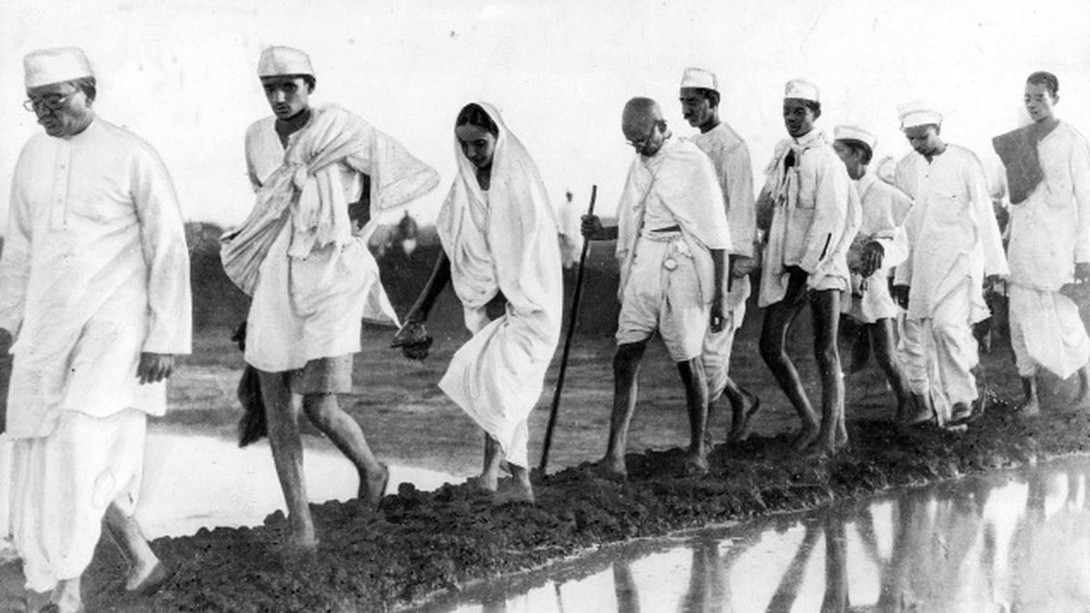
India observed the 96th anniversary of the historic Dandi March (March 12 – April 6, 1930) on March 12, 2026. The day was marked by:
- Tributes at Sabarmati Ashram and Dandi Memorial
- Re-enactment walks and seminars across states
- Special focus in NCERT modules and Doordarshan documentaries
- Renewed academic discussion on civil disobedience, non-violence, and constitutional morality
The anniversary comes at a time when peaceful mass protest continues to be debated in India and globally, making Gandhi’s 24-day march from Sabarmati to Dandi one of the most powerful examples of non-violent resistance against unjust laws.
Key Facts & Timeline
- Start Date: March 12, 1930
- Start Point: Sabarmati Ashram, Ahmedabad
- End Point: Dandi beach, Navsari district, Gujarat
- Distance: ≈ 390 km (241 miles)
- Duration: 24 days
- Initial Marchers: 78 carefully chosen satyagrahis from Sabarmati Ashram
- Final Gathering at Dandi: 60,000–100,000 people
- Key Act: On April 6, 1930, Mahatma Gandhi picked up natural salt from the seashore, openly breaking the Salt Act of 1882
- Immediate Aftermath: Gandhi arrested on May 5, 1930 (Yerwada Jail)
- Nationwide Response: Mass arrests (>60,000), boycotts of foreign cloth & liquor, picketing of shops
Objectives & Significance 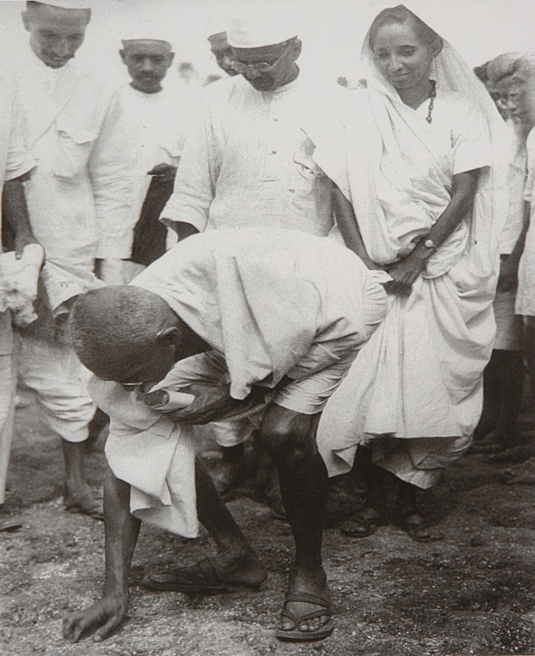
- Immediate Goal: Break the British monopoly on salt production and sale
- Symbolic Power: Salt was a daily necessity used by every Indian → made the protest relatable to the masses
- Mass Mobilization: Transformed Congress from an elite body into a true mass movement
- Global Attention: Covered by international media (Time magazine cover); inspired civil rights leaders worldwide (Martin Luther King Jr., Nelson Mandela)
- Gandhian Principles in Action: Ahimsa (non-violence), Satyagraha (truth-force), Swadeshi, boycott of foreign goods
- Economic Nationalism: Hit British revenue through cloth & liquor boycotts
Major Outcomes & Legacy
- Gandhi–Irwin Pact (March 5, 1931)
- Release of political prisoners
- Right to make salt for personal consumption
- Congress participation in Second Round Table Conference
- Women’s Massive Participation
- Sarojini Naidu led the famous Dharasana Salt Works raid after Gandhi’s arrest
- Long-term Impact
- Paved the way for Quit India Movement (1942)
- Established non-violent civil disobedience as a legitimate tool against unjust laws
- Contemporary Relevance
- Symbol of peaceful protest, people’s power, moral force against injustice
Prelims
- Year: 1930
- Leader: Mahatma Gandhi
- Start: Sabarmati Ashram
- End: Dandi
- Distance: ~390 km
- Associated Pact: Gandhi–Irwin Pact (1931)
- Linked Movement: Civil Disobedience Movement
GS-1 (History)
- Modern Indian History – Gandhian phase
- Civil Disobedience Movement
GS-2 (Polity & Governance)
- Constitutional morality
- Right to protest (Article 19(1)(b))
- Civil disobedience in democracy
GS-4 (Ethics)
- Gandhian values: Ahimsa, Satyagraha, Swadeshi
- Leadership & mass mobilization
Essay / Interview
- “Dandi March: The March That Shook an Empire”
- “Relevance of Gandhian Methods in Contemporary India”
- The Dandi March began on:
(a) March 12, 1930
(b) April 6, 1930
(c) January 26, 1930
(d) August 15, 1930
Answer: (a)
- The distance covered during the Dandi March was approximately:
(a) 240 km
(b) 390 km
(c) 500 km
(d) 600 km
Answer: (b)
- The Dandi March was part of which major movement?
(a) Non-Cooperation Movement
(b) Civil Disobedience Movement
(c) Quit India Movement
(d) Swadeshi Movement
Answer: (b)
- Who led the raid on Dharasana Salt Works after Gandhi’s arrest?
(a) Jawaharlal Nehru
(b) Sarojini Naidu
(c) Subhas Chandra Bose
(d) Vallabhbhai Patel
Answer: (b)
- “The Dandi March transformed the Indian National Congress from an elite organization into a mass movement.” Discuss the significance of the Salt Satyagraha in India’s freedom struggle. (15 marks / 250 words)
- Analyse the role of Mahatma Gandhi’s strategy of non-violent civil disobedience in mobilizing diverse sections of Indian society during the Dandi March. (10 marks / 150 words)
- “The Dandi March remains a powerful symbol of peaceful resistance against unjust laws.” Critically examine its relevance in contemporary democratic struggles. (15 marks / 250 words)
- Essay (250 marks) “From Sabarmati to Dandi: How a 24-Day March Changed the Course of Indian History and Inspired Global Movements for Justice”
Why in News? 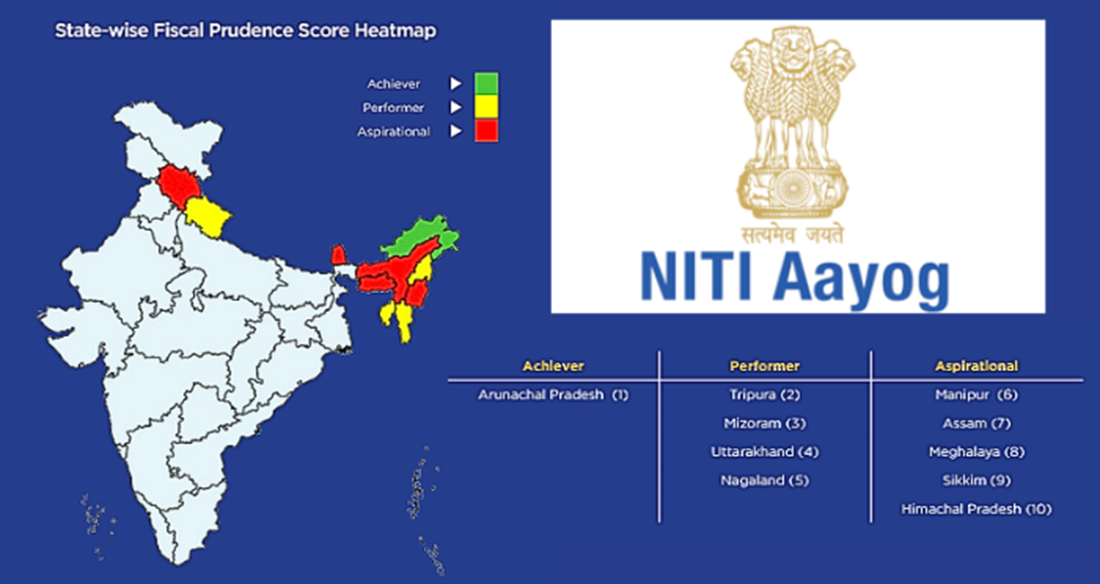
On March 11–12, 2026, NITI Aayog released the second annual edition of the Fiscal Health Index (FHI) 2026 in New Delhi. The index evaluates the fiscal performance of 18 major states and 10 North-Eastern & Himalayan states using five key pillars: Quality of Expenditure, Revenue Mobilisation, Fiscal Prudence, Debt Index, and Debt Sustainability.
Key highlights from the report:
- Odisha, Goa and Jharkhand classified as Achievers (top tier)
- Karnataka and Telangana slipped from Front Runner to Performer
- Kerala and Tamil Nadu further declined to Aspirational (bottom tier)
- Among North-Eastern & Himalayan states, Arunachal Pradesh topped the list, followed by Uttarakhand, Tripura, Meghalaya, Assam and Mizoram
The report assumes added significance amid:
- Rising state debt levels post-pandemic
- 16th Finance Commission deliberations (ongoing)
- Concerns over fiscal discipline in several states ahead of the 2026–27 Union Budget
About Fiscal Health Index (FHI)
Introduced by: NITI Aayog First Edition: 2025 Purpose: To provide a transparent, data-driven, comparable assessment of fiscal performance across states and promote evidence-based policymaking Coverage:
- 18 major states
- 10 North-Eastern & Himalayan states (categorised separately due to special category status) Five Pillars:
- Quality of Expenditure
- Revenue Mobilisation
- Fiscal Prudence
- Debt Index
- Debt Sustainability
Classification (Four Tiers):
- Achievers — Strong fiscal discipline, high own-tax revenue, low deficits, sustainable debt
- Front Runners — Broadly sound finances, minor weaknesses
- Performers — Mixed performance
- Aspirational — Persistent deficits, high debt, limited revenue capacity
Key Highlights of FHI 2026
Major States:
- Top Performers (Achievers): Odisha, Goa, Jharkhand
- Odisha retained top rank due to high own-tax revenue, prudent expenditure, and low debt-GSDP ratio
- Slippages:
- Karnataka & Telangana moved from Front Runner → Performer
- Kerala & Tamil Nadu slipped to Aspirational (high debt, revenue shortfalls)
- Other Notable States:
- Gujarat, Maharashtra, Madhya Pradesh remained Front Runners
- Punjab, Rajasthan, West Bengal continued in Aspirational category
North-Eastern & Himalayan States:
- Top: Arunachal Pradesh (improved revenue buoyancy, low debt burden)
- Followed by: Uttarakhand, Tripura, Meghalaya, Assam, Mizoram
- Laggards: Manipur, Nagaland (high dependence on central transfers)
Significance & Implications
- Tool for Competitive Federalism States now have a clear, quantifiable benchmark to improve fiscal performance.
- Guides 16th Finance Commission Likely to influence horizontal devolution criteria (performance-based weightage).
- Highlights Fiscal Stress in Key States Kerala, Tamil Nadu, Punjab, West Bengal face structural revenue & debt challenges.
- Encourages Revenue Augmentation Emphasis on own-tax revenue buoyancy (property tax, stamp duty, excise).
- Debt Sustainability Warning Several states approaching or breaching 30–35% debt-GSDP threshold.
Challenges & Way Forward
Challenges:
- Many states still heavily dependent on central transfers (60–80% of revenue)
- Poor tax administration and low tax-to-GSDP ratios
- Populist revenue expenditure (freebies, subsidies) crowding out capital spending
- Weak own-revenue generation in urban local bodies
Reforms Needed:
- Strengthen state GST collection mechanisms
- Rationalize revenue expenditure & populist schemes
- Improve property tax & stamp duty administration
- Incentivize capital expenditure through performance-linked grants
- Capacity building of state finance departments
- Greater use of public finance management systems (PFMS)
Prelims
- NITI Aayog initiatives
- Fiscal Health Index 2026
- 15th & 16th Finance Commission
- Key fiscal indicators: Revenue Deficit, Fiscal Deficit, Debt-GSDP ratio
GS-2
- Indian Economy – Fiscal Federalism
- Centre-State financial relations
- Role of NITI Aayog
- 16th Finance Commission deliberations
GS-3
- Inclusive growth & fiscal discipline
- Public finance management
- State-level economic reforms
Essay / Interview
- “Fiscal Discipline and Competitive Federalism in India”
- “Role of NITI Aayog in Promoting Evidence-Based Policymaking”
- The Fiscal Health Index 2026 is released by:
(a) Ministry of Finance
(b) NITI Aayog
(c) RBI
(d) 16th Finance Commission
Answer: (b)
- Which state topped the Fiscal Health Index 2026 among major states?
(a) Gujarat
(b) Odisha
(c) Karnataka
(d) Maharashtra
Answer: (b)
- Among North-Eastern & Himalayan states, which state topped the FHI 2026?
(a) Assam
(b) Meghalaya
(c) Arunachal Pradesh
(d) Tripura
Answer: (c)
- The Fiscal Health Index evaluates states on how many key pillars?
(a) 3
(b) 4
(c) 5
(d) 6
Answer: (c)
- “The Fiscal Health Index 2026 highlights both achievements and persistent fiscal challenges among Indian states.” Discuss the key findings and their implications for fiscal federalism. (15 marks / 250 words)
- Analyse the factors responsible for fiscal stress in states like Kerala and Tamil Nadu as per the FHI 2026. (10 marks / 150 words)
- “Improving own-tax revenue and controlling revenue expenditure are critical for sustainable state finances.” Critically examine in light of NITI Aayog’s Fiscal Health Index. (15 marks / 250 words)
- Essay (250 marks) “Fiscal Discipline in Indian States: Lessons from the Fiscal Health Index 2026 and the Road to Viksit Bharat”
Why in News? 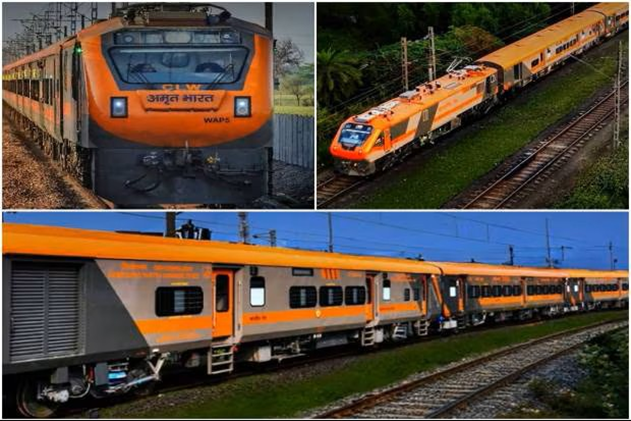
- South Central Railway (SCR) announced the launch of a new Amrut Bharat Express train service in March 2026, specifically designed to connect devotees from Andhra Pradesh and Telangana to the famous Maa Kamakhya Temple in Guwahati, Assam.
- The train will run between key stations in the two Telugu states and Guwahati, facilitating pilgrimage to the temple located on Nilachal Hill overlooking the Brahmaputra River.
- This initiative is part of Indian Railways’ Amrut Bharat Express scheme (launched 2023), which focuses on pilgrimage and spiritual tourism routes with modern coaches, reserved berths, and improved amenities. The announcement comes ahead of the peak Ambubachi Mela season (June 2026), when millions visit Kamakhya.
- The move is expected to boost religious tourism in Assam, ease pressure on existing long-distance trains, and promote cultural connectivity between the Northeast and South India.
Key Details of the Amrut Bharat Express for Kamakhya
- Route: Major stations in Andhra Pradesh & Telangana → Guwahati (exact originating/terminating stations to be announced; likely Secunderabad/Hyderabad – Guwahati).
- Frequency: Likely weekly or bi-weekly (exact schedule pending).
- Features (Amrut Bharat standard):
- AC 3-tier and Sleeper coaches with enhanced comfort.
- On-board catering, purified water, bio-toilets.
- CCTV, fire & smoke detection, mobile charging points.
- Dedicated pilgrimage assistance counters.
- Purpose: Reduce travel burden on devotees; promote Kamakhya as a pan-Indian Shakti Peetha destination.
- Expected Impact: ~1–1.5 lakh additional pilgrims annually; boost to Assam tourism economy (~₹500–800 crore/year from pilgrimage).
About Kamakhya Temple – Core Facts
- Location: Nilachal Hill, southern bank of Brahmaputra River, Guwahati, Assam.
- Deity: Goddess Kamakhya (incarnation of Goddess Sati / Shakti / Durga), consort of Lord Shiva.
- Significance:
- One of the oldest 51 Shakti Peethas in India.
- Primary centre of Tantric worship and Shakta tradition in South Asia.
- Ambubachi Mela (June) – annual festival celebrating the goddess’s menstruation; temple closed for 3 days; reopens on fourth day with massive crowds.
- History:
- Original temple destroyed by Kala Pahar (16th century).
- Rebuilt in 1565 by Chilarai of the Koch dynasty.
- Architecture – Nilachala Style (unique blend):
- Nagara (North Indian) + Saracenic/Mughal influences.
- Beehive-shaped shikhara (tower).
- Five chambers: Garbhagriha (sanctum), Antarala (vestibule), Jagannath Mandir (main hall), Bhog Mandir (offering hall), Nat Mandir (dance/music hall).
- No idol of Kamakhya; worshipped in the form of a yoni-shaped rock (natural stone).
Significance of the New Train Link
- Religious Tourism Boost: Kamakhya receives ~1 crore pilgrims annually; new connectivity from Telugu states (high Hindu population) will increase footfall.
- Cultural Integration: Strengthens Northeast–South India ties; promotes national unity through shared sacred sites.
- Economic Benefits: Assam tourism (₹1,200 crore/year) gains; railway revenue from pilgrimage traffic.
- Strategic Angle: Reinforces India’s focus on Northeast connectivity (Amrit Bharat Express scheme); counters China’s influence in the region.
- Social Impact: Eases travel for low-income pilgrims; reduces road accidents on NH-31.
Prelims
- Temple: Kamakhya Temple (Shakti Peetha), Nilachal Hill, Guwahati.
- Festival: Ambubachi Mela (annual menstruation festival).
- Architecture: Nilachala Style (Nagara + Mughal blend).
- Related: Amrut Bharat Express scheme, Shakti Peethas (51).
GS-1 (Art & Culture)
- Shakti Peethas & Tantric traditions.
- Nilachala architectural style.
GS-1 (Geography)
- Brahmaputra River & Nilachal Hill location.
- Northeast connectivity (railways).
GS-2 (Governance)
- Amrit Bharat Express & pilgrimage tourism policy.
GS-3 (Economy)
- Impact of religious tourism on state economies.
Essay / Interview
- “Religious tourism as a tool for national integration and economic development.”
- “How can pilgrimage connectivity projects like Amrut Bharat Express transform the Northeast?”
1. The recently announced Amrut Bharat Express will primarily connect devotees from Andhra Pradesh and Telangana to which temple?
(a) Kamakhya Temple
(b) Vaishno Devi Temple
(c) Tirupati Temple
(d) Amarnath Temple
Answer: (a)
2. Kamakhya Temple is dedicated to which goddess?
(a) Goddess Lakshmi
(b) Goddess Kamakhya (incarnation of Sati/Shakti)
(c) Goddess Saraswati
(d) Goddess Parvati
Answer: (b)
3. The Ambubachi Mela at Kamakhya Temple commemorates:
(a) Birth of Lord Ayyappa
(b) Annual menstruation of Goddess Kamakhya
(c) Victory over demons
(d) Harvest festival
Answer: (b)
4. Kamakhya Temple’s architecture is known as:
(a) Dravidian style
(b) Nagara style
(c) Nilachala style
(d) Vesara style
Answer: (c)
1. “Religious tourism connectivity projects like the Amrut Bharat Express can serve as a tool for national integration and economic development in the Northeast.” Discuss the significance of the new train link to Kamakhya Temple and its potential impact on Assam’s tourism economy. (15 marks / 250 words)
2. Describe the historical and cultural significance of the Kamakhya Temple as one of the 51 Shakti Peethas. How does its unique Nilachala architectural style reflect regional influences? (10 marks / 150 words)
3. “Pilgrimage tourism in ecologically sensitive areas must balance faith with conservation.” In the context of Kamakhya Temple and the new rail connectivity, critically examine the statement and suggest sustainable tourism measures. (15 marks / 250 words)
4. Essay (250 marks) “From Faith to Connectivity: How Modern Infrastructure Projects Are Transforming Religious Tourism and Regional Development in India.”
- The Indian Navy’s frontline Talwar-class guided-missile frigate INS Trikand will participate in the 58th National Day celebrations of Mauritius on 12 March 2026. The ship, currently deployed in the Indian Ocean Region (IOR), will join the ceremonial fleet review, cultural exchanges, and maritime security demonstrations at Port Louis.
- This deployment is part of India’s broader SAGAR (Security and Growth for All in the Region) initiative and reflects deepening strategic, defence, and cultural cooperation with Mauritius — a key maritime neighbour and member of the Indian Ocean Rim Association (IORA).
- The visit follows the successful India–Mauritius Comprehensive Economic Cooperation and Partnership Agreement (CECPA) and ongoing joint exercises (e.g., Exercise LAMITIYE), signalling India’s continued focus on the Western Indian Ocean amid growing Chinese presence.
Key Details of INS Trikand’s Deployment 
- Ship Profile: Talwar-class (Project 11356) guided-missile frigate; third and final ship of the second batch built at Yantar Shipyard, Kaliningrad, Russia.
- Commissioning: 29 June 2013 at Kaliningrad; home-ported under Western Naval Command, Mumbai.
- Armament & Capabilities (as of 2026 upgrades):
- Supersonic BrahMos anti-ship/land-attack cruise missile (8 cells).
- Shtil-1 surface-to-air missile system (24 missiles).
- 100 mm A-190 medium-calibre gun.
- 30 mm AK-630 close-in weapon system (CIWS).
- Anti-submarine rockets (RBU-6000) & torpedo tubes.
- Electronic warfare suite & advanced combat management system Trebovanie-M.
- Aviation: Kamov Ka-31 airborne early warning helicopter.
- Speed: >30 knots; powered by four gas turbines.
- Role in Mauritius Visit:
- Participate in fleet review & ceremonial parade.
- Conduct joint exercises with Mauritius Coast Guard & Navy.
- Host ship visit for Mauritian dignitaries, students, and public.
- Showcase Indian naval diplomacy and capability in IOR.
Significance of the Visit
- Diplomatic: Reinforces India–Mauritius “special relationship” (shared cultural, historical ties; Mauritius hosts large Indian diaspora ~68% Indo-Mauritian).
- Defence & Security: Strengthens maritime domain awareness, anti-piracy, and counter-trafficking cooperation in the Western IOR.
- Economic: Supports India–Mauritius CECPA (2021); promotes joint ventures in shipbuilding, hydrography, and blue economy.
- Strategic: Counters China’s growing footprint (e.g., Chinese research vessels in IOR, debt-trap concerns); aligns with SAGAR and Indo-Pacific Oceans Initiative.
- Soft Power: Cultural exchanges, ship visits, and medical camps enhance people-to-people ties.
Broader Context: India’s Maritime Engagement in IOR
- SAGAR Vision (2015): Security and Growth for All in the Region — India’s guiding doctrine for IOR.
- Recent Engagements:
- Exercise LAMITIYE (India–Mauritius biennial naval exercise).
- Operation Vanilla (HADR missions in IOR).
- Colombo Security Conclave (India, Sri Lanka, Maldives, Mauritius).
- Mauritius’ Strategic Value: Key IOR node; hosts Indian listening post; supports India’s EEZ surveillance.
Prelims
- Ship: INS Trikand (Talwar-class, commissioned 2013).
- Key weapon: BrahMos supersonic missile.
- Mauritius National Day: 12 March.
- Related: SAGAR, CECPA, LAMITIYE exercise.
GS-2 (International Relations)
- India–Mauritius ties (diaspora, defence, blue economy).
- SAGAR & Indo-Pacific maritime strategy.
- Countering China in IOR.
GS-3 (Defence)
- Talwar-class frigates & BrahMos integration.
- Naval diplomacy & HADR missions.
GS-3 (Economy)
- Blue economy & maritime trade routes.
Essay / Interview
- “India’s SAGAR vision: Maritime security as the backbone of neighbourhood diplomacy.”
- “How does India use naval deployments to strengthen ties with IOR island nations like Mauritius?”
1. INS Trikand, participating in Mauritius National Day 2026, belongs to which class of warships?
(a) Shivalik-class
(b) Talwar-class
(c) Nilgiri-class
(d) Kamorta-class
Answer: (b)
2. The primary supersonic missile system onboard INS Trikand is:
(a) Barak-8
(b) BrahMos
(c) Astra
(d) Nirbhay
Answer: (b)
3. Mauritius National Day is celebrated on:
(a) 12 March
(b) 15 August
(c) 26 January
(d) 2 October
Answer: (a)
4. Which of the following best describes SAGAR?
(a) India’s space programme
(b) Security and Growth for All in the Region
(c) South Asian Growth and Reconstruction
(d) Strategic Alliance for Gulf and Arabian Region
Answer: (b)
1. “India’s deployment of INS Trikand for Mauritius National Day celebrations exemplifies the SAGAR vision in action.” Discuss the strategic and diplomatic significance of India’s maritime outreach in the Indian Ocean Region. (15 marks / 250 words)
2. Analyse the importance of India–Mauritius relations in the context of India’s Indo-Pacific strategy and countering extra-regional influence. (10 marks / 150 words)
3. “Naval diplomacy is a key instrument of India’s soft power and security cooperation in the IOR.” With reference to recent deployments like INS Trikand, evaluate the statement. (15 marks / 250 words)
4. Essay (250 marks) “From SAGAR to Security: How India’s Naval Diplomacy is Reshaping the Indian Ocean Region.”
Click Here to download the PDF
