
3rd April Editorials & Articles
UPSC 360°
The Hindu Unwrapped – Daily Current Affairs Mastery for UPSC CSE (Clear that it’s based on The Hindu editorials / news analyses – very aspirant-friendly)
|
Significance |
|
Artemis II is a crucial step in advancing human space exploration, marking the return of astronauts to deep space after decades. It will validate technologies, ensure crew safety, and pave the way for lunar landing missions. The mission also strengthens global space leadership, fosters innovation, and supports future human missions to Mars. |
Artemis II: Moon Mission
Introduction 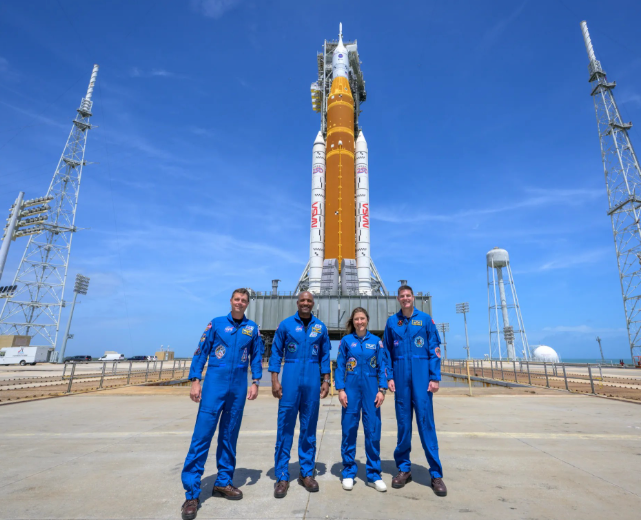
- Artemis II marks a historic milestone in human space exploration. Nearly five decades after Apollo 17 (1972), the last mission to carry humans near the Moon, NASA is once again preparing to send astronauts into deep space.
- This mission is not merely a technological demonstration but a crucial step toward establishing a sustained human presence on the Moon and eventually enabling human missions to Mars.
Artemis Program: Background and Vision
Artemis Program represents one of the most ambitious space initiatives of the 21st century.
Key Objectives:
- To return humans to the Moon after a long hiatus.
- To establish a sustainable lunar presence through long-term missions.
- To utilize lunar resources such as water ice and Helium-3.
- To serve as a stepping stone for human missions to Mars.
Often considered the modern successor to the Apollo Program, Artemis goes beyond short-term exploration and focuses on long-term habitation and deep space expansion.
Key Features of Artemis II
(i) First Crewed Deep Space Mission in Decades
- Artemis II will be the first mission since the Apollo era to carry astronauts beyond low Earth orbit.
- Instead of landing, the crew will perform a lunar flyby, orbiting the Moon before returning to Earth.
(ii) Role of the Orion Spacecraft
- Orion spacecraft is specifically designed for deep space human missions.
- It incorporates advanced life-support systems, radiation shielding, and enhanced crew safety mechanisms.
- It enables astronauts to travel farther and remain in space longer than previous spacecraft.
(iii) Space Launch System (SLS)
- Space Launch System is among the most powerful rockets ever built.
- It is capable of carrying heavy payloads, including crew and mission equipment, into deep space.
- It represents a new generation of launch vehicles, surpassing earlier systems in capability and efficiency.
(iv) Crew Composition
- The mission will include four astronauts, reflecting both technological advancement and international collaboration.
- It symbolizes a renewed global commitment to human space exploration.
Mission Objectives
(i) Testing Human Life Support Systems
- Evaluate oxygen supply, water recycling, and temperature control systems in deep space conditions.
- Assess human endurance and adaptability in long-duration missions.
(ii) Safety and Navigation Validation
- Test Orion’s re-entry capabilities upon return to Earth.
- Ensure the reliability of deep space communication and navigation systems.
(iii) Preparing for Future Missions
- Lay the groundwork for Artemis III, which aims to land humans on the lunar surface.
- Provide critical data for sustained lunar exploration and habitation.
Global Significance
(i) Beginning of a New Space Race
- Artemis II signals a renewed era of competition and collaboration in space.
- Major players such as United States, China, and India are actively advancing their space capabilities.
(ii) Strategic Importance of Lunar Resources
- The Moon contains valuable resources such as Helium-3, which may serve as a future clean energy source.
- Water ice deposits can be converted into hydrogen and oxygen for fuel, enabling deeper space missions.
(iii) Space Diplomacy and Power Dynamics
- Space exploration is increasingly becoming a domain of geopolitical influence.
- Leadership in space technology may shape the future global power structure.
Significance for India
(i) Technological and Scientific Opportunities
- ISRO can benefit from collaboration and technological advancements.
- Following the success of Chandrayaan-3, India has strengthened its position in lunar exploration.
(ii) Strategic and Economic Advantages
- Increased investment in space technology fosters innovation, research, and employment.
- India has the potential to emerge as a key player in the global space economy.
Challenges
(i) High Financial Cost
- The Artemis Program involves significant financial investment, raising concerns about budget sustainability.
(ii) Technical Complexities
- Deep space missions face challenges such as radiation exposure, system failures, and extreme environmental conditions.
(iii) Human Safety Concerns
- Ensuring astronaut safety remains a top priority.
- Long-duration space travel can have physiological and psychological effects on humans.
Conclusion
- Artemis II is not just a mission—it is a transformative step in humanity’s quest to explore beyond Earth. By enabling human presence in deep space once again, it lays the foundation for sustained lunar habitation and future missions to Mars.
- In essence, Artemis II represents the dawn of a new space age, where scientific innovation, global collaboration, and strategic competition converge to shape the future of human civilization beyond our planet.
UPSC CSE & State PCS Relevance
Prelims
- Key terms: Artemis II, SLS Rocket, Orion Spacecraft, Artemis Accords, Lunar Flyby
- Facts: First crewed lunar mission since 1972; Planned landing 2028; Farthest distance ~6,500 km beyond Moon
GS-3 (Science & Technology)
- Space exploration programmes, deep space missions, and international cooperation in space.
GS-2 (International Relations)
- India’s participation in Artemis Accords and growing space diplomacy.
Essay / Interview
- “From Apollo to Artemis: The Evolution of Human Space Exploration in the 21st Century”
- “Space as the Next Frontier: Competition, Collaboration and India’s Strategic Role.”
MCQs
- Artemis II mission is:
(a) A crewed landing on the Moon
(b) A crewed lunar flyby
(c) An uncrewed Mars mission
(d) A space station resupply mission
Answer: (b)
- The Artemis II mission will be launched using:
(a) Saturn V
(b) Space Launch System (SLS)
(c) GSLV Mk III
(d) Falcon Heavy
Answer: (b)
- India has signed which international agreement related to lunar exploration?
(a) Outer Space Treaty
(b) Artemis Accords
(c) Moon Agreement
(d) ISS Agreement
Answer: (b)
- Artemis II is scheduled to be the first crewed mission to lunar vicinity since:
(a) 1969
(b) 1972
(c) 2004
(d) 2012
Answer: (b)
Mains Questions
- “Artemis II marks humanity’s return to deep space after more than five decades.” Discuss the significance of the mission and its implications for future lunar and Mars exploration. (15 marks / 250 words)
- Examine India’s growing role in lunar exploration through the Artemis Accords and its own planned human mission by 2040. (10 marks / 150 words)
- “The new space race is shifting from competition to cooperative exploration.” Analyse this statement with reference to the Artemis programme and India’s space ambitions. (15 marks / 250 words)
- Essay (250 marks) “From Moon Landing to Moon Base: The Evolution of Human Space Exploration in the 21st Century.”
Click Here to download the PDF
