6th March Editorials & Articles
UPSC 360°
The Hindu Unwrapped – Daily Current Affairs Mastery for UPSC CSE (Clear that it’s based on The Hindu editorials / news analyses – very aspirant-friendly)
|
Significance |
|
The sinking of IRIS Dena near Sri Lanka marks the first torpedo combat sinking since WWII, expands the US-Iran conflict into the Indian Ocean, threatens vital global energy sea lanes, militarizes a traditionally neutral region, tests India's strategic neutrality, and heightens risks to maritime trade and regional stability for South Asia.
|
India’s Foreign Policy in the Context of the US–Iran Naval Incident
Introduction
- India’s foreign policy is often characterized by the principles of strategic autonomy and multi-alignment, which allow the country to maintain balanced relations with multiple global powers while safeguarding its national interests. Rather than aligning with a single geopolitical bloc, India seeks to engage with different countries through issue-based partnerships, diplomatic flexibility, and independent decision-making. This approach has become increasingly important in a rapidly changing global order marked by geopolitical rivalries and regional conflicts.
- The sinking of the Iranian naval frigate IRIS Dena by a United States submarine near Sri Lanka in March 2026 has placed India in a particularly sensitive diplomatic situation. The incident gained further significance because the Iranian warship had recently participated in an international naval exercise hosted by India, highlighting India’s close engagement with multiple countries in the Indian Ocean Region. The sudden escalation of tensions involving two countries with which India maintains important relations has created a complex strategic and diplomatic environment.
- Moreover, the incident indicates that the geographical scope of the US–Iran confrontation is expanding beyond the traditional theatre of West Asia into the Indian Ocean Region (IOR). Since the Indian Ocean is central to India’s security, trade, and energy supply routes, any military confrontation in this region directly affects India’s strategic interests. The event therefore raises concerns about regional stability, maritime security, and the safety of key international shipping routes.
- In this context, the incident serves as an important case study for understanding the core principles of India’s foreign policy, the strategic dilemmas it faces while balancing relations with major powers, and the growing importance of maritime security in the Indian Ocean Region. It highlights the challenges India must navigate as it seeks to maintain stability in its extended neighbourhood while continuing to pursue an independent and balanced diplomatic strategy.
India’s Core Foreign Policy Principles 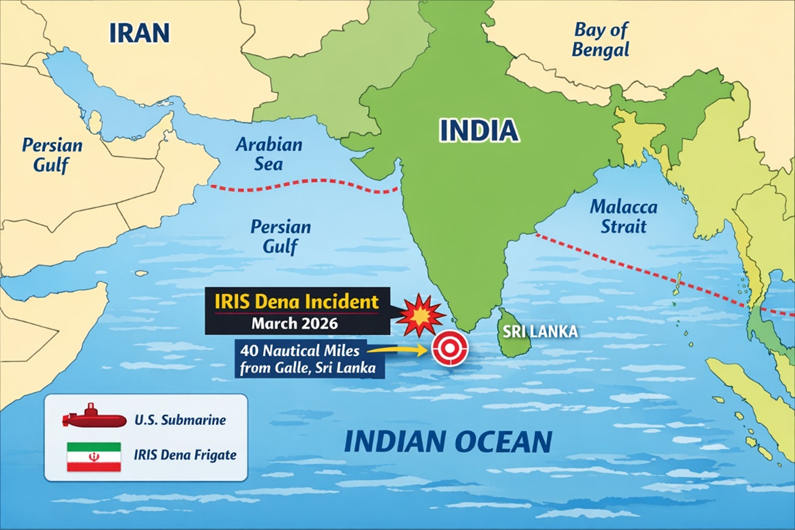
India’s response to international crises, such as the recent naval incident in the Indian Ocean, is shaped by several long-standing principles of its foreign policy. These principles enable India to protect its national interests while maintaining constructive relations with different global powers.
1. Strategic Autonomy
One of the most important pillars of India’s foreign policy is strategic autonomy. This principle emphasizes India’s ability to take independent decisions in international affairs without being bound by military alliances or external pressure.
Key features include:
- India generally avoids joining formal military blocs or alliances.
- It retains the freedom to form issue-based partnerships with different countries depending on its national interests.
Example:
India simultaneously maintains strong relations with major global and regional powers such as the United States, Iran, Russia, Israel, and Gulf countries, even when these countries may have conflicting interests among themselves.
Multi-Alignment Strategy 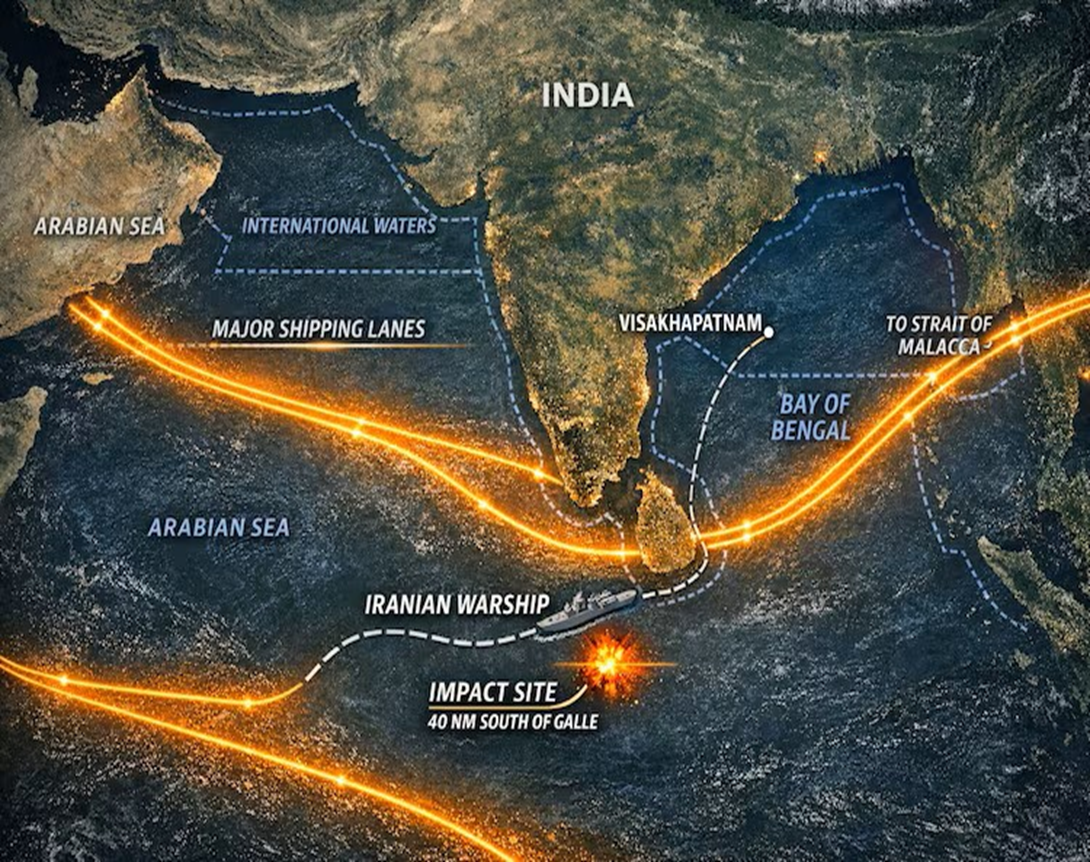
While India historically followed the policy of Non-Alignment during the Cold War, its modern diplomacy is often described as multi-alignment. This approach involves building cooperative partnerships with multiple power centers across the world rather than aligning with a single bloc.
India’s major partnerships include:
- United States: strategic defence partner and key collaborator in Indo-Pacific security.
- Iran: important partner for energy security and regional connectivity.
- Russia: long-standing partner for defence cooperation and military technology.
- Japan and Australia: key partners in promoting Indo-Pacific stability and maritime security.
Through multi-alignment, India seeks to maximize strategic benefits while maintaining policy flexibility.
Commitment to a Rules-Based International Order
India also consistently supports the idea of a rules-based international system, where global interactions are governed by international law and mutual respect for sovereignty.
India generally advocates:
- Respect for international law and sovereignty of states
- Freedom of navigation in international waters
- Peaceful resolution of disputes through dialogue and diplomacy
This approach aligns with India’s broader objective of maintaining global stability and cooperative international relations.
The 2026 IRIS Dena Incident: Key Facts 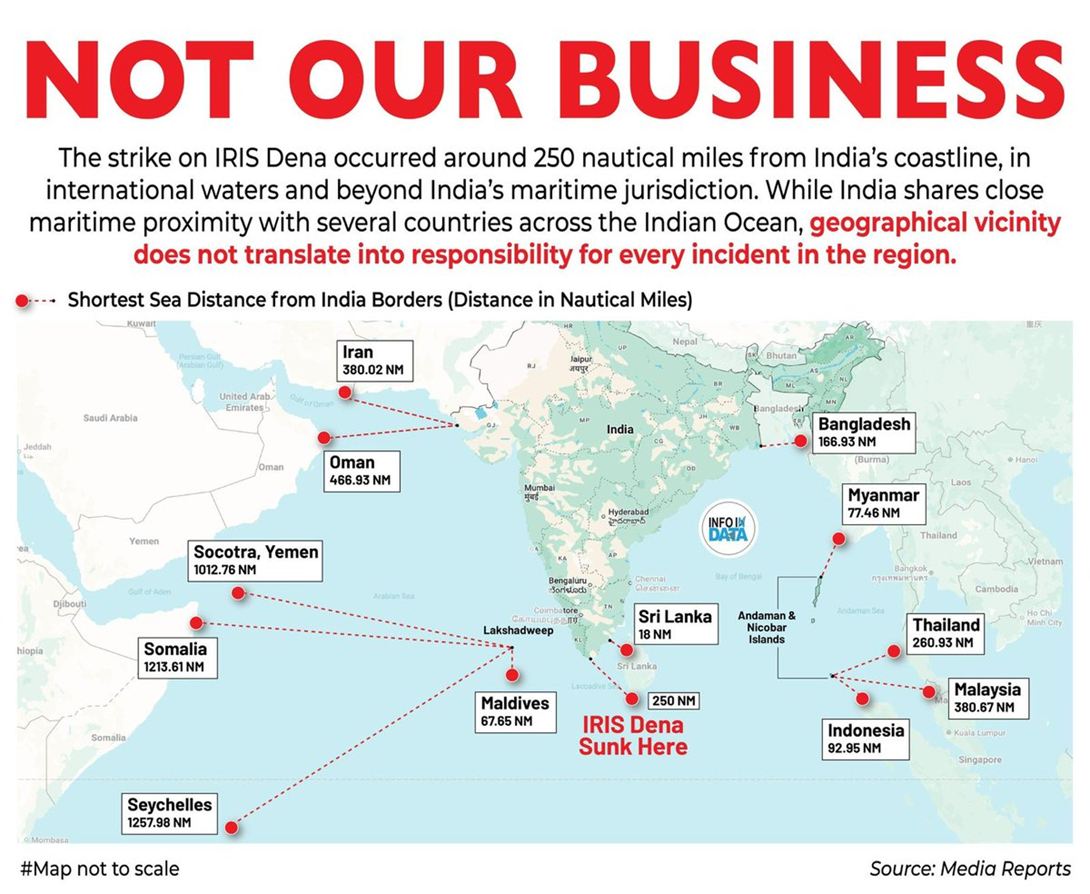
A recent naval incident involving the Iranian frigate IRIS Dena has drawn significant international attention and has implications for India’s strategic environment.
Key details of the incident include:
- Date: 4 March 2026
- Location: Indian Ocean, approximately 40 nautical miles from Galle, Sri Lanka
- Event: A United States Navy submarine torpedoed the Iranian warship IRIS Dena.
- Casualties: Around 87 sailors were killed, while 32 survivors were rescued by Sri Lankan authorities.
- Prior Activity: The Iranian warship had previously participated in Exercise MILAN / International Fleet Review hosted by India at Visakhapatnam.
Following the incident, India and Sri Lanka conducted search and rescue operations to assist survivors and manage the humanitarian situation.
Why This Incident Matters for India’s Foreign Policy
1. Conflict Reaching India’s Maritime Neighbourhood
The Indian Ocean forms the core strategic sphere of influence for India, making any military confrontation in this region a matter of serious concern.
The incident highlights several important implications:
- The conflict between the United States and Iran has expanded beyond West Asia into the Indian Ocean.
- Military activity has occurred close to India’s maritime zones and key shipping routes.
- Such developments increase the risk of instability in India’s immediate strategic environment.
This situation also challenges India’s aspiration to act as a “Net Security Provider” in the Indian Ocean Region (IOR)—a role that involves ensuring stability, maritime safety, and cooperative security among countries in the region.
Overall, the event demonstrates the growing importance of maritime security, strategic diplomacy, and regional cooperation in shaping India’s foreign policy in the 21st century.
Diplomatic Balancing Between the United States and Iran
India’s foreign policy often requires careful diplomatic balancing between competing powers, and the tensions between the United States and Iran represent a clear example of this challenge. Both countries are strategically important to India, but for different reasons. Therefore, India must manage its relations with each side in a manner that protects its national interests while avoiding direct involvement in their conflicts.
India–United States Strategic Partnership
Over the past two decades, India and the United States have developed a strong strategic partnership, particularly in the areas of defence, security, and regional stability. Key areas of cooperation include:
- Defence technology and military cooperation, including joint exercises and defence agreements.
- Indo-Pacific strategy, where both countries support a free, open, and inclusive maritime order.
- Quad partnership, involving India, the United States, Japan, and Australia to promote regional security and cooperation.
- Intelligence sharing and counterterrorism cooperation, which strengthens both countries’ security frameworks.
This partnership has become a major pillar of India’s global strategic engagement.
India–Iran Strategic Partnership
At the same time, Iran remains an important partner for India due to its geographical location, energy resources, and connectivity potential. India’s key interests in Iran include:
- Energy imports, as Iran has historically been an important supplier of crude oil to India.
- The development of the Chabahar Port project, which helps India bypass Pakistan and access Afghanistan and Central Asia.
- Strategic connectivity and trade routes linking India with Central Asia and Eurasia.
Given these interests, India must maintain constructive engagement with Iran even while strengthening ties with the United States.
Strategic Balancing
As a result, India follows a policy of strategic autonomy and multi-alignment, ensuring that it maintains productive relations with both countries. By avoiding alignment with any single power bloc, India can protect its economic, security, and geopolitical interests while minimizing diplomatic tensions.
Impact on India’s Maritime Security
The Indian Ocean plays a critical role in India’s economic and strategic security. As a major trading nation with significant energy needs, India relies heavily on maritime routes for trade and resource transportation.
Two key realities highlight this dependence:
- Nearly 90% of India’s trade by volume is carried through sea routes.
- A large share of India’s oil imports passes through the Strait of Hormuz and the Arabian Sea, making these maritime corridors vital for the country’s energy security.
Potential Risks if the US–Iran Conflict Escalates
If tensions between the United States and Iran intensify, several risks could emerge that directly affect India’s maritime interests:
- Attacks on oil tankers or commercial vessels, which could threaten energy supplies.
- Disruption of global shipping routes, leading to delays, increased costs, and instability in global trade.
- Increased naval militarization in the Indian Ocean, as major powers deploy more warships and surveillance systems in the region.
Such developments could create instability in a region that is critical for India’s economic growth and strategic influence.
Strategic Implications for India
To address these risks, India must strengthen maritime security mechanisms, naval presence, and regional cooperation in the Indian Ocean. Maintaining safe sea lanes, ensuring freedom of navigation, and preventing escalation in nearby maritime zones will remain essential priorities for India’s foreign and security policy.
India’s Strategic Concerns
The incident near Sri Lanka has significant implications for India’s strategic environment. As a major power in the Indian Ocean Region (IOR), India must carefully assess the broader security, geopolitical, and diplomatic consequences of such events. Three major strategic concerns emerge from this development.
1. Security of Sea Lanes of Communication (SLOCs)
One of India’s primary concerns is the safety of Sea Lanes of Communication (SLOCs), which are the major maritime routes used for global trade and energy transportation. The area near the incident lies close to some of the most critical international shipping routes, including:
Persian Gulf → Arabian Sea → Indian Ocean → Malacca Strait
These routes are extremely important for India because:
- A large portion of India’s crude oil and energy imports passes through them.
- They carry a significant share of global maritime trade.
- Any disruption due to military conflict or naval confrontation could affect global supply chains and India’s economic stability.
Therefore, ensuring the safety and uninterrupted functioning of these maritime routes is a central element of India’s national security strategy.
2. Regional Power Competition
Another major concern is the possibility of increased military presence and competition among major powers in the Indian Ocean. The crisis could encourage greater naval deployments by several countries, including:
- United States, which already maintains strong naval capabilities in the region.
- China, which has been expanding its naval footprint through bases, ports, and maritime partnerships.
- Iran, which may increase patrols to protect its strategic interests.
- NATO allies, which could participate in broader maritime security operations.
China’s growing influence in the Indian Ocean is particularly significant for India. Through initiatives such as the Belt and Road Initiative (BRI) and investments in strategic ports across the region, China has been steadily strengthening its maritime presence. Any instability in the region could provide Beijing with opportunities to expand its strategic influence further.
3. India’s Image as a Regional Security Provider
India has long projected itself as a net security provider in the Indian Ocean Region. This vision is reflected in the doctrine known as SAGAR – Security and Growth for All in the Region, which emphasizes cooperative security, maritime safety, and economic development for all countries in the region.
However, incidents occurring close to India’s strategic maritime space can raise questions about:
- India’s maritime monitoring and surveillance capabilities
- Its ability to maintain stability in the Indian Ocean
- Its leadership role among smaller Indian Ocean states
To maintain its credibility as a regional security leader, India must continue strengthening its naval capabilities, enhancing maritime domain awareness, and expanding cooperation with neighbouring countries.
These strategic concerns underline the importance of maritime security, diplomatic balancing, and regional cooperation in India’s foreign policy. Addressing these challenges effectively will be essential for India to safeguard its national interests and sustain its leadership role in the Indian Ocean Region.
India’s Possible Diplomatic Strategy
In response to rising tensions in the Indian Ocean Region (IOR) following the IRIS Dena incident, India is likely to adopt a multi-layered diplomatic strategy that balances its security interests with its broader foreign policy principles. India traditionally emphasizes strategic autonomy, regional stability, and peaceful conflict resolution, and these principles will guide its response. A three-layer diplomatic approach can be expected.
1. Neutral Diplomatic Position
India is expected to maintain a balanced and neutral diplomatic stance between the United States and Iran. Both countries are important for India’s strategic and economic interests. While the United States is a key partner in defence cooperation, technology, and Indo-Pacific security, Iran remains significant for energy security and regional connectivity initiatives.
Therefore, India will likely avoid taking sides in the conflict and instead emphasize:
- De-escalation of tensions through diplomatic dialogue
- Peaceful resolution of disputes in accordance with international law
- Maintaining stability in the Indian Ocean Region
By promoting dialogue and restraint, India can position itself as a responsible global actor committed to regional peace and stability.
Humanitarian and Rescue Diplomacy
Another important dimension of India’s response is humanitarian diplomacy. India has already demonstrated this approach by participating in search and rescue operations along with Sri Lanka following the naval incident. Such actions reflect India’s willingness to prioritize humanitarian concerns over geopolitical rivalries.
Humanitarian assistance—such as rescue operations, medical aid, and logistical support—helps build trust and goodwill among neighbouring countries. It also strengthens India’s reputation as a “first responder” in the Indian Ocean Region, capable of providing rapid assistance during emergencies.
These initiatives align with India’s regional vision under SAGAR (Security and Growth for All in the Region), which emphasizes cooperation, shared prosperity, and collective security among Indian Ocean states.
Strengthening Maritime Security
At the strategic level, India is likely to enhance its maritime security framework to prevent future instability in its surrounding waters. The Indian Ocean carries a significant portion of global trade and energy shipments, making it essential for India to ensure safe and secure sea lanes.
To achieve this, India may focus on:
- Expanding naval surveillance through advanced maritime patrol aircraft, drones, and satellite monitoring
- Strengthening Maritime Domain Awareness (MDA) to track activities across the Indian Ocean in real time
- Increasing cooperation with Indian Ocean countries through joint naval exercises, information sharing, and coordinated maritime patrols
By combining stronger maritime capabilities with diplomatic engagement, India can maintain stability in the region while protecting its strategic and economic interests.
Through a combination of neutral diplomacy, humanitarian engagement, and enhanced maritime security, India can effectively navigate complex geopolitical challenges. Such a balanced strategy will allow India to protect its national interests while reinforcing its role as a responsible and stabilizing power in the Indian Ocean Region and the broader Indo-Pacific.
Broader Lessons for India’s Foreign Policy
The IRIS Dena incident near Sri Lanka reflects several emerging trends in global geopolitics that directly affect India’s strategic environment. It highlights how regional conflicts are increasingly interconnected and capable of expanding beyond their traditional geographical boundaries. For India, which lies at the center of the Indian Ocean Region (IOR), the event offers important lessons for shaping a more adaptive and resilient foreign policy.
Expansion of West Asian Conflicts into the Indian Ocean
Traditionally, tensions between countries such as the United States and Iran were largely confined to the Persian Gulf and West Asia. However, the recent incident demonstrates that such conflicts can spill over into the wider Indian Ocean region, bringing military confrontations closer to India’s maritime neighborhood. This shift increases security risks for India and highlights the need for greater regional monitoring, crisis preparedness, and diplomatic engagement with both West Asian and Indian Ocean countries.
Increasing Importance of Maritime Geopolitics
The incident underscores the rising significance of maritime power and sea control in global politics. With most international trade and energy transportation moving through sea routes, the security of Sea Lanes of Communication (SLOCs) has become a critical strategic concern. For India, which depends heavily on maritime trade and energy imports, safeguarding these routes is essential. As a result, maritime geopolitics will play a larger role in shaping India’s foreign policy and defence strategy in the coming decades.
Need for Stronger Indian Naval Capabilities
The event reinforces the importance of a strong and technologically advanced Indian Navy capable of monitoring and protecting India’s maritime interests. Enhanced naval presence, improved maritime domain awareness, and advanced surveillance systems are essential to detect potential threats early. Strengthening indigenous naval shipbuilding and expanding submarine and aircraft carrier capabilities will also help India maintain a credible deterrence in the Indian Ocean.
Challenges of Balancing Great Power Relations
India’s foreign policy is characterized by strategic autonomy and multi-alignment, allowing it to maintain relations with multiple global powers simultaneously. However, incidents like the IRIS Dena crisis highlight the difficulty of balancing ties with countries that may be in direct conflict with each other. India must carefully navigate its relationships with major powers such as the United States, Iran, Russia, and other regional actors, ensuring that its national interests are protected while avoiding entanglement in geopolitical rivalries.
Taken together, these developments show that India’s foreign policy must remain flexible, pragmatic, and forward-looking. Strengthening maritime security, maintaining balanced diplomatic relations, and actively contributing to regional stability will be essential for India to safeguard its strategic interests and play a constructive role in the evolving global order.
Way Forward for India
In light of the recent geopolitical tensions in the Indian Ocean Region (IOR) and the growing spillover of West Asian conflicts into nearby maritime spaces, India must adopt a multi-dimensional and forward-looking strategy to safeguard its national interests. The approach should combine military preparedness, diplomatic engagement, economic security, and regional cooperation.
Strengthening Indian Navy Capabilities
India must significantly enhance the operational capabilities of the Indian Navy to ensure maritime dominance in the Indian Ocean. This includes expanding the submarine fleet, aircraft carriers, and advanced surveillance systems such as maritime patrol aircraft and satellite-based monitoring. The development of indigenous defence technologies under the “Atmanirbhar Bharat” initiative will also be crucial in reducing dependence on foreign military equipment. Strengthening naval bases in strategic locations like the Andaman and Nicobar Islands can further improve India’s ability to monitor vital sea lanes and respond quickly to regional crises.
Expanding Indian Ocean Security Partnerships
India should deepen cooperation with countries in the Indian Ocean Region through multilateral frameworks and bilateral agreements. Platforms such as the Quad (India, USA, Japan, Australia), Indian Ocean Rim Association (IORA), and Indian Ocean Naval Symposium (IONS) can help strengthen maritime security coordination. Enhanced naval exercises, intelligence sharing, and joint maritime patrols with regional partners like Sri Lanka, Maldives, Seychelles, and Mauritius will contribute to a stable and secure maritime environment.
Promoting Regional Conflict De-escalation
India has traditionally played the role of a responsible and peace-oriented power in international relations. It should continue advocating for dialogue, diplomacy, and peaceful resolution of conflicts in West Asia and surrounding regions. By using its diplomatic influence and maintaining balanced relations with multiple stakeholders, India can contribute to confidence-building measures and mediation efforts that reduce tensions and prevent further militarization of the Indian Ocean.
Securing Energy Supply Routes
India’s economy depends heavily on imported energy resources, particularly crude oil transported through the Strait of Hormuz, Arabian Sea, and Indian Ocean sea lanes. Therefore, India must diversify its energy sources and supply routes to reduce vulnerability to geopolitical disruptions. Strengthening strategic petroleum reserves, expanding renewable energy capacity, and developing alternative trade corridors will enhance India’s long-term energy security.
Continuing Strategic Autonomy in Diplomacy
India must continue to uphold its principle of strategic autonomy, which allows it to maintain independent foreign policy decisions without aligning exclusively with any global power bloc. By following a multi-alignment approach, India can maintain constructive relations with the United States, Iran, Russia, and other global powers simultaneously. This balanced diplomacy will help India protect its economic, security, and geopolitical interests while avoiding entanglement in great-power conflicts.
By integrating strong naval capabilities, regional cooperation, diplomatic engagement, and energy security measures, India can effectively address emerging challenges in the Indian Ocean Region. Such a comprehensive strategy will not only safeguard India’s national interests but also reinforce its role as a responsible regional leader committed to stability, security, and sustainable development in the Indo-Pacific.
Conclusion
- The sinking of the Iranian warship near Sri Lanka highlights a critical reality of contemporary geopolitics: regional conflicts rarely remain confined to their original theatres. The expansion of tensions from West Asia into the Indian Ocean Region (IOR) illustrates how interconnected global security has become. For India, whose strategic and economic interests are deeply tied to the stability of the Indian Ocean, such incidents directly affect its security environment, energy supply routes, and diplomatic relations.
- From a foreign policy perspective, the incident reinforces the complex balancing act that India must perform in international relations. On one hand, India shares a strategic partnership with the United States, especially in areas such as defence cooperation, technology, and the Indo-Pacific strategy. On the other hand, Iran remains an important partner for India, particularly for energy security and connectivity initiatives like the Chabahar Port, which provides access to Afghanistan and Central Asia. Therefore, India must carefully maintain strategic neutrality and diplomatic balance, ensuring that its relationships with both countries remain intact without being drawn into great-power rivalries.
- The episode also underscores the growing importance of maritime geopolitics. The Indian Ocean carries a major portion of global trade and energy flows, and any military escalation in this region can threaten the Sea Lanes of Communication (SLOCs) that are vital for India’s economy. Consequently, India must continue strengthening its naval capabilities, maritime surveillance systems, and regional partnerships to ensure the safety of these critical routes.
- Furthermore, the incident emphasizes India’s aspiration to play the role of a “Net Security Provider” in the Indian Ocean Region. Through initiatives such as SAGAR (Security and Growth for All in the Region), humanitarian assistance, search-and-rescue operations, and naval diplomacy, India seeks to promote stability and cooperation among Indian Ocean states. Events like this demonstrate the necessity of proactive diplomacy and stronger maritime coordination with regional partners such as Sri Lanka, Maldives, and other littoral states.
- In the broader strategic context, the incident serves as a reminder that India’s foreign policy must remain flexible, pragmatic, and interest-driven. Strategic autonomy, multi-alignment, and a commitment to regional stability will remain key pillars guiding India’s engagement with major powers and neighbouring regions. Strengthening maritime power, ensuring energy security, and promoting dialogue to prevent escalation will be essential for safeguarding India’s national interests.
- Ultimately, the episode reinforces that India’s future role in global politics will increasingly depend on its ability to manage crises in its extended neighbourhood while maintaining balanced relations with competing global powers.
UPSC CSE & State PCS Relevance
Prelims
- Key Terms: Torpedo Warfare, IFR 2026, SLOCs, UNCLOS Article 98 (rescue duty).
- Facts: IRIS Dena (Moudge-class); Sinking near Galle; First since WWII.
- Geography: Visakhapatnam, Galle, IOR routes.
GS-1 (Society & Geography)
- Geopolitical shifts in IOR; impact on regional stability.
GS-2 (Polity & Governance)
- India's foreign policy: Strategic autonomy, multi-alignment.
- International Law: Self-defense (Article 51), maritime disputes.
GS-3 (Economy & Security)
- Energy security; defense modernization (submarines).
- Internal Security: IOR threats spillover.
Essay / Interview
- “The Expansion of West Asia Conflicts into the Indian Ocean: Challenges for India's Maritime Strategy.”
- “Neutrality in Global Conflicts: Lessons from the IRIS Dena Incident.”
MCQs
- The IRIS Dena, sunk by a U.S. submarine on March 4, 2026, had participated in which Indian-hosted event prior to the incident?
(a) Exercise Malabar
(b) International Fleet Review 2026
(c) RIMPAC
(d) Exercise Milan
Answer: (b)
- The attack on IRIS Dena marked the first torpedo sinking of a warship since which historical event?
(a) World War I
(b) Korean War
(c) World War II
(d) Falklands War
Answer: (c)
- Approximately how many nautical miles off the coast of Galle, Sri Lanka, did the incident occur?
(a) 20
(b) 40
(c) 60
(d) 80
Answer: (b)
- Which article of the UN Charter was invoked by the U.S. to justify the strike as self-defense?
(a) Article 2
(b) Article 51
(c) Article 39
(d) Article 42
Answer: (b)
Mains Questions
- “The sinking of an Iranian warship near Sri Lanka by a U.S. submarine signifies the globalization of regional conflicts.” Discuss the strategic drivers and implications for India's foreign policy. (15 marks / 250 words)
- Analyse the role of maritime security in the Indian Ocean Region in light of the IRIS Dena incident. How does it affect global energy trade? (10 marks / 150 words)
- “India's strategic neutrality is tested by escalations in West Asia spilling into its neighborhood.” Critically evaluate India's response and suggest measures to safeguard its interests. (15 marks / 250 words)
- Essay (250 marks) “From the Persian Gulf to the Indian Ocean: The Widening Arc of Conflict and India's Maritime Imperatives.”
CLICK HERE to download the PDF
