7th April Current Affairs
Mission MITRA: ISRO Launches Team Behavioural Study for Gaganyaan Astronauts in Ladakh
1. Why in News?
- The Indian Space Research Organisation (ISRO), in collaboration with the Indian Air Force’s Institute of Aerospace Medicine (IAM), has launched Mission MITRA (Mapping of Interoperable Traits and Response Assessment) in the high-altitude region of Leh, Ladakh.
- This first-of-its-kind team behavioural study involves India’s four designated Gaganyaan astronauts (Gaganyatris) and aims to evaluate their mental, physical, and operational resilience in extreme, space-like conditions. The mission was formally flagged off in early April 2026 and is being conducted in the rugged, isolated terrain of Ladakh to simulate the psychological and physiological stresses of long-duration human spaceflight.
2. About Mission MITRA
- Full Form: Mapping of Interoperable Traits and Response Assessment (MITRA).

- Designed by: ISRO in collaboration with the Institute of Aerospace Medicine (IAM), Indian Air Force.
Objective:
-
- To study the physiological, psychological, and operational dynamics of crew members and ground support teams in a high-altitude, extreme environment.
- To assess team interoperability between astronauts (Gaganyatris) and ground control teams.
- To evaluate decision-making effectiveness under environmental and operational stress.
- To generate critical data for future human spaceflight missions, especially longer-duration orbital or inter-planetary missions.
- Location: Leh-Ladakh region (high-altitude cold desert). Ladakh serves as an excellent terrestrial analogue for space-like conditions due to:
- Extreme cold temperatures (sub-zero).
- Very low oxygen levels (hypoxia).
- High isolation and rugged terrain.
- Limited communication and logistical challenges.
Participants:
-
- India’s four selected Gaganyaan astronauts.
- Multidisciplinary team including scientists, engineers, medical experts, psychologists, and ground support personnel.
3. Significance of Mission MITRA
- Human Spaceflight Preparedness: Provides vital insights into how astronauts and ground teams perform together under prolonged stress — a critical requirement for the Gaganyaan mission (India’s first crewed spaceflight) and future deep-space missions.
- Team Dynamics: Focuses not just on individual astronaut performance but on crew-ground interoperability, which is essential for mission success in isolated environments.
- Analogue Research: Ladakh’s harsh conditions closely mimic challenges faced in space (low oxygen, extreme temperatures, isolation, delayed communication).
- Long-term Impact: The findings will help refine selection criteria, training protocols, psychological support systems, and operational procedures for India’s human spaceflight programme.
- Atmanirbhar Bharat in Space: Strengthens indigenous capability in human spaceflight research and analogue studies.
4. Link with Gaganyaan Mission
Mission MITRA is a crucial ground-based precursor to the Gaganyaan human spaceflight programme. While Gaganyaan aims to send Indian astronauts to Low Earth Orbit for 3–7 days, future missions may involve longer durations. Understanding human factors in extreme analogue environments like Ladakh is essential for ensuring crew safety, mental health, and mission success.
5. UPSC CSE Relevance
Prelims
- Key terms: Mission MITRA, Gaganyaan astronauts (Gaganyatris), Terrestrial analogue, Institute of Aerospace Medicine (IAM), High-altitude hypoxia, Crew-ground interoperability.
- Facts: Launched in Leh-Ladakh in April 2026; Joint ISRO-IAF initiative; Focuses on physiological, psychological, and team dynamics in space-like conditions.
GS-3 (Science & Technology, Space)
- India’s human spaceflight programme (Gaganyaan); Role of analogue studies; Human factors in space missions; ISRO’s indigenous capabilities.
GS-2 (Governance)
- Inter-agency collaboration (ISRO & IAF); Atmanirbhar Bharat in critical technology sectors.
Essay / Interview
- “Human Factors: The Most Critical Element in India’s Journey to Become a Spacefaring Nation.”
- “From Ground Analogues to Deep Space: Preparing Astronauts for India’s Future Space Missions.”
- “Balancing Technological Advancement with Human Resilience in Extreme Environments.”
MCQs (Prelims Standard)
- Consider the following statements about Mission MITRA:
- It is a joint initiative of ISRO and the Indian Air Force’s Institute of Aerospace Medicine.
- It is being conducted in the high-altitude region of Leh-Ladakh.
- The mission focuses only on individual physical fitness of astronauts. Which of the statements given above is/are correct?
Which of the statements given above is/are correct?
(a) 1 and 2 only
(b) 2 and 3 only
(c) 1 only
(d) 1, 2 and 3
Answer: (a) 1 and 2 only
-
Mission MITRA primarily aims to study:
(a) Satellite communication technologies
(b) Team interoperability and response under space-like stress conditions
(c) Lunar landing technologies
(d) Rocket propulsion systems
Answer: (b) Team interoperability and response under space-like stress conditions -
Which location is being used as a terrestrial analogue for space-like conditions in Mission MITRA?
(a) Thar Desert
(b) Leh-Ladakh
(c) Andaman Islands
(d) Western Ghats
Answer: (b) Leh-Ladakh - The Gaganyaan astronauts are also referred to as:
(a) Gaganyatris
(b) Vyomanauts
(c) Spacenauts
(d) Astronauts only
Answer: (a) Gaganyatris - Mission MITRA is directly linked to which of India’s flagship space programmes?
(a) Chandrayaan
(b) Gaganyaan
(c) Mangalyaan
(d) Aditya-L1
Answer: (b) Gaganyaan
Mains Questions
- “Human factors remain the most critical and complex element in human spaceflight missions.” Discuss the significance of Mission MITRA in preparing India’s Gaganyaan astronauts for future space missions. (15 marks / 250 words)
- Examine how high-altitude regions like Ladakh serve as effective terrestrial analogues for space research. What are the key challenges being studied under Mission MITRA? (10 marks / 150 words)
- “Successful human spaceflight depends as much on team dynamics and psychological resilience as on technological excellence.” Analyse this statement in the context of ISRO’s Mission MITRA. (15 marks / 250 words)
- Essay (250 marks) “From Earth Analogues to Deep Space: Building Human Capability for India’s Ambitious Space Programme.”
Indian Crested Porcupine Damaging Saffron Crop in Kashmir: A New Human-Wildlife Conflict Detailed Current Affairs Note for UPSC CSE (07 April 2026)
1. Why in News?
Farmers in Kashmir’s saffron-growing belts (primarily Pampore, Pulwama, and parts of Budgam) have reported significant damage to the upcoming saffron crop. The Indian Crested Porcupine (Hystrix indica) has been observed digging up and feeding on saffron corms (underground bulbs) before they can sprout and bloom.
This nocturnal behaviour has led to “hollowing out” of fields, causing heavy losses for saffron growers. Local agricultural officials and wildlife experts have confirmed the increasing conflict, which is emerging as a new challenge alongside traditional issues like climate change and labour shortage in Kashmir’s world-famous saffron industry.
2. About Indian Crested Porcupine
- Scientific Name: Hystrix indica
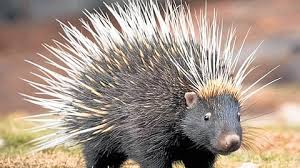
- Classification: Large rodent belonging to the Old World porcupine family (Hystricidae).
- Habitat
- Primarily found on rocky hill sides.
- Also inhabits tropical and temperate scrublands, grasslands, and forests.
- In India, it is widely distributed, including the Himalayan region up to elevations of 2,400 metres.
- Distribution Found across South and Central Asia and parts of the Middle East — India, Nepal, Bhutan, Bangladesh, Sri Lanka, Pakistan, Israel, Iran, and Saudi Arabia.
- Physical Features
- Quills: Long, sharp, black-and-white quills on the back and tail — its primary defence mechanism.
- Cannot “throw” quills, but when alarmed, it launches them backward in a sudden attack.
- Broad feet and hands with long claws adapted for burrowing.
- Nocturnal animal — rests in caves, rock crevices, or self-dug burrows during the day.
- Quills: Long, sharp, black-and-white quills on the back and tail — its primary defence mechanism.
- Diet
- Mostly herbivorous.
- Feeds on fruits, grains, roots, tubers, and other vegetable matter.
- In Kashmir, it has now included saffron corms in its diet, causing direct damage to the crop.
- Lifespan: 18 to 20 years.
- Conservation Status
- IUCN Red List: Least Concern (widely distributed and not currently at risk of extinction).
3. Significance of the Recent Conflict
- Economic Impact: Saffron (Kesar) is one of Kashmir’s most valuable GI-tagged crops and a major source of livelihood. Damage to corms directly reduces yield and quality.
- Emerging Human-Wildlife Conflict: While porcupines are generally not considered major crop raiders, changing agricultural patterns, habitat pressure, and possibly declining natural forage may be driving them towards cultivated fields.
- Ecological Role: As burrowing herbivores, porcupines help in soil aeration but can become pests when they target high-value cash crops.
- Conservation Angle: Being “Least Concern” does not mean they should be persecuted; sustainable management (non-lethal deterrents, habitat management, and awareness) is required.
4. UPSC CSE Relevance
Prelims
- Key terms: Indian Crested Porcupine (Hystrix indica), Hystricidae, Saffron corms, Human-wildlife conflict, Nocturnal burrowing rodent.
- Facts: Found up to 2,400 m in Himalayas; Quills used in backward defence; IUCN — Least Concern; Recently damaging saffron crop in Kashmir.
GS-3 (Environment & Ecology, Agriculture)
- Human-wildlife conflict in India; Impact on high-value cash crops; Biodiversity and agricultural interface; Conservation of “Least Concern” species that turn pests.
GS-1 (Geography)
- Himalayan ecology and agriculture in Kashmir Valley.
Essay / Interview
- “Human-Wildlife Conflict: When ‘Least Concern’ Species Become Agricultural Pests.”
- “Protecting Kashmir’s Saffron Economy: Balancing Livelihoods and Wildlife Conservation.”
- “Changing Foraging Behaviour of Wildlife: Signals of Ecological Stress in the Himalayas.”
MCQs
- Consider the following statements about the Indian Crested Porcupine:
- It belongs to the Old World porcupine family (Hystricidae).
- It can actively throw its quills at predators when threatened.
- It is known to feed on underground corms and tubers. Which of the statements given above is/are correct?
Which of the statements given above is/are correct?
(a) 1 and 2 only
(b) 1 and 3 only
(c) 2 and 3 only
(d) 1, 2 and 3
Answer: (b) 1 and 3 only
- The Indian Crested Porcupine has recently been reported damaging which high-value crop in Kashmir?
(a) Apple
(b) Saffron
(c) Almond
(d) Walnut
Answer: (b) Saffron - What is the IUCN Red List status of the Indian Crested Porcupine?
(a) Endangered
(b) Vulnerable
(c) Least Concern
(d) Critically Endangered
Answer: (c) Least Concern - The Indian Crested Porcupine is primarily:
(a) Carnivorous
(b) Herbivorous
(c) Omnivorous
(d) Insectivorous
Answer: (b) Herbivorous - Up to what elevation is the Indian Crested Porcupine found in the Himalayan region?
(a) 1,000 metres
(b) 1,500 metres
(c) 2,400 metres
(d) 3,500 metres
Answer: (c) 2,400 metres
Mains Questions
- “Human-wildlife conflict is no longer limited to large carnivores but is increasingly involving smaller mammals like the Indian Crested Porcupine.” Discuss the causes and possible management strategies for such conflicts, with special reference to the recent damage to saffron crops in Kashmir. (15 marks / 250 words)
- Examine the ecological role of rodents like the Indian Crested Porcupine and the challenges they pose to high-value agriculture in ecologically sensitive regions like the Himalayas. (10 marks / 150 words)
- “Conservation of ‘Least Concern’ species becomes critical when they start impacting local livelihoods.” Analyse this statement in the context of the Indian Crested Porcupine in Kashmir. (15 marks / 250 words)
Two New Marine Nematode Species Discovered Off Tamil Nadu Coast
1. Why in News?
- Researchers from the Zoological Survey of India (ZSI) have discovered and described two new species of free-living marine nematodes from the coastal waters of Tamil Nadu.
The new species are:
- Corononema dhriti
- Epacanthion indica
- The findings were published in the international journal Zootaxa in early April 2026. This discovery adds to India’s marine biodiversity database and highlights the rich but under-explored meiofauna of the Indian Ocean.
2. About the New Species
1. Corononema dhriti 
- Named in honour of Dr. Dhriti Banerjee, Director of the Zoological Survey of India.
- It is only the fourth known species of the genus Corononema worldwide.
- Previously, the genus was reported only from Australia, Thailand, and Vietnam.
- Found in marine sediments off the Tamil Nadu coast.
2. Epacanthion indica
- Named after India (the country of discovery).
- Distinguished by its complex anatomy, including specialised mandibles and teeth-like structures.
- Unlike most nematodes that feed on microbes, E. indica is a microscopic predator in the benthic (seabed) food web.
- It plays an active role in the marine ecosystem as a carnivore among meiofauna.
3. What are Nematodes?
- Nematodes belong to the phylum Nematoda (commonly called roundworms).
- They are among the most abundant and diverse multicellular animals on Earth.
- They can be:
- Parasitic (in animals and plants)
- Free-living (in soil, freshwater, and marine environments)
Key Features:
-
- Bilaterally symmetrical, elongated, and tapered at both ends.
- Many possess a pseudocoel (fluid-filled body cavity between the gut and body wall).
- Extremely adaptable — found in deserts, swamps, oceans, tropics, Antarctica, and even extreme environments like vinegar, beer malts, and deep crustal cracks.
- Distribution: Reported from every continent, including the deepest ocean trenches and highest mountains.
4. Significance of Marine Nematodes
Marine nematodes (meiofauna) play crucial ecological roles:
- Nutrient Cycling: Break down organic matter and recycle nutrients in the ocean floor.
- Sediment Health: Help maintain the structure and productivity of benthic sediments through burrowing and feeding.
- Bio-indicators: Highly sensitive to environmental changes; used as markers for pollution, climate change impact, and ecosystem health.
- Food Web: Serve as an important link between microbes and larger organisms; predatory species like Epacanthion indica regulate microbial populations.
5. UPSC CSE Relevance
Prelims
- Key terms: Marine nematodes, Meiofauna, Corononema dhriti, Epacanthion indica, Zoological Survey of India (ZSI), Benthic food web, Pseudocoel.
- Facts: Two new species discovered off Tamil Nadu coast (2026); Corononema dhriti — 4th species of its genus globally; Epacanthion indica — predatory nematode with specialised mandibles.
GS-3 (Environment & Ecology, Science & Technology)
- Marine biodiversity; Meiofauna and ecosystem services; Role of ZSI in taxonomic research; Bio-indicators and climate change studies.
GS-1 (Geography)
- Coastal and marine ecosystems of India (Bay of Bengal).
Essay / Interview
- “Hidden Biodiversity: Why Studying Microscopic Organisms like Nematodes Matters for Ecosystem Health.”
- “Taxonomic Research and Conservation: The Unsung Role of Institutions like ZSI in India’s Biodiversity Documentation.”
- “From Micro to Macro: Understanding Marine Food Webs in the Context of Climate Change.”
MCQs
- Consider the following statements regarding the recently discovered marine nematodes:
- Corononema dhriti is named in honour of the Director of the Zoological Survey of India.
- Epacanthion indica is a predatory nematode with specialised mandibles and teeth.
- Both species were discovered from the Andaman Sea. Which of the statements given above is/are correct?
Which of the statements given above is/are correct?
(a) 1 and 2 only
(b) 2 and 3 only
(c) 1 only
(d) 1, 2 and 3
Answer: (a) 1 and 2 only
- Nematodes belong to which phylum?
(a) Annelida
(b) Nematoda
(c) Platyhelminthes
(d) Cnidaria
Answer: (b) Nematoda - Which of the following is NOT a known ecological role of marine nematodes?
(a) Nutrient cycling
(b) Maintaining sediment health
(c) Acting as bio-indicators
(d) Primary producers in the ocean
Answer: (d) Primary producers in the ocean - Corononema dhriti is the ______ known species of its genus worldwide.
(a) Second
(b) Third
(c) Fourth
(d) Fifth
Answer: (c) Fourth - The discovery of the two new nematode species was made by scientists from:
(a) Botanical Survey of India
(b) Zoological Survey of India
(c) Geological Survey of India
(d) National Institute of Oceanography
Answer: (b) Zoological Survey of India
Mains Questions
- “Marine meiofauna such as nematodes play a silent but critical role in maintaining ocean ecosystem health.” Discuss the ecological significance of marine nematodes with reference to the recent discovery of two new species off Tamil Nadu. (15 marks / 250 words)
- Examine the importance of taxonomic research and institutions like the Zoological Survey of India in documenting India’s biodiversity. How do such discoveries contribute to broader conservation efforts? (10 marks / 150 words)
- “Even microscopic organisms can provide vital clues about environmental health and climate change.” Analyse this statement in the context of marine nematodes as bio-indicators. (15 marks / 250 words)
Government e-Marketplace (GeM) Achieves Record ₹18.4 Lakh Crore Cumulative GMV
1. Why in News?
- The Government e-Marketplace (GeM) has achieved a cumulative Gross Merchandise Value (GMV) of ₹18.4 lakh crore, with the platform crossing ₹5 lakh crore GMV in the financial year 2025–26 alone.
- This milestone reflects the rapid growth and deepening penetration of India’s national public procurement portal. GeM has emerged as one of the world’s largest government procurement platforms, significantly transforming public buying processes through digitisation, transparency, and inclusivity.
2. About Government e-Marketplace (GeM)
- Launch: 2016 by the Ministry of Commerce & Industry, Government of India.
- Purpose: A one-stop, national public procurement portal for all Central and State Government Ministries, Departments, Public Sector Undertakings (PSUs), and affiliated organisations.
- Nature: Fully digital, cashless, paperless, and system-driven end-to-end procurement platform.
3. Key Features of GeM
- AI-powered tools for better search, recommendation, and price discovery.
- Multilingual interface and voice-enabled navigation to improve accessibility.
- Learning Management System (LMS) with region-specific training modules, specially designed to onboard sellers from remote and underserved areas.
- Multiple procurement modes:
- Direct Purchase
- Bidding with Reverse e-Auction
- e-Bidding
- Direct Reverse Auction
- Real-time tracking, grievance redressal, and performance rating of sellers.
- Integration with other government platforms (PFMS, GSTN, etc.).
4. Objectives of GeM
- Bring efficiency, transparency, speed, and accountability in public procurement.
- Achieve economies of scale and better price discovery.
- Promote inclusivity by enabling MSMEs, startups, women entrepreneurs, and sellers from remote areas to participate in government procurement.
- Make procurement by government entities mandatory through GeM (as per GFR 2017 and subsequent rules).
- Disseminate best practices and reduce corruption in public buying.
5. Significance of the Milestone
- Scale: ₹18.4 lakh crore cumulative GMV positions GeM among the largest digital public procurement systems globally.
- Savings: The platform has consistently delivered significant cost savings to the government through competitive pricing and reduced intermediaries.
- Inclusivity: Increased participation of MSMEs, women-led enterprises, and sellers from Tier-2/3 cities and rural areas.
- Digital Governance: A shining example of Digital India and Atmanirbhar Bharat in public procurement.
- Economic Impact: Boosts formalisation of economy, supports MSME growth, and strengthens supply chains.
6. UPSC CSE Relevance
Prelims
- Key terms: Government e-Marketplace (GeM), Gross Merchandise Value (GMV), Public Procurement, Reverse e-Auction, Digital India.
- Facts: Launched in 2016; Cumulative GMV ₹18.4 lakh crore (as of 2026); Crossed ₹5 lakh crore in FY 2025–26.
GS-2 (Governance)
- E-governance initiatives; Public procurement reforms; Transparency and accountability in government spending; Role of technology in reducing corruption.
GS-3 (Economy)
- Support to MSMEs; Digital economy; Atmanirbhar Bharat; Public expenditure efficiency.
Essay / Interview
- “GeM: Transforming Public Procurement through Transparency and Technology.”
- “Digital Platforms as Instruments of Good Governance and Economic Inclusion.”
- “From Paper to Platform: The Evolution of Public Procurement in India.”
MCQs
- Consider the following statements about the Government e-Marketplace (GeM):
- It was launched in 2016 by the Ministry of Commerce & Industry.
- It is a mandatory platform for procurement by all Central and State Government entities.
- It has achieved a cumulative GMV of ₹18.4 lakh crore as of 2026. Which of the statements given above is/are correct?
Which of the statements given above is/are correct?
(a) 1 only
(b) 1 and 2 only
(c) 1 and 3 only
(d) 1, 2 and 3
Answer: (d) 1, 2 and 3
-
What does GMV stand for in the context of GeM?
(a) Gross Market Value
(b) Gross Merchandise Value
(c) Government Minimum Value
(d) General Market Volume
Answer: (b) Gross Merchandise Value - Which of the following is NOT a feature of the GeM portal?
(a) Reverse e-Auction
(b) Voice-enabled navigation
(c) Paper-based bidding process
(d) Multilingual Learning Management System
Answer: (c) Paper-based bidding process - GeM primarily aims to achieve:
(a) Privatisation of public sector undertakings
(b) Transparency, efficiency and inclusivity in public procurement
(c) Direct subsidy transfer to farmers
(d) Regulation of cryptocurrency transactions
Answer: (b) Transparency, efficiency and inclusivity in public procurement - GeM falls under the administrative control of:
(a) Ministry of Finance
(b) Ministry of Commerce & Industry
(c) Ministry of Electronics and IT
(d) NITI Aayog
Answer: (b) Ministry of Commerce & Industry
Mains Questions
- “The Government e-Marketplace (GeM) represents a transformative step in public procurement in India.” Discuss the key features, objectives, and achievements of GeM and its contribution to good governance. (15 marks / 250 words)
- Examine how digital platforms like GeM are promoting inclusivity and supporting MSMEs in public procurement. What challenges remain in its wider adoption? (10 marks / 150 words)
- “Technology-driven governance can significantly reduce corruption and improve efficiency.” Analyse this statement with reference to the growth and impact of the Government e-Marketplace (GeM). (15 marks / 250 words)
- Essay (250 marks) “From Red Tape to Digital Efficiency: The Role of Platforms like GeM in Reforming Public Procurement in India.”
Guru Tegh Bahadur: Prime Minister Pays Homage on Parkash Purab
1. Why in News?
- On the sacred occasion of Parkash Purab (birth anniversary) of Sri Guru Tegh Bahadur Ji, the ninth Sikh Guru, Prime Minister Narendra Modi offered homage and paid tributes to the spiritual leader.
- PM Modi described Guru Tegh Bahadur as a “towering spiritual great of our civilization” and highlighted his unparalleled sacrifice for the protection of faith, dignity, and religious freedom. The occasion is observed with deep reverence across the Sikh community and serves as an annual reminder of Guru Ji’s message of courage, compassion, and resistance against religious persecution.
2. About Guru Tegh Bahadur (1621–1675)
- Ninth Sikh Guru: He was the ninth of the ten Sikh Gurus.
- Birth Name: Tyaga Mal.
- Title “Tegh Bahadur”: Given by his father, Guru Hargobind, after he displayed exceptional valour in battles against the Mughals. “Tegh” means sword and “Bahadur” means brave/mighty.
- Guruship: In 1664, he succeeded Guru Har Krishan (eighth Guru) as the ninth Sikh Guru.
- Honorific Title: Revered as ‘Hind Di Chadar’ (Shield of India) for sacrificing his life to protect the religious freedom of Hindus (Kashmiri Pandits) from forced conversion under Mughal Emperor Aurangzeb.
3. Life and Major Contributions
- Warrior-Saint Tradition: He continued and strengthened the concept of Saint-Soldier (Sant-Sipahi) introduced by Guru Hargobind. He raised an army and resisted Mughal oppression while emphasising spiritual values.
- Founder of Anandpur Sahib: He established the city of Anandpur Sahib (in present-day Rupnagar/Ropar district, Punjab) on the foothills of the Shivalik Hills near the Sutlej River.
- This holy city later became the residence of the last two Sikh Gurus.
- In 1699, Guru Gobind Singh founded the Khalsa Panth here.
- Literary Contribution:
- Composed more than 100 poetic hymns (shabads) that are included in the Guru Granth Sahib.
- His compositions cover profound themes such as the nature of God, human attachments, body and mind, dignity, service, and detachment.
- Martyrdom (Shaheedi):
- Guru Tegh Bahadur was martyred on 24 November 1675 in Delhi on the orders of Aurangzeb for refusing to convert to Islam and for defending the right of Kashmiri Pandits to practise their faith.
- His martyrdom is annually observed as Shaheedi Divas on 24 November (as per the Nanakshahi calendar).
- His sacrifice is seen as one of the greatest acts of religious tolerance and courage in Indian history.
4. Significance
- Symbol of religious freedom, sacrifice, and inter-faith harmony.
- His life and martyrdom inspired Guru Gobind Singh to create the Khalsa and further militarise the Sikh community for self-defence.
- Continues to be a source of moral and spiritual strength for millions, emphasising that one should stand for justice and the rights of others even at the cost of one’s life.
5. UPSC CSE Relevance
Prelims
- Key terms: Guru Tegh Bahadur, Ninth Sikh Guru, Hind Di Chadar, Anandpur Sahib, Shaheedi Divas, Parkash Purab, Khalsa Panth.
- Facts: Born as Tyaga Mal; Title given by Guru Hargobind; Martyred 24 November 1675; Composed over 100 hymns in Guru Granth Sahib; Established Anandpur Sahib.
GS-1 (History & Indian Culture)
- Sikhism and the Sikh Gurus; Religious tolerance and martyrdom in Indian history; Contribution to composite culture.
GS-2 (Polity & Governance)
- Secularism and protection of religious freedom in the Indian Constitution.
Essay / Interview
- “Guru Tegh Bahadur: The Shield of India and the Eternal Message of Courage and Compassion.”
- “Martyrdom as the Ultimate Expression of Religious Tolerance in Indian Tradition.”
- “The Role of Sikh Gurus in Shaping India’s Pluralistic Ethos.”
MCQs
-
Consider the following statements about Guru Tegh Bahadur:
- He was the ninth Sikh Guru and is known as ‘Hind Di Chadar’.
- He founded the city of Anandpur Sahib.
- His martyrdom is observed on 24 November as Shaheedi Divas.
Which of the statements given above is/are correct?
(a) 1 only
(b) 1 and 2 only
(c) 1 and 3 only
(d) 1, 2 and 3
Answer: (d) 1, 2 and 3
2. Guru Tegh Bahadur was the son of which Sikh Guru?
(a) Guru Arjan Dev
(b) Guru Hargobind
(c) Guru Har Rai
(d) Guru Har Krishan
Answer: (b) Guru Hargobind
3. The title ‘Tegh Bahadur’ was given to him by:
(a) Guru Har Krishan
(b) Guru Gobind Singh
(c) Guru Hargobind
(d) Guru Nanak
Answer: (c) Guru Hargobind
4. Guru Tegh Bahadur’s compositions are included in:
(a) Dasam Granth
(b) Guru Granth Sahib
(c) Sarbloh Granth
(d) Only oral tradition
Answer: (b) Guru Granth Sahib
5. In which modern district of Punjab is Anandpur Sahib located?
(a) Amritsar
(b) Rupnagar (Ropar)
(c) Patiala
(d) Jalandhar
Answer: (b) Rupnagar (Ropar)
Mains Questions
- “Guru Tegh Bahadur’s martyrdom remains one of the most powerful symbols of religious tolerance and courage in Indian history.” Discuss the life, contributions, and enduring legacy of Guru Tegh Bahadur Ji. (15 marks / 250 words)
- Examine the role of Sikh Gurus in shaping the values of courage, sacrifice, and inter-faith harmony in India. Illustrate your answer with the example of Guru Tegh Bahadur. (10 marks / 150 words)
- “The sacrifice of Guru Tegh Bahadur for the protection of Kashmiri Pandits reflects the spirit of India’s composite culture.” Comment. (15 marks / 250 words)
EU Parliament Adds PFAS (“Forever Chemicals”) to Water Pollution Standards
1. Why in News?
- The European Union Parliament has approved updated EU water pollution standards and included Per- and Polyfluoroalkyl Substances (PFAS) — popularly known as “Forever Chemicals” — in the list of pollutants that must be monitored and regulated in water bodies.
- This move marks a significant step in global efforts to control these highly persistent and toxic chemicals. The decision comes amid growing scientific evidence of their widespread presence in the environment and their harmful effects on human health and ecosystems.
2. About Per- and Polyfluoroalkyl Substances (PFAS)
- Nature: A large family of man-made, synthetic chemicals (over 4,700 compounds).
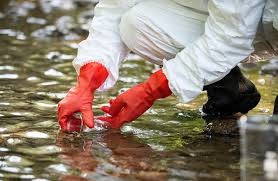
- Key Characteristic: Contain strong carbon-fluorine bonds, one of the strongest in organic chemistry. Because of this, PFAS do not break down easily in the environment — hence called “Forever Chemicals”.
Subgroups:
-
- Perfluorooctane sulfonic acid (PFOS)
- Perfluorooctanoic acid (PFOA) Both are listed as Persistent Organic Pollutants (POPs) under the Stockholm Convention.
Common Uses:
-
- Non-stick cookware (Teflon)
- Stain-resistant fabrics and carpets
- Water-repellent clothing
- Food packaging (grease-proof paper)
- Firefighting foams
- Aerospace, automotive, construction, and electronics industries
3. How People Are Exposed to PFAS
- Drinking contaminated water (most common route).
- Eating food packaged in PFAS-containing materials or grown in contaminated soil.
- Using products treated with PFAS (cookware, textiles, cosmetics).
- Breathing air near industrial sites or landfills where PFAS are released.
PFAS can accumulate in the human body over time (bioaccumulation) and persist for years.
4. Health Impacts of PFAS
Scientific studies have linked PFAS exposure to multiple adverse effects:
- Decreased fertility and pregnancy complications
- Developmental delays and low birth weight in children
- Hormonal (endocrine) disruption
- Increased cholesterol levels
- Weakened immune system
- Higher risk of certain cancers (kidney, testicular)
- Liver damage
5. Environmental Concerns
- Extremely persistent in soil, water, and air.
- Can travel long distances through water cycles.
- Harmful to aquatic life and wildlife.
- Difficult and expensive to remove from contaminated sites (remediation challenge).
6. Global and Indian Regulation
- Stockholm Convention: PFOS and PFOA are already listed as POPs, restricting their production and use.
- European Union: The recent approval strengthens monitoring and sets stricter limits in drinking water and surface water.
- India: Currently, there is no comprehensive national regulation specifically targeting all PFAS. Some restrictions exist under the Environment Protection Act, but monitoring and bans remain limited. The EU move is likely to push India towards stronger domestic regulations in the coming years.
7. UPSC CSE Relevance
Prelims
- Key terms: PFAS, “Forever Chemicals”, Perfluorooctane sulfonic acid (PFOS), Perfluorooctanoic acid (PFOA), Stockholm Convention, Persistent Organic Pollutants (POPs).
- Facts: EU Parliament added PFAS to water pollution standards (2026); Over 4,700 compounds; Highly persistent due to strong C-F bond.
GS-3 (Environment & Ecology)
- Chemical pollution; Persistent Organic Pollutants; Environmental health; International environmental agreements (Stockholm Convention); Emerging contaminants.
GS-2 (International Relations)
- Global environmental governance; EU environmental standards and their influence on India.
Essay / Interview
- “Forever Chemicals: The Hidden Environmental and Health Crisis of the 21st Century.”
- “Need for Stronger Regulation of Emerging Contaminants like PFAS in India.”
- “Balancing Industrial Development with Environmental and Public Health Safety.”
MCQs
-
Consider the following statements about Per- and Polyfluoroalkyl Substances (PFAS):
- They are known as “Forever Chemicals” because they do not degrade easily in the environment.
- PFOS and PFOA are listed as Persistent Organic Pollutants under the Stockholm Convention.
- They are naturally occurring chemicals found only in industrial waste.
Which of the statements given above is/are correct?
(a) 1 and 2 only
(b) 2 and 3 only
(c) 1 only
(d) 1, 2 and 3
Answer: (a) 1 and 2 only
2. Recently, which organisation added PFAS to its updated water pollution standards?
(a) United Nations Environment Programme
(b) European Union Parliament
(c) World Health Organization
(d) Central Pollution Control Board (India)
Answer: (b) European Union Parliament
3. Which of the following is a common use of PFAS?
(a) Fertiliser manufacturing
(b) Non-stick cookware and stain-resistant fabrics
(c) Pesticide production
(d) Antibiotic synthesis
Answer: (b) Non-stick cookware and stain-resistant fabrics
4. Exposure to PFAS is most commonly linked to which health effect?
(a) Improved immunity
(b) Hormonal disruption and increased cancer risk
(c) Enhanced fertility
(d) Reduced cholesterol levels
Answer: (b) Hormonal disruption and increased cancer risk
5. The strong carbon-fluorine bond in PFAS makes them:
(a) Highly biodegradable
(b) Extremely persistent in the environment
(c) Water-soluble only
(d) Non-toxic to humans
Answer: (b) Extremely persistent in the environment
Mains Questions
- “PFAS, or ‘Forever Chemicals’, represent a serious and growing threat to environmental and human health.” Discuss the sources, persistence, health impacts, and regulatory challenges associated with PFAS. (15 marks / 250 words)
- Examine the significance of the recent EU decision to include PFAS in water pollution standards. What steps should India take to address the risks posed by these emerging contaminants? (10 marks / 150 words)
- “Regulation of Persistent Organic Pollutants is essential for achieving the goals of sustainable development.” Analyse this statement in the context of PFAS and the Stockholm Convention. (15 marks / 250 words)
First-Ever Annual Survey of Incorporated Services Sector Enterprises (ASISSE) Launched by NSO
1. Why in News?
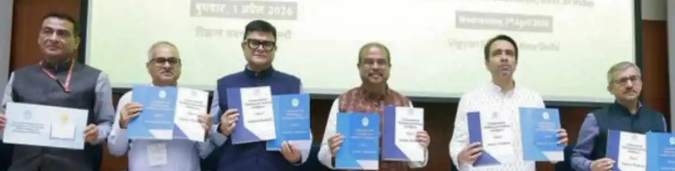
- The National Statistical Office (NSO), under the Ministry of Statistics and Programme Implementation (MoSPI), has launched the first-ever Annual Survey of Incorporated Services Sector Enterprises (ASISSE).
- This is a landmark initiative aimed at filling a critical data gap in India’s services sector by creating a comprehensive, reliable database of incorporated (corporate) entities in services. The survey will cover over 1.21 lakh enterprises and is expected to significantly improve the quality of economic statistics, especially for the services sector which contributes around 55% to India’s GDP.
2. About Annual Survey of Incorporated Services Sector Enterprises (ASISSE)
- Full Form: Annual Survey of Incorporated Services Sector Enterprises
- Launched by: National Statistical Office (NSO), Ministry of Statistics and Programme Implementation (MoSPI)
- Objective: To develop a robust, annual database on the performance, structure, and contribution of incorporated enterprises in the services sector.
- Sampling Frame: Uses the Goods and Services Tax Network (GSTN) database for selecting units.
Coverage:
-
- Corporate entities registered under the Companies Act, 1956/2013 or the Limited Liability Partnership (LLP) Act, 2008.
- Focuses exclusively on the services sector (excluding manufacturing, mining, etc.).
- Scale: One of the largest surveys of its kind — will cover more than 1.21 lakh enterprises.
- Legal Backing: Conducted under the Collection of Statistics Act, 2008 (as amended in 2017) and the Jan Vishwas (Amendment of Provisions) Act, 2023.
3. Significance of ASISSE
- Addressing Data Gaps: The services sector lacks detailed annual corporate-level data compared to the Annual Survey of Industries (ASI) for the manufacturing sector. ASISSE will bridge this gap.
- Better GDP Estimation: Will improve accuracy in estimating Gross Value Added (GVA) and Gross Domestic Product (GDP) from the services sector.
- Evidence-Based Policymaking: Provide reliable inputs for policy formulation in areas such as trade in services, employment, investment, and sectoral reforms.
- Support to Atmanirbhar Bharat: Help monitor the performance of India’s services economy, which includes IT-ITeS, tourism, hospitality, transport, finance, education, health, and professional services.
- Digital Integration: Use of GSTN data reflects the deepening of digital statistical systems in India.
4. About National Statistical Office (NSO)
- Formation: Established in 2019 by merging the Central Statistics Office (CSO) and the National Sample Survey Office (NSSO) to improve coordination and efficiency.
- Role: Apex body responsible for collecting, processing, and disseminating official statistical data in India.
- Functions:
- Conducts major surveys (NSS, ASI, ASISSE, etc.).
- Releases key macroeconomic indicators (GDP, IIP, CPI, WPI, etc.).
- Supports evidence-based policymaking and planning.
- Leadership: Headed by the Chief Statistician of India (CSI).
- Parent Ministry: Ministry of Statistics and Programme Implementation (MoSPI).
5. UPSC CSE Relevance
Prelims
- Key terms: ASISSE, National Statistical Office (NSO), GSTN database, Collection of Statistics Act 2008, Services Sector GDP, Jan Vishwas Act.
- Facts: Launched in 2026; Covers over 1.21 lakh incorporated services enterprises; First dedicated annual survey for corporate services sector.
GS-3 (Economy)
- Services sector in Indian economy; Statistical reforms; Data-driven policymaking; GDP estimation methodology.
GS-2 (Governance)
- Role of NSO/MoSPI; Institutional reforms in statistical system; Use of digital platforms (GSTN) for official statistics.
Essay / Interview
- “Reliable Data is the Foundation of Good Governance: The Role of Statistical Reforms in India.”
- “Services Sector: The Growth Engine of India – Need for Robust Data Infrastructure.”
- “From ASI to ASISSE: Strengthening Statistical Systems for a $5 Trillion Economy.”
MCQs
-
Consider the following statements about the Annual Survey of Incorporated Services Sector Enterprises (ASISSE):
- It is the first dedicated annual survey for the incorporated services sector in India.
- It uses the GSTN database as its sampling frame.
- It covers both manufacturing and services sector enterprises.
Which of the statements given above is/are correct?
(a) 1 and 2 only
(b) 2 and 3 only
(c) 1 only
(d) 1, 2 and 3
Answer: (a) 1 and 2 only
2. ASISSE has been launched by:
(a) NITI Aayog
(b) National Statistical Office (NSO)
(c) Ministry of Commerce & Industry
(d) Reserve Bank of India
Answer: (b) National Statistical Office (NSO)
3. Which of the following Acts provides the legal backing for conducting ASISSE?
(a) Right to Information Act
(b) Collection of Statistics Act, 2008 (as amended)
(c) Companies Act, 2013
(d) Fiscal Responsibility and Budget Management Act
Answer: (b) Collection of Statistics Act, 2008 (as amended)
4. The National Statistical Office (NSO) was formed in 2019 by merging:
(a) CSO and NSSO
(b) CSO and RBI Statistical Wing
(c) NSSO and Ministry of Corporate Affairs
(d) NITI Aayog and MoSPI
Answer: (a) CSO and NSSO
5. The services sector contributes approximately what percentage to India’s GDP?
(a) Around 30%
(b) Around 40%
(c) Around 55%
(d) Around 70%
Answer: (c) Around 55%
Mains Questions
- “Reliable and timely statistical data is the backbone of effective economic policymaking.” Discuss the significance of the newly launched Annual Survey of Incorporated Services Sector Enterprises (ASISSE) in strengthening India’s statistical system. (15 marks / 250 words)
- Examine the importance of the services sector in India’s economy and the challenges in capturing its performance through official statistics. How will ASISSE help address these challenges? (10 marks / 150 words)
- “Digital integration in statistical systems can transform governance.” Analyse this statement with reference to the use of GSTN database in ASISSE and other recent initiatives of the National Statistical Office. (15 marks / 250 words)
Ministry Releases Draft Rules for Management of Tar Balls to Protect Coastline and Marine Environment
1. Why in News?
- The Ministry of Environment, Forest and Climate Change (MoEFCC) has released draft rules for the management of Tar Balls to mitigate their adverse impact on India’s coastline and marine ecosystem.
- Tar balls, which frequently wash ashore on India’s western coast (especially from Gujarat to Goa) between April and September, have become a recurring environmental problem.
- The new draft guidelines aim to establish a systematic framework for collection, treatment, disposal, and monitoring of tar balls arising from oil spills or natural seeps.
2. About Tar Balls
- Definition: Tar balls are small, dark, sticky blobs or lumps of weathered crude oil that form in the marine environment.
- Size: Range from small globules to balls as large as a basketball.
- Formation Process: When crude oil is spilled or seeps naturally into the sea, it undergoes weathering — a combination of physical (evaporation, wave action), chemical (oxidation), and biological (microbial degradation) processes. Over time, the lighter fractions evaporate or dissolve, leaving behind heavy, semi-solid or solid sticky masses known as tar balls. These are then transported by sea currents and waves and eventually wash ashore on beaches.
- Composition: Contain toxic contaminants such as heavy metals, trace elements, and persistent organic pollutants (POPs). They are highly resistant to natural degradation.
3. Impacts of Tar Balls
- On Marine Biodiversity:
- Pose serious threat to seabirds, fish, marine mammals, and sea turtles.

- Animals often mistake tar balls for food and ingest them, leading to poisoning, digestive blockage, and death.
- They can smother coral reefs and intertidal organisms.
- Pose serious threat to seabirds, fish, marine mammals, and sea turtles.
- On Coastal Ecosystem and Human Health:
- Accumulate on beaches, making them unusable for tourism and fishing.
- Toxic compounds can enter the food chain and affect human health through contaminated seafood or direct skin contact.
- Cause aesthetic degradation and foul odour on tourist beaches.
- Geographical Impact in India: India’s western coast, particularly the stretch from Gujarat to Goa, is most severely affected. The problem intensifies during the pre-monsoon and monsoon months (April to September) due to ocean currents and wave patterns.
4. Significance of the Draft Rules
- First dedicated regulatory framework for tar ball management in India.
- Aims to ensure timely collection, safe disposal, and scientific monitoring of tar balls.
- Expected to reduce long-term ecological damage and protect coastal livelihoods dependent on tourism and fisheries.
- Aligns with India’s commitments under the UN Convention on the Law of the Sea (UNCLOS) and MARPOL (International Convention for the Prevention of Pollution from Ships).
5. UPSC CSE Relevance
Prelims
- Key terms: Tar Balls, Weathering of crude oil, Persistent Organic Pollutants (POPs), MoEFCC Draft Rules on Tar Balls.
- Facts: Frequently affect western coast (Gujarat to Goa) during April–September; Contain heavy metals and toxic contaminants; Draft rules released in 2026.
GS-3 (Environment & Ecology)
- Marine pollution; Oil spill management; Coastal ecosystem protection; Human-wildlife conflict and biodiversity loss; Environmental regulations in India.
GS-1 (Geography)
- Coastal geography of India; Ocean currents and their impact on pollution distribution.
Essay / Interview
- “Marine Pollution and Coastal Vulnerability: Need for Integrated Management of Emerging Threats like Tar Balls.”
- “Balancing Economic Development with Marine Environmental Protection in India.”
- “From Oil Spills to Tar Balls: The Long-term Ecological Cost of Fossil Fuel Dependence.”
MCQs
-
Consider the following statements about Tar Balls:
- They are formed by the weathering of crude oil in marine environments.
- They contain toxic heavy metals and persistent organic pollutants.
- They primarily affect India’s eastern coast throughout the year.
Which of the statements given above is/are correct?
(a) 1 and 2 only
(b) 2 and 3 only
(c) 1 only
(d) 1, 2 and 3
Answer: (a) 1 and 2 only
2. Tar Balls are most commonly reported on which part of India’s coastline?
(a) Eastern coast (Bay of Bengal)
(b) Western coast from Gujarat to Goa
(c) Andaman and Nicobar Islands
(d) Lakshadweep Islands
Answer: (b) Western coast from Gujarat to Goa
3. The draft rules for management of Tar Balls have been released by:
(a) Ministry of Petroleum and Natural Gas
(b) Ministry of Environment, Forest and Climate Change
(c) Ministry of Earth Sciences
(d) National Disaster Management Authority
Answer: (b) Ministry of Environment, Forest and Climate Change
4. Which of the following is NOT a major impact of Tar Balls on marine life?
(a) Ingestion by sea turtles mistaking them for food
(b) Smothering of intertidal organisms
(c) Increase in dissolved oxygen levels in seawater
(d) Poisoning of seabirds
Answer: (c) Increase in dissolved oxygen levels in seawater
5. Tar Balls are best described as:
(a) Biodegradable plastic waste
(b) Weathered lumps of crude oil
(c) Volcanic rock formations
(d) Algal blooms
Answer: (b) Weathered lumps of crude oil
Mains Questions
- “Tar Balls represent a persistent and under-regulated form of marine pollution along India’s western coast.” Discuss the formation, environmental impacts, and the need for dedicated management guidelines for tar balls. (15 marks / 250 words)
- Examine the challenges of coastal pollution in India and evaluate the significance of the recent draft rules released by the Ministry of Environment for tar ball management. (10 marks / 150 words)
- “Marine ecosystems are increasingly threatened by both point and non-point sources of pollution.” Analyse this statement with special reference to the problem of tar balls on India’s coastline. (15 marks / 250 words)
CBSE Launches Computational Thinking & AI Curriculum for Classes 3–8: Concerns Over Foundational Literacy Gaps
1. Why in News?
- On 1 April 2026, the Central Board of Secondary Education (CBSE), in alignment with the National Education Policy (NEP) 2020, introduced a new curriculum on Computational Thinking (CT) and Artificial Intelligence (AI) for students of Classes 3 to 8.
- The curriculum aims to develop logical reasoning, problem-solving, pattern recognition, and early exposure to AI in daily life. It will be implemented from the 2026–27 academic session. While the initiative is widely welcomed as a forward-looking step towards future-ready education, experts have raised serious concerns about its timing and sequencing, given the persistent foundational learning deficits (especially in LSRW skills) among Indian schoolchildren.
2. About the CBSE Computational Thinking & AI Curriculum
- Target Group: Classes 3 to 8 (foundational and preparatory stages as per NEP).
- Core Focus:
- Building Computational Thinking skills (logical reasoning, decomposition, pattern recognition, abstraction, and algorithm design).
- Introducing basic concepts of Artificial Intelligence and its applications in everyday life.
- Approach: Integrated across subjects rather than a standalone subject; activity-based, experiential, and ethical AI learning.
- Delivery: Embedded in textbooks through puzzles, pattern exercises, problem-solving tasks, group activities, and reflective assignments.
- Assessment: Written tests, project presentations, reflective journals, teacher observations, and group work.
3. The Critical Concern: Weak Foundational LSRW Skills
LSRW Skills (Listening, Speaking, Reading, Writing) form the cognitive foundation for all learning, including Computational Thinking and AI.
- The CT curriculum is heavily language-dependent — students must read, comprehend, interpret instructions, and express ideas clearly.
- Many activities and assessments assume grade-level reading and comprehension abilities.
- Students struggling with basic reading will face the curriculum as a reading/comprehension challenge rather than a thinking exercise.
Evidence from Recent Data:
- ASER 2024 Report: More than half of Class 5 students in government schools cannot read a Class 2-level text. This benchmark has shown little improvement since 2006.
- PARAKH 2024 National Assessment (covering 23 lakh students):
- Urban private school students performed worse than rural counterparts at Grade 3 level in some parameters.
- Significant foundational learning gaps exist across school types (government, private, urban, rural).
4. Policy Context and Sequencing Issue
- NIPUN Bharat Mission (launched 2021): Aimed to achieve Foundational Literacy and Numeracy (FLN) for every child by the end of Class 3 by 2026–27.
- The CBSE CT & AI curriculum is being rolled out in the same year (2026–27) when the NIPUN Bharat target was supposed to be fully achieved.
- Global best practices (Finland, Singapore, South Korea) introduced AI education only after achieving strong foundational literacy and numeracy.
Risk Highlighted: Introducing higher-order cognitive skills (CT & AI) without fixing basic literacy gaps may lead to early learning breakdowns, widened inequality, and superficial implementation.
5. Significance and Challenges
Positive Aspects:
- Aligns with NEP 2020’s emphasis on 21st-century skills.
- Prepares students for an AI-driven future.
- Promotes activity-based and ethical learning.
Major Challenges:
- Persistent foundational learning crisis (ASER & PARAKH data).
- Heavy dependence on strong LSRW skills for effective delivery.
- Risk of assessment measuring literacy gaps instead of computational thinking ability.
- Uneven readiness across government, private, urban, and rural schools.
6. UPSC CSE Relevance
Prelims
- Key terms: Computational Thinking (CT), Artificial Intelligence in School Curriculum, NIPUN Bharat Mission, ASER 2024, PARAKH Assessment, LSRW Skills, NEP 2020.
- Facts: CBSE CT & AI curriculum launched for Classes 3–8 on 1 April 2026; To be implemented from 2026–27 session.
GS-2 (Governance, Education)
- Education policy implementation; Foundational Literacy and Numeracy; NEP 2020; Quality of school education; Digital/AI education initiatives.
GS-3 (Science & Technology)
- Artificial Intelligence and future skills; Preparing workforce for AI era.
Essay / Interview
- “Strong Foundational Literacy is Prerequisite for 21st-Century Skills like Computational Thinking and AI.”
- “The Sequencing Challenge in Education Reforms: Literacy Before Technology?”
- “Bridging the Learning Deficit: Can India Achieve Both Foundational Skills and Future-Ready Education Simultaneously?”
MCQs (Prelims Standard)
-
Consider the following statements about the CBSE Computational Thinking & AI Curriculum:
- It has been introduced for students of Classes 3 to 8.
- It will be implemented from the 2026–27 academic session.
- It is a standalone compulsory subject replacing existing curriculum.
Which of the statements given above is/are correct?
(a) 1 and 2 only
(b) 2 and 3 only
(c) 1 only
(d) 1, 2 and 3
Answer: (a) 1 and 2 only
2. Which mission aims to achieve Foundational Literacy and Numeracy by the end of Class 3?
(a) Samagra Shiksha Abhiyan
(b) NIPUN Bharat Mission
(c) Beti Bachao Beti Padhao
(d) PM SHRI Scheme
Answer: (b) NIPUN Bharat Mission
3. According to ASER 2024, what percentage of Class 5 students in government schools struggle with reading a Class 2-level text?
(a) Less than 20%
(b) More than 50%
(c) Around 30%
(d) Nearly 80%
Answer: (b) More than 50%
4. Computational Thinking primarily involves skills such as:
(a) Memorisation and rote learning
(b) Logical reasoning, pattern recognition, and problem-solving
(c) Artistic expression and creativity only
(d) Physical education and sports
Answer: (b) Logical reasoning, pattern recognition, and problem-solving
5. The CBSE CT & AI curriculum is integrated:
(a) As a separate board exam subject
(b) Across existing subjects rather than as a standalone discipline
(c) Only for Classes 9–12
(d) Exclusively through online platforms
Answer: (b) Across existing subjects rather than as a standalone discipline
Mains Questions
- “Introducing Computational Thinking and AI education is essential for preparing students for the future, but it must be built on strong foundational literacy.” Critically examine the CBSE’s new curriculum in light of recent learning outcome surveys like ASER 2024 and PARAKH 2024. (15 marks / 250 words)
- Discuss the challenges of implementing 21st-century skills curricula in Indian schools when foundational learning deficits persist. Suggest measures to ensure effective sequencing of education reforms. (15 marks / 250 words)
- “Foundational Literacy and Numeracy remain the biggest unfinished agenda of Indian education despite multiple policy initiatives.” Analyse this statement with reference to the launch of the CBSE Computational Thinking curriculum. (10 marks / 150 words)
Understanding India’s Internet Censorship Regime
1. Why in News?
- A recent comprehensive study analysing 294 million domains across six major Indian ISPs in 2025 revealed significant inconsistencies and opacity in website blocking practices. Only 1,414 domains were uniformly blocked by all six ISPs, despite government orders.
- The study highlights how website blocking in India — governed primarily by Section 69A of the IT Act, 2000 — remains arbitrary, non-transparent, and unevenly implemented. This has reignited debates on the balance between national security/public order and the fundamental right to freedom of speech and expression online (Article 19(1)(a)).
2. Constitutional and Legal Framework
Constitutional Basis: 
-
- Article 19(1)(a): Guarantees freedom of speech and expression, which includes the right to access and disseminate information online.
- Article 19(2): Permits “reasonable restrictions” on grounds of sovereignty and integrity of India, security of the State, public order, decency, morality, etc.
- Any restriction must pass the test of reasonableness and proportionality (as laid down in various Supreme Court judgments).
Key Legal Provisions:
-
- Section 69A of the IT Act, 2000: Empowers the Central Government to direct intermediaries (ISPs) to block access to any information or website in the interest of sovereignty, security, public order, or friendly relations with foreign states.
- Section 79: Provides “safe harbour” protection to intermediaries, but this is conditional on compliance with government orders.
- IT (Intermediary Guidelines and Digital Media Ethics Code) Rules, 2021: Impose obligations on significant social media intermediaries, including appointment of grievance officers and traceability requirements (challenged for threatening end-to-end encryption).
- Telecom Act, 2023: Consolidates powers relating to suspension of telecom services, including internet shutdowns.
3. How ISPs Implement Blocking
ISPs primarily use DNS-level blocking (DNS poisoning), which is cheap and easy:
- When a user tries to access a blocked domain, the ISP’s DNS server returns an incorrect or null IP address instead of the real one.
- This method does not require deep packet inspection and is the most common practice in India.
Other technical methods (less common due to cost):
- IP blocking
- URL filtering
- DPI (Deep Packet Inspection)
4. What the Data Reveals: Inconsistent & Opaque Blocking
- A 2025 study of 294 million domains across six major ISPs found 43,083 blocked domains.
- Only 1,414 domains were blocked by all six ISPs — showing lack of uniformity.
- Majority of blocks: Piracy sites, peer-to-peer sharing, pornography, and gambling.
- Higher consistency: Domains related to terrorism, militancy, and sensitive political content (e.g., Weibo, The Kashmir Walla).
- Key Issues:
- Arbitrary implementation without standard guidelines.
- Lack of transparency — blocking orders are usually confidential.
- No public disclosure of blocked domains (except in highly sensitive cases).
5. Types of Internet Censorship in India
- Website & URL Blocking (most common under Section 69A).
- Internet Shutdowns (frequent in J&K, Manipur, and during protests).
- Social Media Content Takedowns.
- App Bans (e.g., TikTok, PUBG Mobile in 2020 on national security grounds).
6. Significance and Concerns
- Positive: Enables swift action against fake news, hate speech, terrorism-related content, and piracy.
- Concerns:
- Overbroad and vague orders leading to collateral censorship.
- Chilling effect on free speech.
- Lack of judicial oversight and transparency.
- Inconsistent enforcement across ISPs creates a fragmented internet experience.
- Potential misuse for political or ideological suppression.
7. UPSC CSE Relevance
Prelims
- Key terms: Section 69A IT Act, Internet Censorship, DNS Blocking, Safe Harbour (Section 79), Telecom Act 2023, IT Rules 2021.
- Facts: Study of 294 million domains (2025) found only 1,414 domains blocked uniformly by all six ISPs.
GS-2 (Polity & Governance)
- Freedom of speech and expression vs reasonable restrictions; Digital governance; Transparency and accountability in executive actions.
GS-3 (Science & Technology)
- Internet regulation; Cybersecurity and national security; Impact of technology on fundamental rights.
Essay / Interview
- “Internet Censorship in India: Striking a Balance Between National Security and Freedom of Expression.”
- “Opacity and Inconsistency in Digital Regulation: Challenges to Rule of Law in the Internet Age.”
- “Does India Need a Comprehensive Digital Freedom and Accountability Framework?”
MCQs
-
Consider the following statements regarding internet censorship in India:
- Section 69A of the IT Act, 2000 empowers the government to direct blocking of websites.
- DNS-level blocking is the most commonly used method by Indian ISPs.
- All blocked domains are uniformly implemented across every ISP.
Which of the statements given above is/are correct?
(a) 1 and 2 only
(b) 2 and 3 only
(c) 1 only
(d) 1, 2 and 3
Answer: (a) 1 and 2 only
2. Which Article of the Indian Constitution guarantees freedom of speech and expression, including online speech?
(a) Article 14
(b) Article 19(1)(a)
(c) Article 21
(d) Article 32
Answer: (b) Article 19(1)(a)
3. A 2025 study analysing 294 million domains found how many domains were blocked by all six major Indian ISPs?
(a) 43,083
(b) 1,414
(c) 294,000
(d) 10,000
Answer: (b) 1,414
4. Which of the following is NOT a common ground for blocking content under Section 69A?
(a) Sovereignty and integrity of India
(b) Public order
(c) Promotion of international trade
(d) Friendly relations with foreign states
Answer: (c) Promotion of international trade
5. The “safe harbour” protection for intermediaries is provided under which section of the IT Act?
(a) Section 66A
(b) Section 69A
(c) Section 79
(d) Section 80
Answer: (c) Section 79
Mains Questions
- “Internet censorship in India, while necessary for national security, suffers from opacity, inconsistency, and lack of proportionality.” Critically examine the legal framework and implementation challenges of website blocking under Section 69A of the IT Act. (15 marks / 250 words)
- Discuss the tension between freedom of speech and expression (Article 19(1)(a)) and reasonable restrictions (Article 19(2)) in the context of digital censorship in India. Suggest reforms for a more transparent regime. (15 marks / 250 words)
- “Inconsistent implementation of blocking orders by ISPs undermines the rule of law in the digital space.” Analyse this statement with reference to recent studies on website blocking practices in India. (10 marks / 150 words)
Prototype Fast Breeder Reactor (PFBR) at Kalpakkam Achieves Criticality
1. Why in News?
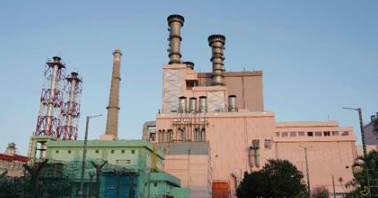
- India’s 500 MWe Prototype Fast Breeder Reactor (PFBR) at the Indira Gandhi Centre for Atomic Research (IGCAR), Kalpakkam, Tamil Nadu, has achieved criticality — a major milestone in the country’s nuclear power programme.
- The reactor, operated by Bharatiya Nabhikiya Vidyut Nigam Limited (BHAVINI), a public sector enterprise under the Department of Atomic Energy (DAE), has initiated a self-sustaining nuclear fission chain reaction.
- This marks India’s entry into the second stage of its three-stage nuclear programme and places the country among a select group of nations with operational fast breeder reactor technology (Russia being the only other nation with commercial-scale FBRs).
2. About Fast Breeder Reactor (FBR)
- Definition: A Fast Breeder Reactor is a nuclear reactor that generates more fissile material than it consumes.
- Working Principle:
- Uses fast neutrons (unlike conventional reactors that use slow/thermal neutrons).
- Fuel: Mixed Oxide (MOX) fuel containing Plutonium-239 and Uranium-238.
- During operation, fertile Uranium-238 absorbs neutrons and is converted into fissile Plutonium-239 — the “breeding” process.
- Key Advantage: Highly efficient use of fuel and significant reduction in nuclear waste.
3. India’s Three-Stage Nuclear Programme
- Stage 1: Pressurised Heavy Water Reactors (PHWRs) using natural uranium → produces Plutonium-239 as by-product.
- Stage 2: Fast Breeder Reactors (like PFBR) using Plutonium-239 to breed more fissile material and also prepare for thorium utilisation.
- Stage 3: Thorium-based reactors using Uranium-233 (bred from Thorium-232) for long-term energy security.
India has limited uranium reserves but possesses one of the world’s largest reserves of thorium. FBRs are therefore crucial for unlocking thorium’s potential.
4. Key Features of the PFBR
- Capacity: 500 MWe (Prototype).
- Type: Sodium-cooled, pool-type Fast Breeder Reactor.
- Fuel: Mixed Oxide (MOX) of Uranium-238 and Plutonium-239.
- Coolant: Liquid Sodium (excellent heat transfer properties, allows fast neutron spectrum).
- Safety Feature: Negative void coefficient — reaction rate decreases automatically if coolant boils or voids form, enhancing inherent safety.
- Location: Kalpakkam, Tamil Nadu.
Achieving criticality means the reactor core is now self-sustaining and ready for gradual power ascension toward commercial electricity generation.
5. Significance of the Achievement
- Demonstrates India’s indigenous capability in advanced nuclear technology.
- Moves the country closer to a closed nuclear fuel cycle.
- Reduces long-term dependence on imported uranium.
- Paves the way for commercial deployment of FBRs and eventual thorium-based Stage-3 reactors.
- Enhances energy security and supports India’s goal of net-zero emissions by 2070 through clean nuclear power.
6. UPSC CSE Relevance
Prelims
- Key terms: Prototype Fast Breeder Reactor (PFBR), Criticality, Three-stage Nuclear Programme, Mixed Oxide (MOX) fuel, Sodium-cooled reactor, Bharatiya Nabhikiya Vidyut Nigam Ltd (BHAVINI).
- Facts: Achieved criticality in 2026 at Kalpakkam; 500 MWe; Second stage of India’s nuclear programme; India now has operational FBR technology.
GS-3 (Science & Technology, Energy)
- Nuclear energy programme; Indigenous technology development; Energy security; Thorium utilisation; Advanced reactor technologies.
GS-2 (Governance)
- Role of DAE and BHAVINI; Strategic importance of nuclear power.
Essay / Interview
- “Fast Breeder Reactors: The Bridge to India’s Thorium-Based Energy Future.”
- “Nuclear Power as a Pillar of India’s Energy Transition and Net-Zero Goal.”
- “Indigenous Technological Milestones: From PFBR Criticality to Energy Self-Reliance.”
MCQs (Prelims Standard)
-
Consider the following statements about the Prototype Fast Breeder Reactor (PFBR):
- It uses fast neutrons for fission.
- It is designed to produce more fissile material than it consumes.
- It is located at Kalpakkam in Tamil Nadu.
Which of the statements given above is/are correct?
(a) 1 only
(b) 1 and 2 only
(c) 1, 2 and 3
(d) 2 and 3 only
Answer: (c) 1, 2 and 3
2. In India’s three-stage nuclear programme, the Prototype Fast Breeder Reactor represents:
(a) Stage 1
(b) Stage 2
(c) Stage 3
(d) Stage 4
Answer: (b) Stage 2
3. Which of the following is used as coolant in the PFBR?
(a) Heavy water
(b) Light water
(c) Liquid Sodium
(d) Carbon dioxide
Answer: (c) Liquid Sodium
4. “Criticality” in a nuclear reactor refers to:
(a) The point when the reactor is shut down
(b) The state of a self-sustaining nuclear chain reaction
(c) The stage when fuel is loaded
(d) The maximum power output capacity
Answer: (b) The state of a self-sustaining nuclear chain reaction
5. The PFBR is operated by:
(a) Nuclear Power Corporation of India Ltd (NPCIL)
(b) Bharatiya Nabhikiya Vidyut Nigam Ltd (BHAVINI)
(c) Indira Gandhi Centre for Atomic Research (IGCAR)
(d) Bhabha Atomic Research Centre (BARC)
Answer: (b) Bharatiya Nabhikiya Vidyut Nigam Ltd (BHAVINI)
Mains Questions
- “The achievement of criticality in the Prototype Fast Breeder Reactor marks a significant step in India’s nuclear energy journey.” Discuss the importance of Fast Breeder Reactors in India’s three-stage nuclear programme and their role in long-term energy security. (15 marks / 250 words)
- Explain the working principle of a Fast Breeder Reactor. How does it differ from conventional nuclear reactors, and why is it strategically important for a country like India with limited uranium but abundant thorium reserves? (10 marks / 150 words)
- “Fast Breeder Reactors are not only about energy generation but also about advancing towards a closed nuclear fuel cycle.” Analyse this statement in the context of the recent criticality of the PFBR at Kalpakkam. (15 marks / 250 words)
Click Here to download the PDF
