
7th March Current Affairs
West Asia Conflict's Ripple Effects on India's Core Industries: Beyond Oil and Gas Disruptions
Why in News? (March 2026)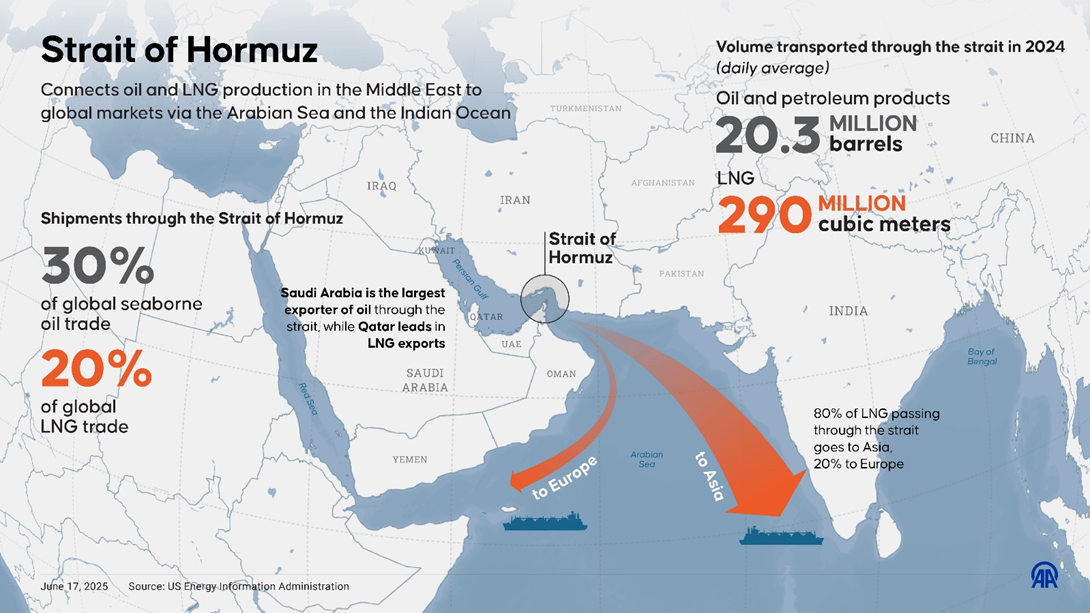
- The ongoing West Asia conflict—escalated by U.S.-Israel strikes on Iran and Iran's retaliatory drone/missile attacks across the Persian Gulf—has raised alarms over its potential to disrupt India's imports of critical raw materials beyond oil and gas.
- As reported in The Economic Times on March 6, 2026, over 40% of India's rough diamonds, 68.1% of limestone, and 65% of sulfur originate from West Asian countries like UAE, Oman, Qatar, and Saudi Arabia.
- The conflict's impact on shipping routes, particularly the Strait of Hormuz, could halt supplies, affecting key sectors like steel, fertilizers, cement, construction, and jewelry. Indian officials and industry bodies (FICCI, CII) have urged diversification, with Commerce Minister Piyush Goyal announcing emergency measures on March 5 to scout alternatives from Africa and Latin America.
- This "looming threat" underscores vulnerabilities in global supply chains, amplified by Houthi attacks on Red Sea shipping and potential Hormuz blockade. It aligns with India's push for self-reliance under Atmanirbhar Bharat and global commitments to SDG 9 (industry resilience).
Drivers of Supply Chain Vulnerabilities
- Geopolitical Escalation
- U.S.-Iran strikes disrupt Gulf ports; Houthi/Yemeni attacks on shipping amplify risks.
- Concentrated Sourcing
- India's reliance on West Asia for low-cost, high-volume minerals due to proximity and trade pacts (CEPA with UAE).
- Shipping Disruptions
- Strait of Hormuz (20% global oil, but also minerals); potential blockade halts bulk carriers.
- Industry-Specific Dependencies
- Fertilizers: Sulfur/phosphate for DAP/urea; agriculture sector (17% GDP) vulnerable.
- Construction: Limestone/gypsum for cement; aligns with $1.4T infrastructure push.
- Economic Factors
- Cheap imports ($20k/ton sulfur vs. domestic); conflict inflates prices via insurance hikes.
- Global Supply Chain Fragility
- Post-COVID lessons ignored; no adequate stockpiles for 3-6 months.
- Alternative Shortages
- Diversification to Africa (Morocco phosphate) or Australia delayed by logistics.
Long-term Economic & Sectoral Consequences
- Inflation & Cost Escalation
- Raw material prices surge 20-50%; impacts consumer goods (fertilizers → food prices up 5-10%).
- Industrial Slowdown
- Steel/cement: Production dips 10-15%; delays in NHAI/rail projects.
- Jewelry: Surat/Kerala hubs face shutdowns; $50B export sector hit.
- Food Security Risks
- Fertilizer shortages reduce yields; echoes 2022 Ukraine crisis.
- Trade Imbalances
- Widens CAD (Current Account Deficit); rupee pressure amid oil volatility.
- Geopolitical Realignments
- India deepens ties with Africa/Latin America; boosts domestic mining (e.g., Rajasthan limestone).
- Environmental & Sustainability Issues
- Rushed diversification may increase carbon footprint from longer shipping.
- Global Ripple Effects
- Affects GVCs (Global Value Chains); EU/China also vulnerable to West Asia minerals.
Policy Challenges & Suggested Reforms
- Diversify Imports: Expedite FTAs with Morocco, Australia; build 6-month stockpiles via MMDR Act amendments.
- Boost Domestic Production: Incentivize mining in Jharkhand/Rajasthan; R&D for synthetic fertilizers.
- Supply Chain Resilience: Implement PLI for critical minerals; digital tracking via blockchain.
- Diplomatic Efforts: Engage QUAD for secure shipping; mediate in UNSC for de-escalation.
- Sectoral Support: Subsidies for affected industries; insurance schemes for importers.
- Green Alternatives: Promote bio-fertilizers; align with Net Zero 2070 goals.
- Monitoring Mechanisms: Form inter-ministerial task force (Commerce, Mines, Agri).
UPSC CSE & State PCS Relevance
Prelims
- Trade Dependencies: West Asia imports (diamonds, sulfur); Strait of Hormuz.
- Policies: Atmanirbhar Bharat, PLI Scheme.
- Geography: Terai Arc (related to broader resource issues).
GS-1 (Society & Geography)
- Resource distribution; West Asia's role in global minerals.
GS-2 (Polity & Governance)
- India's foreign policy: Balancing West Asia ties; FTAs.
- International Relations: Conflict's global impact.
GS-3 (Economy & Infrastructure)
- Supply chain vulnerabilities; industrial sectors; food security.
- Economic Reforms: Diversification strategies.
Essay / Interview
- “Geopolitical Conflicts and India's Supply Chain Resilience.”
- “Beyond Oil: West Asia's Influence on India's Industrial Growth.”
MCQs
- Over what percentage of India's rough diamonds imports come from West Asia, as highlighted in the March 2026 conflict analysis?
(a) 20%
(b) 40%
(c) 60%
(d) 80%
Answer: (b)
- Which strait is critical for India's mineral imports from West Asia and faces disruption risks due to the conflict?
(a) Malacca Strait
(b) Strait of Hormuz
(c) Bab-el-Mandeb
(d) Suez Canal
Answer: (b)
- India's imports of sulfur from West Asia primarily affect which industry?
(a) Electronics
(b) Automobiles
(c) Fertilizers
(d) Textiles
Answer: (c)
- What is the approximate annual value of India's sulfur imports from West Asia?
(a) $100M
(b) $420M
(c) $800M
(d) $1B
Answer: (b)
Mains Questions
- “The West Asia conflict exposes India's vulnerabilities in non-oil imports from the region.” Discuss the affected sectors and suggest strategies for supply chain diversification. (15 marks / 250 words)
- Analyse the potential impact of disruptions in the Strait of Hormuz on India's construction and agriculture industries. (10 marks / 150 words)
- “Geopolitical risks necessitate a shift towards self-reliance in critical minerals.” Critically evaluate India's preparedness and recommend policy reforms in light of the 2026 West Asia crisis. (15 marks / 250 words)
- Essay (250 marks) “From Conflict Zones to Supply Chains: The Far-Reaching Impacts of West Asia Instability on India's Economy.”
U.S. Grants India 30-Day Waiver for Russian Oil Imports Amid Iran's Hormuz Blockade Crisis
Why in News? 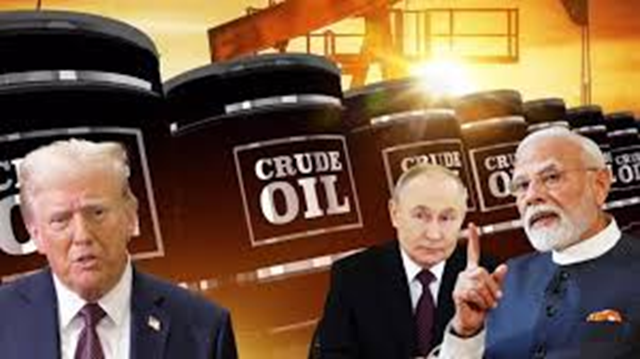
- On March 6, 2026, the U.S. Treasury Department issued an order allowing India to import R ussian oil for a 30-day period, amid escalating disruptions in global oil supplies due to Iran's blockade of the Strait of Hormuz during the ongoing West Asia conflict.
- This "alleviate" measure, as termed by U.S. Treasury Secretary Scott Bessent, comes as India faces critical shortages, with only 25 days of crude oil reserves and equivalent stocks of petrol and diesel.
- The waiver overrides existing U.S. sanctions on Russian oil, enabling India to secure discounted supplies from Russia, which had become a major supplier post-2022 Ukraine war. Commerce Minister Piyush Goyal welcomed the move but emphasized long-term diversification.
- This development highlights India's energy vulnerability amid geopolitical tensions, with Iran's actions constraining 20% of global oil transit through Hormuz. Congress slammed the Centre for "begging" the U.S., while experts warn of fuel price surges and economic fallout.
- It aligns with India's strategic balancing of ties with the U.S. (QUAD ally) and Russia (defense/energy partner), underscoring challenges in energy security under the National Energy Policy.
Drivers of the Waiver and Crisis
- Geopolitical Escalation in West Asia
- Iran's blockade of Hormuz (response to U.S.-Israel strikes) disrupts Gulf exports; U.S. aims to stabilize allies like India.
- India's Energy Dependency
- 85% oil imported; reserves cover only 25 days vs. global norm of 90; rapid depletion amid conflict.
- U.S.-India Strategic Ties
- Waiver under "humanitarian" clause; supports QUAD energy security; counters China's Russian oil dominance.
- Russian Oil Economics
- Discounted Urals crude ($20-30 below Brent); India saved $5-7B in 2025; sustains CAD management.
- Domestic Political Pressure
- Fuel prices up 10-15%; Congress criticism forces Centre to seek U.S. flexibility.
- Global Supply Crunch
- Ukraine war sanctions + Hormuz crisis; OPEC+ cuts amplify shortages.
- Bilateral Diplomacy
- U.S. Treasury order follows PM Modi-Biden talks; reciprocal for India's Iran mediation efforts.
Long-term Economic & Strategic Consequences
- Energy Price Volatility
- Short-term relief, but prolonged conflict could spike petrol/diesel to ₹120/liter; inflation hits 7-8%.
- Economic Slowdown
- Transport/agri sectors affected; GDP growth dips 0.5-1%; CAD balloons to 2.5% of GDP.
- Strategic Realignments
- Deepens India-Russia ties; strains with Iran (Chabahar investor); boosts U.S. leverage in Indo-Pacific.
- Food and Industrial Security
- Higher fuel costs raise food/transport prices; manufacturing (e.g., textiles) faces 5-10% input hikes.
- Diversification Imperative
- Accelerates shift to renewables (500 GW target); new FTAs with Angola, Venezuela.
- Geopolitical Risks
- Potential Russian supply cuts if U.S. pressures; India may face secondary sanctions post-waiver.
- Global Implications
- Encourages other importers (China) to seek waivers; tests G7 price cap on Russian oil.
Policy Challenges & Suggested Reforms
- Emergency Stockpiling: Build 90-day reserves via SPR (Strategic Petroleum Reserve) expansion; partner with UAE for overseas storage.
- Diversification Drive: Expedite imports from U.S., Nigeria; invest in African oilfields under ONGC Videsh.
- Renewable Push: Accelerate NEP 2022; subsidies for EVs/solar to reduce oil dependency (80% by 2030).
- Diplomatic Balancing: Engage SCO/BRICS for energy pacts; mediate U.S.-Iran talks via UN.
- Price Management: Rationalize excise duties; buffer stocks for petrol/diesel.
- Economic Safeguards: RBI forex interventions; PLI for biofuels.
- Avoid Over-Reliance: Cap Russian imports at 30%; enforce energy audits in industries.
UPSC CSE & State PCS Relevance
Prelims
- Key Terms: Strait of Hormuz, Strategic Petroleum Reserve (SPR), G7 Price Cap on Russian Oil.
- Facts: India's oil reserves (25 days); Russian share (55%).
- Organizations: OPEC+, ONGC Videsh.
GS-1 (Society & Geography)
- Energy geography: West Asia's role in global oil.
GS-2 (Polity & Governance)
- India's foreign policy: Multi-alignment with U.S./Russia/Iran.
- International Relations: Sanctions waivers, conflict mediation.
GS-3 (Economy & Infrastructure)
- Energy security; CAD management; inflation control.
- Economic Policies: Atmanirbhar in energy.
Essay / Interview
- “Geopolitical Conflicts and India's Energy Security Challenges.”
- “Balancing Imports and Self-Reliance in India's Oil Strategy.”
MCQs
- India's current crude oil reserves, as highlighted in the March 2026 crisis, cover approximately how many days?
(a) 15 days
(b) 25 days
(c) 50 days
(d) 90 days
Answer: (b)
- The U.S. waiver allows India to import Russian oil for how many days amid the Hormuz blockade?
(a) 15 days
(b) 30 days
(c) 45 days
(d) 60 days
Answer: (b)
- What percentage of India's crude imports in FY 2025-26 comes from Russia?
(a) 25%
(b) 35%
(c) 55%
(d) 65%
Answer: (c)
- The Strait of Hormuz is critical as it handles what percentage of global oil transit?
(a) 10%
(b) 20%
(c) 30%
(d) 40%
Answer: (b)
Mains Questions
- “The West Asia conflict underscores India's vulnerability in energy imports.” Discuss the implications of the Hormuz blockade and suggest measures for enhancing energy security. (15 marks / 250 words)
- Analyse the role of U.S. sanctions waivers in India's oil diplomacy with Russia. How does this affect India's strategic autonomy? (10 marks / 150 words)
- “Short-term waivers cannot substitute long-term self-reliance in energy.” Critically evaluate India's reserve management and recommend reforms in light of the 2026 crisis. (15 marks / 250 words)
- Essay (250 marks) “Geopolitical Tensions and the Quest for Energy Security: India's Challenges and Strategies in a Volatile World.”
Alarming Air Quality Crisis in Indian Cities
Why in News? 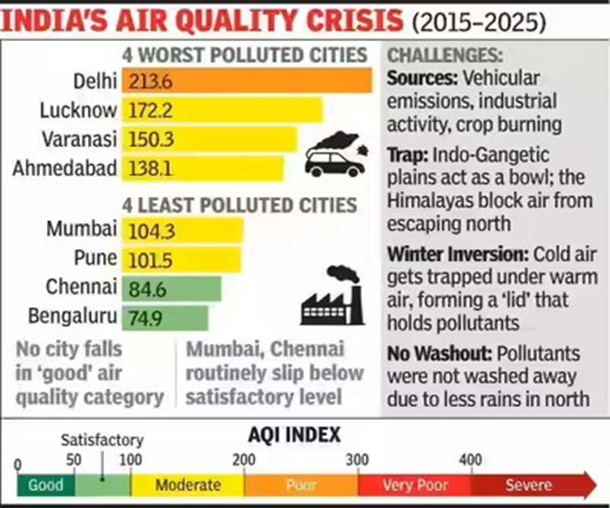
- A report released by the Centre for Research on Energy and Clean Air (CREA) on March 6, 2026, highlighted that 204 out of 238 monitored Indian cities failed to meet the national PM2.5 air quality standard of 40 μg/m³ during the winter period from October 1, 2025, to February 28, 2026.
- The analysis, based on data from the Central Pollution Control Board (CPCB)'s Continuous Ambient Air Quality Monitoring Stations (CAAQMS), underscores persistent pollution hotspots in northern and urban India, with Ghaziabad recording the highest average of 172 μg/m³.
- None of the cities met the World Health Organization (WHO)'s stringent guideline of 5 μg/m³, raising alarms over public health impacts like respiratory diseases and premature deaths.
- This revelation comes amid India's push for cleaner air under the National Clean Air Programme (NCAP) and coincides with Supreme Court directives on stubble burning and vehicular emissions.
- It highlights systemic failures in pollution control and calls for urgent urban planning reforms, aligning with SDG 11 (Sustainable Cities) and the 15th Finance Commission's air quality grants.
Drivers of Poor Air Quality
- Stubble Burning & Agriculture
- Northern states (Punjab, Haryana, UP): Post-harvest residue burning peaks in winter; contributes 20-30% to Delhi's PM2.5.
- Vehicular & Industrial Emissions
- Urban traffic (BS-IV/VI non-compliance); industries in NCR (coal-fired) release SO2, NOx.
- Construction Dust
- Rapid urbanization; unchecked activities in cities like Noida/Gurugram add particulate matter.
- Geographical Factors
- Winter inversion traps pollutants; Indo-Gangetic Plain's topography worsens stagnation.
- Household Sources
- Biomass cooking in peri-urban areas; firecrackers (post-Diwali residue).
- Policy Implementation Gaps
- NCAP's 122 non-attainment cities show slow progress; weak enforcement of GRAP (Graded Response Action Plan).
- Transboundary Pollution
- Winds carry pollutants from Pakistan/China; regional cooperation lacking.
Long-term Health, Economic & Environmental Consequences
- Health Burden
- ~1.67M premature deaths annually (Lancet 2020); respiratory diseases up 20-30% in polluted cities.
- Economic Losses
- $95B GDP loss/year (World Bank); productivity dips due to sick days; tourism in Delhi-NCR affected.
- Social Inequities
- Low-income groups exposed more; urban poor in slums face higher morbidity.
- Environmental Degradation
- Acid rain from SO2/NOx; biodiversity loss in forests like Corbett; climate feedback (black carbon).
- Urban Planning Challenges
- Unsustainable growth; migration to polluted megacities exacerbates issues.
- Global Standing
- India ranks high in air pollution indices (IQAir); hampers FDI in green sectors.
- Sustainable Development Risks
- Threatens SDG 3 (Health), 11 (Cities), 13 (Climate); delays net-zero 2070 goals.
Policy Challenges & Suggested Reforms
- Strengthen Monitoring: Expand CAAQMS to 500+ cities; integrate AI for real-time alerts.
- Enforcement Drive: Strict GRAP implementation; penalize stubble burning with alternatives (happy seeder subsidies).
- Green Transport: Accelerate EV policy (FAME-III); phase out old vehicles; metro expansions.
- Industrial Reforms: Mandate scrubbers in factories; shift to renewables under RE Mission.
- Urban Greening: Increase forest cover (33% target); vertical gardens in cities.
- Regional Cooperation: SAARC air quality pact; transboundary monitoring with Pakistan.
- Public Awareness: Campaigns via NCERT; integrate air quality in school curricula.
UPSC CSE & State PCS Relevance
Prelims
- Standards: National PM2.5 (40 μg/m³ annual); WHO (5 μg/m³).
- Bodies: CPCB, CREA, NCAP.
- Acts: Air (Prevention & Control of Pollution) Act, 1981.
GS-1 (Society & Geography)
- Urbanization issues; regional pollution disparities.
GS-2 (Polity & Governance)
- Environmental governance; NCAP implementation.
- Centre-State coordination on pollution.
GS-3 (Environment & Ecology)
- Air pollution sources/control; health impacts.
- Sustainable development; NCAP targets.
Essay / Interview
- “Air Pollution as a Silent Killer: Challenges and Solutions for Indian Cities.”
- “From Policy to Practice: Evaluating India's Fight Against Urban Air Pollution.”
MCQs
- According to the CREA report, how many Indian cities failed to meet the national PM2.5 standard in winter 2025-26?
(a) 150
(b) 204
(c) 238
(d) 100
Answer: (b)
- The national annual PM2.5 standard in India is:
(a) 5 μg/m³
(b) 40 μg/m³
(c) 60 μg/m³
(d) 100 μg/m³
Answer: (b)
- Which city recorded the highest average PM2.5 concentration in the CREA analysis?
(a) Delhi
(b) Mumbai
(c) Ghaziabad
(d) Bengaluru
Answer: (c)
- The WHO's PM2.5 guideline is:
(a) 40 μg/m³
(b) 5 μg/m³
(c) 15 μg/m³
(d) 25 μg/m³
Answer: (b)
Mains Questions
- “Air pollution in Indian cities remains a persistent challenge despite policy interventions.” Discuss the findings of the CREA report and suggest measures to achieve national air quality standards. (15 marks / 250 words)
- Analyse the regional variations in PM2.5 levels across Indian cities as per recent reports. How do these impact public health? (10 marks / 150 words)
- “The National Clean Air Programme has shown limited success in curbing urban pollution.” Critically evaluate and recommend reforms for effective implementation. (15 marks / 250 words)
- Essay (250 marks) “Urban Air Pollution in India: A Health and Environmental Crisis – Pathways to Cleaner Skies.”
Empowering India's Women Farmers: Rights, Justice, and Action on International Women's Day 2026
Why in News? 
- The discourse calls for gender-inclusive policies to address exclusion from land titles, credit, and technology, amid India's agrarian crisis.
- This focus aligns with global themes of gender equality (SDG 5) and India's commitments under the National Policy for Women 2016 and the Mahila Kisan Sashaktikaran Pariyojana (MKSP). It gains urgency post-2025 farm laws repeal and ongoing debates on MSP, highlighting women farmers' role in food security and rural economy.
Drivers of Challenges for Women Farmers
- Patriarchal Inheritance Laws
- Hindu Succession Act 2005 amendments unevenly implemented; daughters often relinquish claims due to social pressure.
- Resource Access Barriers
- Credit denial without land collateral; Kisan Credit Cards biased towards men; extension services male-oriented.
- Technological Exclusion
- Limited access to seeds, irrigation, mechanization; digital divide in apps like e-NAM.
- Health & Nutritional Deficits
- Double burden: Farm work + household chores; anemia from poor diets affects productivity.
- Climate & Agrarian Stress
- Women bear brunt of droughts/floods; lack insurance under PMFBY.
- Policy Gaps
- Schemes like PM-KISAN transfer to male heads; MKSP underfunded.
- Social Norms
- Gender roles restrict mobility; violence/discrimination in markets.
Long-term Socio-economic & Gender Consequences
- Economic Inequality
- Widens gender wage gap (women earn 20-30% less); rural poverty persists at 25%.
- Food Security Risks
- Lower productivity threatens India's 1.4B population; malnutrition cycles continue.
- Health Burden
- Higher maternal mortality; intergenerational stunting (23% children under 5).
- Migration & Social Disruption
- Male out-migration leaves women overburdened; family breakdowns rise.
- Environmental Impact
- Unsustainable practices due to resource denial; soil degradation accelerates.
- Empowerment Deficits
- Low political representation (14% in Panchayats for agri issues); SDG 5 goals delayed.
National Development Hurdles
-
- Hinders Viksit Bharat 2047; $1T+ GDP loss from gender gaps (McKinsey 2025).
5. Policy Challenges & Suggested Reforms
- Legal Reforms: Amend HSA for equal inheritance; enforce FRA for tribal women.
- Resource Inclusion: Gender budgeting in agri schemes; women-only credit lines via NABARD.
- Tech & Training: Drone/herbicide subsidies for women; digital literacy under Digital India.
- Health Integration: Link MKSP with Poshan Abhiyaan; nutrition gardens in SHGs.
- Climate Resilience: Women-led cooperatives for crop insurance; agroforestry promotion.
- Monitoring & Enforcement: Gender audits in NCAP; data disaggregation in NSSO.
- Global Collaboration: Leverage FAO/WFP for best practices; align with G20 gender commitments.
UPSC CSE & State PCS Relevance
Prelims
- Schemes: MKSP, PM-KISAN, FRA 2006, HSA 2005.
- Data: Women in agriculture (78%); NFHS anemia stats.
- Bodies: MoA&FW, MoRD, FAO.
GS-1 (Society & Geography)
- Gender roles in rural India; agrarian distress.
GS-2 (Polity & Governance)
- Women empowerment policies; federalism in agri reforms.
- Social Justice: Inheritance laws, SHGs.
GS-3 (Economy & Agriculture)
- Agri productivity gaps; food security; inclusive growth.
- Environment: Sustainable farming by women.
Essay / Interview
- “Women Farmers: Pillars of India's Agrarian Economy Yet Invisible in Policy.”
- “Gender Equality in Agriculture: Key to Sustainable Development in India.”
MCQs
- What percentage of India's rural women workforce is engaged in agriculture, as per recent reports?
(a) 50%
(b) 60%
(c) 78%
(d) 90%
Answer: (c)
- The Mahila Kisan Sashaktikaran Pariyojana (MKSP) primarily aims to:
(a) Provide urban employment
(b) Empower women farmers through SHGs
(c) Promote industrial jobs
(d) Focus on education
Answer: (b)
- According to FAO, women-managed farms in India are less productive by what percentage due to resource gaps?
(a) 5-10%
(b) 20-30%
(c) 40-50%
(d) 60-70%
Answer: (b)
- The Hindu Succession Act amendment granting equal inheritance rights to daughters was in:
(a) 1956
(b) 1981
(c) 2005
(d) 2016
Answer: (c)
Mains Questions
- “Women farmers in India face systemic exclusion despite their pivotal role in agriculture.” Discuss the challenges and suggest measures for gender-inclusive agrarian reforms. (15 marks / 250 words)
- Analyse the impact of patriarchal inheritance laws on women's empowerment in rural India. (10 marks / 150 words)
- “Empowering women farmers is essential for achieving food security and sustainable development.” Critically evaluate in the context of government schemes like MKSP and PM-KISAN. (15 marks / 250 words)
- Essay (250 marks) “Rights, Justice, and Action: Transforming the Lives of India's Women Farmers for a Gender-Equal Future.”
U.S. Deploys Precision Strike Missile (PrSM) in Combat Debut Against Iran
Why in News? 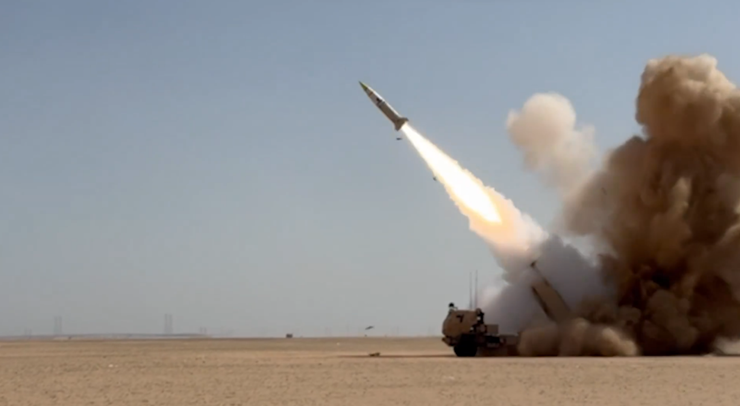
- On March 5, 2026, U.S. Central Command (CENTCOM) confirmed the first combat use of the Precision Strike Missile (PrSM) during "Operation Epic Fury," the U.S.-led military campaign against Iranian targets amid the ongoing West Asia conflict.
- Launched from an M142 High Mobility Artillery Rocket System (HIMARS), the PrSM struck Iranian military installations, marking a significant escalation in the war.
- This debut highlights the U.S. Army's shift to advanced, long-range precision weaponry to counter Iran's missile and drone capabilities. Developed by Lockheed Martin, the PrSM replaces the aging Army Tactical Missile System (ATACMS) and entered service in late 2023.
- The event underscores evolving warfare dynamics, with hypersonic-class trajectories and modular designs enabling deep strikes. It raises concerns over arms race in the region, potential civilian risks, and implications for global non-proliferation efforts under the Missile Technology Control Regime (MTCR).
- For India, it signals advancements in allied (U.S.) missile tech, relevant to border security with China/Pakistan.
Features of Precision Strike Missile (PrSM)
- Design & Architecture
- Open systems architecture: Modular for upgrades (e.g., anti-ship variants).
- Solid rocket propellant: Enables rapid launch and sustained flight.
- Launch & Compatibility
- Integrated with existing platforms: HIMARS (wheeled, mobile), MLRS (tracked).
- Quick deployment: Rocket booster jettisoned post-launch; piston engine optional for variants.
- Guidance & Navigation
- Advanced systems: GPS, inertial guidance; resilient to jamming.
- Integration: Links with satellites, drones, radars for real-time targeting.
- Range & Speed
- Minimum 500 km; hypersonic trajectory (Mach 5+ peaks) for evasion.
- Payload & Safety
- IM energetic payload: Reduces accidental detonation risks.
- Warheads: High-explosive, fragmentation; adaptable for specific missions.
- Advantages Over Predecessors
- Longer range than ATACMS (300 km); cheaper, more precise in adverse weather.
- Strategic Role
- Deep strike: Neutralizes high-value targets; overwhelms defenses in swarms.
Long-term Geopolitical & Security Consequences
- Escalation in West Asia
- Boosts U.S./Israel offensive edge; Iran may accelerate hypersonic development.
- Arms Race Acceleration
- Prompts Russia/China responses; India may seek tech transfers via QUAD.
- Non-Proliferation Challenges
- MTCR scrutiny; risks tech diffusion to non-state actors.
- Economic Impacts
- Higher defense spending; oil price volatility from conflict.
- Humanitarian Risks
- Precision reduces collateral, but deep strikes raise civilian concerns (Geneva Conventions).
- India's Strategic Implications
- Lessons for Agni/Pralay missiles; enhances U.S.-India defense ties (DTTI).
- Global Warfare Evolution
- Shift to stand-off precision; drones/missiles dominate over manned aircraft.
Policy Challenges & Suggested Reforms
- Tech Collaboration: Strengthen U.S.-India co-development under iCET; integrate PrSM-like features in indigenous missiles.
- Non-Proliferation: Advocate stricter MTCR enforcement; bilateral talks with Iran.
- Defense Modernization: Accelerate DRDO hypersonic projects; HIMARS acquisitions.
- Humanitarian Safeguards: Push for AI ethics in precision weapons via UN.
- Regional Stability: India mediate de-escalation via SCO; diversify energy to reduce Gulf dependency.
- Export Controls: Balance tech transfers with proliferation risks.
UPSC CSE & State PCS Relevance
Prelims
- Key Terms: PrSM, HIMARS, ATACMS, MTCR.
- Facts: Range (500 km); Developer (Lockheed Martin); First use (2026 vs. Iran).
GS-2 (IR)
- U.S.-Iran conflict; India's balancing act.
GS-3 (Security & Tech)
- Missile tech advancements; defense indigenization.
- Internal Security: Border missile deployments.
Essay / Interview
- “Precision Missiles: Transforming Modern Warfare and Global Security.”
- “U.S.-Iran Conflict: Implications for India's Defense Strategy.”
MCQs
- The Precision Strike Missile (PrSM) was first used in combat by the U.S. against which country in March 2026?
(a) Russia
(b) China
(c) Iran
(d) North Korea
Answer: (c)
- PrSM is primarily launched from which platform?
(a) F-35 Jet
(b) HIMARS
(c) Submarine
(d) Drone
Answer: (b)
- What is the minimum operational range of the PrSM?
(a) 300 km
(b) 500 km
(c) 1,000 km
(d) 2,000 km
Answer: (b)
- PrSM features which type of payload to reduce accidental detonation risks?
(a) Nuclear
(b) Insensitive Munitions (IM)
(c) Chemical
(d) Biological
Answer: (b)
Mains Questions
- “The combat debut of U.S. PrSM against Iran signifies advancements in precision strike capabilities.” Discuss its features and implications for global security. (15 marks / 250 words)
- Analyse the role of missile technology in modern conflicts, with reference to PrSM's use in West Asia. (10 marks / 150 words)
- “India must learn from PrSM's deployment to enhance its indigenous missile programs.” Critically evaluate and suggest reforms for DRDO. (15 marks / 250 words)
- Essay (250 marks) “Precision Warfare in the 21st Century: Opportunities and Challenges for International Peace and Security.”
First Camera Trap Record of Sambar Deer in High-Altitude Protected Areas of Chamba, Himachal Pradesh
Why in News? 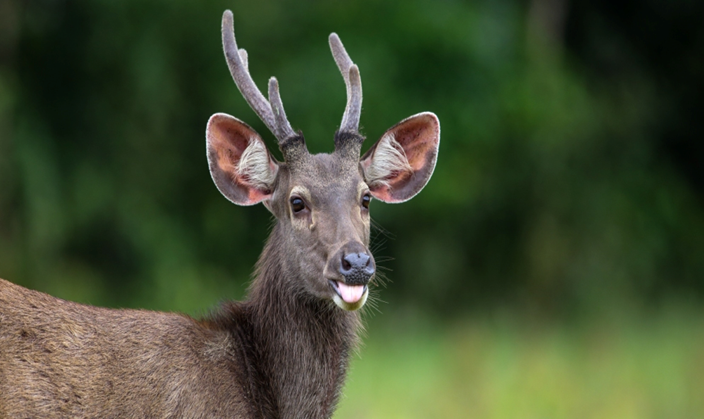
- The Wildlife Wing of the Himachal Pradesh Forest Department announced in early March 2026 that camera traps deployed in high-altitude protected areas of Chamba district captured images of Sambar Deer (Rusa unicolor) for the first time.
- This marks a significant ecological finding, as the species was previously not documented at such elevations in the state (above 2,500–3,000 m). The sightings were recorded in the remote alpine and sub-alpine zones of the district, including areas near the Tirthan Wildlife Sanctuary extension and Pir Panjal range.
- The discovery highlights improved habitat connectivity, reduced human disturbance in higher altitudes, and successful conservation efforts in Himachal Pradesh.
- It also indicates possible upward altitudinal shifts of large mammals due to climate change and habitat pressure in lower elevations. The event aligns with ongoing biodiversity monitoring under the State Wildlife Action Plan and contributes to understanding species distribution in the Western Himalayas.
Features & Ecology of Sambar Deer
- Taxonomy & Appearance
- Scientific Name: Rusa unicolor
- Largest Oriental deer; shoulder height 1.2–1.4 m
- Weight: Males up to 550 kg (females ~200–300 kg)
- Coat: Yellowish-brown to dark gray; long hair, especially around neck (males)
- Tail: Long, black with white underside
- Males: Antlers up to 42 inches, 3–4 tines; shed annually
- Sexual Dimorphism
- Males heavier, darker, with prominent antlers and neck mane
- Females smaller, lighter coat
- Behavior
- Mostly solitary or in small groups (females + young)
- Nocturnal/crepuscular; wallows in mud for thermoregulation
- Excellent swimmers; agile in steep terrain
- Diet
- Herbivorous browser: Leaves, fruits, grasses, shrubs
- Feeds near cultivated areas (crops, plantations)
- Habitat Preferences
- Thick forests, swamp forests, scrub, hillsides
- Prefers proximity to water and cover
- Altitudinal range: Sea level to ~3,500 m (rare)
- Distribution
- Indian Subcontinent, southern China, Southeast Asia (Indonesia, Malaysia, Philippines)
- In India: Widespread except arid west and high Himalayas
- Threats & Conservation
- Habitat loss, poaching for meat/antlers, human-wildlife conflict
- Vulnerable (IUCN); protected under Wildlife Protection Act, 1972 (Schedule III)
Long-term Ecological & Conservation Implications
- Climate Change Indicator
- Upward shift suggests warming allows expansion into cooler zones; tracks similar patterns in other Himalayan species.
- Biodiversity Enrichment
- Presence of large herbivore improves ecosystem balance (seed dispersal, prey for leopards/snow leopards).
- Habitat Connectivity
- Validates corridor conservation efforts (e.g., Great Himalayan National Park linkage).
- Eco-Tourism Potential
- Boosts Chamba’s wildlife appeal; promotes responsible tourism.
- Human-Wildlife Conflict Risk
- If sambar move closer to villages, crop raiding may increase.
- Research Opportunities
- Long-term camera trap studies for population, behavior, altitudinal ecology.
- Conservation Linkages
- Supports Himachal’s High Altitude Protected Area network; aligns with National Wildlife Action Plan 2017–2031.
Policy Challenges & Suggested Reforms
- Expand Monitoring: Increase camera trap density in high-altitude zones; integrate with e-forest watch.
- Climate-Adaptive Management: Update State Wildlife Action Plan with altitudinal shift data.
- Conflict Mitigation: Crop insurance, fencing, community awareness in Chamba periphery.
- Habitat Protection: Strengthen enforcement in Chamba’s sub-alpine forests; declare new community reserves.
- Research Funding: Collaborate with WII Dehradun for Himalayan ungulate studies.
- Eco-Tourism Guidelines: Promote low-impact tourism; train locals as guides.
UPSC CSE & State PCS Relevance
Prelims
- Species: Sambar Deer (Rusa unicolor)
- IUCN: Vulnerable
- Legal Status: Schedule III (WLPA 1972)
- Habitat: High-altitude record in Chamba, HP
GS-1 (Society & Geography)
- Himalayan ecology; altitudinal migration due to climate change
GS-3 (Environment & Ecology)
- Biodiversity monitoring; camera trap surveys
- Conservation: Protected areas, species range shifts
- Acts: Wildlife Protection Act, 1972
Essay / Interview
- “Climate Change and Shifting Wildlife Ranges in the Himalayas.”
- “Role of Camera Traps in Modern Wildlife Conservation.”
MCQs
- The Sambar Deer was recently recorded for the first time in high-altitude areas of which district in Himachal Pradesh?
(a) Kangra
(b) Chamba
(c) Mandi
(d) Kinnaur
Answer: (b)
- The scientific name of Sambar Deer is:
(a) Cervus unicolor
(b) Rusa unicolor
(c) Axis axis
(d) Muntiacus muntjak
Answer: (b)
- The IUCN Red List status of Sambar Deer is:
(a) Least Concern
(b) Near Threatened
(c) Vulnerable
(d) Endangered
Answer: (c)
- Under the Wildlife Protection Act, 1972, Sambar Deer is listed in:
(a) Schedule I
(b) Schedule II
(c) Schedule III
(d) Schedule IV
Answer: (c)
Mains Questions
- “The recent sighting of Sambar Deer in high-altitude Chamba district highlights the impact of climate change on Himalayan wildlife.” Discuss the ecological significance and suggest adaptive conservation measures. (15 marks / 250 words)
- Analyse the role of camera trap technology in monitoring elusive species like the Sambar Deer in protected areas. (10 marks / 150 words)
- “Large herbivores such as the Sambar Deer are critical for ecosystem balance in the Himalayas.” Critically evaluate their conservation status and challenges in Himachal Pradesh. (15 marks / 250 words)
- Essay (250 marks) “Shifting Ranges and Climate Resilience: Lessons from the Sambar Deer Sighting in High-Altitude Himachal Pradesh.”
Tajikistan and Uzbekistan Propose Striped Hyena Listing Under CMS Appendices I & II Ahead of COP15
Why in News? 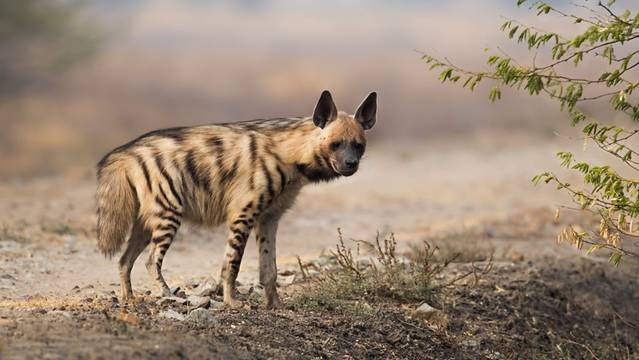
- In the lead-up to the 15th Meeting of the Conference of the Parties (COP15) to the Convention on the Conservation of Migratory Species of Wild Animals (CMS), scheduled for March 23–29, 2026, in Campo Grande, Brazil, Tajikistan and Uzbekistan jointly submitted a formal proposal to include the Striped Hyena (Hyaena hyaena) in Appendix I and Appendix II of the CMS.
- The proposal (CMS COP15 Doc. 30.2.2) was highlighted in February–March 2026 updates by the CMS Secretariat, Wildlife Conservation Society (WCS), and media outlets like Down To Earth.
- The move seeks stricter international protection for this Near Threatened species, which exhibits transboundary movements across Central Asia, South Asia, West Asia, and Africa.
- It reflects growing concern over habitat fragmentation, human-wildlife conflict, persecution, and illegal trade. The proposal aligns with the Samarkand Strategic Plan (2024–2032) and the Kunming-Montreal Global Biodiversity Framework.
Features & Ecology of Striped Hyena
- Taxonomy & Appearance
- Family: Hyaenidae (one of four species: Spotted, Brown, Aardwolf, Striped)
- Smaller than Spotted Hyena; body stripes (black/brown on yellowish-gray)
- Shoulder height: ~70–90 cm; weight: 25–55 kg
- Long, bushy tail; powerful forequarters; sloping back
- Behavior
- Primarily solitary; territorial with scent-marking
- Females dominant over males; aggressive toward other females
- Nocturnal/scavenger; opportunistic diet (carrion, refuse, small prey)
- Diet
- Mainly carrion and human refuse; occasionally hunt small mammals, birds, reptiles
- Bone-crushing jaws for scavenging
- Habitat
- Savannas, grasslands, semi-deserts, open woodlands, mountainous regions
- Highly adaptable; found near human settlements for refuse
- Distribution
- North & Sub-Saharan Africa, Middle East, Central Asia, South Asia (India, Nepal, Afghanistan)
- Movement Patterns
- Long-distance dispersal; seasonal/nomadic in arid regions
- Crosses international borders in search of food/water
- Threats
- Habitat loss/fragmentation, human-wildlife conflict, direct persecution (poisoning, hunting), illegal trade
Long-term Conservation & Geopolitical Implications
- Transboundary Conservation Need
- Appendix I: Strict protection; prohibits taking/exploitation
- Appendix II: Coordinated conservation (MoUs, action plans)
- Regional Cooperation
- Strengthens Central Asia Mammals Initiative (CAMI); benefits India (Range State)
- Climate & Habitat Resilience
- Arid/semi-arid shifts due to climate change; CMS listing aids adaptation
- Human-Wildlife Conflict
- Reduced persecution via awareness; compensation schemes
- India's Role
- Strong domestic protection (Schedule I); CMS listing enhances global advocacy
- Biodiversity Framework Alignment
- Supports Kunming-Montreal targets; migratory species connectivity
- Global Precedent
- Builds on CITES uplisting; potential model for other Near Threatened carnivores
Policy Challenges & Suggested Reforms
- Support Proposal: India endorse at COP15; lead South Asia coordination
- Transboundary MoUs: Strengthen CAMI; India-Tajikistan/Uzbekistan bilateral action
- Conflict Mitigation: Community-based programs; livestock insurance
- Monitoring: Camera traps, genetic studies across borders
- Legal Enforcement: Combat illegal trade; align with CITES
- Awareness: Education in pastoral communities; integrate in school curricula
UPSC CSE & State PCS Relevance
Prelims
- Species: Striped Hyena (Hyaena hyaena)
- IUCN: Near Threatened
- CMS: Appendices I & II
- WLPA: Schedule I
- Bodies: CMS, CAMI, CITES
GS-1 (Society & Geography)
- Transboundary species; arid ecosystem ecology
GS-2 (Polity & Governance)
- International conventions: CMS, CITES
- India's wildlife diplomacy
GS-3 (Environment & Ecology)
- Migratory species conservation; human-wildlife conflict
- Biodiversity frameworks: Kunming-Montreal
Essay / Interview
- “Protecting Migratory Carnivores: The Case for Striped Hyena under CMS.”
- “Transboundary Conservation in Central & South Asia.”
MCQs
- Tajikistan and Uzbekistan have proposed listing the Striped Hyena under which appendices of CMS at COP15?
(a) Appendix I only
(b) Appendix II only
(c) Appendices I and II
(d) Appendix III
Answer: (c)
- The Striped Hyena is listed under which schedule of the Wildlife Protection Act, 1972 in India?
(a) Schedule II
(b) Schedule I
(c) Schedule III
(d) Schedule IV
Answer: (b)
- The IUCN Red List status of Striped Hyena (Hyaena hyaena) is:
(a) Vulnerable
(b) Endangered
(c) Near Threatened
(d) Least Concern
Answer: (c)
- CMS COP15 is scheduled to be held in which city in March 2026?
(a) Bonn, Germany
(b) Campo Grande, Brazil
(c) Samarkand, Uzbekistan
(d) New Delhi, India
Answer: (b)
Mains Questions
- “The proposal to include the Striped Hyena in CMS Appendices I & II reflects the need for transboundary conservation of migratory species.” Discuss the ecological significance and challenges involved. (15 marks / 250 words)
- Analyse the role of the Convention on Migratory Species (CMS) in protecting transboundary wildlife like the Striped Hyena. (10 marks / 150 words)
- “Human-wildlife conflict and habitat fragmentation threaten species like the Striped Hyena across Asia.” Critically evaluate India's conservation framework and suggest regional cooperation measures. (15 marks / 250 words)
- Essay (250 marks) “Transboundary Conservation in a Fragmented World: The Case for Protecting the Striped Hyena under CMS.”
Union Minister Reviews Low Temperature Thermal Desalination (LTTD) Plant at Kavaratti, Lakshadweep
Why in News?
- On March 5, 2026, Union Minister for Earth Sciences Kiren Rijiju visited the Low Temperature Thermal Desalination (LTTD) plant at Kavaratti Island, Lakshadweep, and reviewed its operational performance.
- The minister inspected the facility, interacted with scientists from the National Institute of Ocean Technology (NIOT), and emphasized the need to scale up LTTD technology across all Lakshadweep islands to ensure reliable, eco-friendly drinking water supply.
- He highlighted that the Kavaratti plant, commissioned in 2005, continues to be a model for low-energy, chemical-free desalination suitable for small island territories.
- This visit comes amid growing freshwater stress in Lakshadweep due to climate change, rising sea levels, limited groundwater, and increasing tourist and resident demand.
- The LTTD plant at Kavaratti produces ~1 lakh litres of potable water per day and remains a flagship project under the Ministry of Earth Sciences (MoES) and NIOT. The review aligns with India’s commitment to sustainable development in island ecosystems and the Jal Jeevan Mission’s extension to Union Territories.
Working Principle of LTTD Technology
- Ocean Thermal Gradient
- Surface seawater: Warm (~28–30°C)
- Deep seawater (400–1,000 m): Cold (~4–12°C)
- Flash Evaporation
- Warm surface water is pumped into a low-pressure chamber.
- Due to reduced pressure, water flashes into vapour (boils at lower temperature).
- Condensation
- Vapour passes through tubes/chambers.
- Cold deep seawater is circulated over the tubes, condensing vapour into fresh water.
- Brine Management
- Concentrated brine (salty residue) is discharged back into deep ocean, minimizing ecological impact.
- Advantages Over Reverse Osmosis (RO)
- No high-pressure membranes → lower energy & maintenance
- No chemical additives → zero chemical pollution
- Suitable for small-scale, remote islands
- Limitations
- Requires access to deep cold water (bathymetry dependent)
- Lower capacity compared to large RO plants
- Initial capital cost for pipelines and pumps
Long-term Significance & Challenges
- Water Security for Islands
- Addresses freshwater scarcity in Lakshadweep & Andaman (rainfall variability, sea-level rise).
- Climate Resilience
- Low-carbon desalination; aligns with India’s net-zero 2070 goal.
- Eco-Friendly Alternative
- Minimal marine impact compared to RO brine discharge.
- Economic Benefits
- Reduces dependence on bottled water imports; supports tourism.
- Scalability Challenges
- High initial investment for deep-sea pipelines.
- Maintenance in remote, corrosive marine environment.
- Replication Potential
- Suitable for other small island nations (Maldives, Seychelles) and coastal hilly regions.
- Policy Alignment
- Supports Jal Jeevan Mission (100% tap water), National Water Policy 2012, and Island Development initiatives.
Policy Challenges & Suggested Reforms
- Scale-up Plan: Establish LTTD in all 10 inhabited Lakshadweep islands by 2030.
- Funding: Integrate into PM Gati Shakti and Island Development Scheme.
- Technology Upgradation: Hybrid LTTD-RO systems for higher capacity.
- Research & Maintenance: NIOT-led capacity building for local operators.
- Environmental Monitoring: Regular EIA and marine impact studies.
- Community Involvement: Train islanders in plant operations; awareness drives.
- International Cooperation: Share LTTD expertise with SIDS (Small Island Developing States) via India’s SIDS Fellowship.
UPSC CSE & State PCS Relevance
Prelims
- Technology: Low Temperature Thermal Desalination (LTTD)
- Developer: NIOT (Ministry of Earth Sciences)
- Location: Kavaratti, Lakshadweep (first plant 2005)
- Principle: Ocean Thermal Gradient / Flash Evaporation
GS-1 (Society & Geography)
- Island geography; freshwater scarcity in Lakshadweep
GS-3 (Environment & Technology)
- Desalination technologies; sustainable water management
- Ocean resources; climate-resilient infrastructure
Essay / Interview
- “Desalination Technologies: Bridging India’s Water Security Gap in Coastal and Island Regions.”
- “Low-Carbon Water Solutions: Role of LTTD in Sustainable Island Development.”
MCQs
- The Low Temperature Thermal Desalination (LTTD) plant in Lakshadweep is located on which island?
(a) Minicoy
(b) Agatti
(c) Kavaratti
(d) Androth
Answer: (c)
- LTTD technology primarily utilizes:
(a) Reverse Osmosis membranes
(b) Ocean thermal gradient
(c) Solar evaporation
(d) Electrodialysis
Answer: (b)
- The first LTTD plant in Lakshadweep was commissioned in:
(a) 1995
(b) 2005
(c) 2010
(d) 2015
Answer: (b)
- Which organization developed and maintains the LTTD technology in India?
(a) ISRO
(b) NIOT
(c) DRDO
(d) BARC
Answer: (b)
Mains Questions
- “Low Temperature Thermal Desalination (LTTD) offers a sustainable solution for freshwater scarcity in India’s island territories.” Discuss its working principle and advantages over conventional methods. (15 marks / 250 words)
- Analyse the significance of LTTD plants for Lakshadweep’s water security in the context of climate change and sea-level rise. (10 marks / 150 words)
- “Desalination technologies must balance economic viability, environmental sustainability, and scalability.” Critically evaluate LTTD in this framework and suggest measures for wider adoption in coastal India. (15 marks / 250 words)
- Essay (250 marks) “From Ocean Depths to Drinking Water: The Promise and Challenges of Low Temperature Thermal Desalination in India’s Island Territories.”
CLICK HERE t download the PDF
