
9th April Current Affairs
Exercise Cyclone-IV: India-Egypt Special Forces Joint Training in Egypt
1. Why in News?
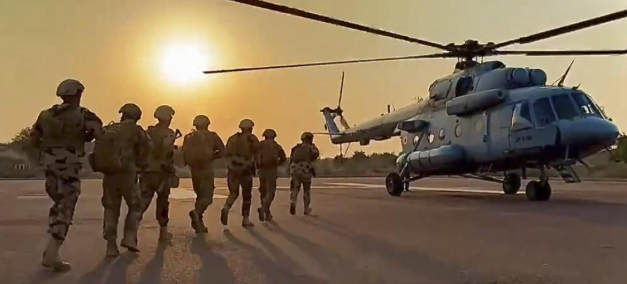
- An Indian Army contingent comprising 25 personnel from Special Forces units has departed for Egypt to participate in the fourth edition of Exercise Cyclone (Cyclone-IV), scheduled to be held at Anshas, Egypt.
- This annual bilateral exercise between the special forces of India and Egypt alternates between the two countries and aims to enhance joint operational capabilities in desert and semi-desert terrain.
2. About Exercise Cyclone
- Nature: Joint Special Forces exercise between the Indian Army and the Egyptian Army.
- Edition: Fourth edition (Cyclone-IV).
- Frequency: Annual event, conducted alternately in India and Egypt.
- Participating Forces:
- Indian contingent: 25 personnel from elite Special Forces units.
- Egyptian counterpart: Special Forces personnel of the Egyptian Army.
- Location (2026): Anshas, Egypt (desert and semi-desert terrain).
- Aim:
- To enhance joint mission planning capabilities.
- To improve interoperability between the two special forces.
- To exchange best practices and professional expertise in special operations.
- Focus Areas:
- Special operational tactics, techniques, and procedures.
- Training in realistic operational environments, especially desert and semi-desert conditions.
- Strengthening bonds of camaraderie and mutual understanding.
3. Significance of the Exercise
- Defence Diplomacy: Strengthens bilateral defence cooperation between India and Egypt, two ancient civilisations with growing strategic convergence in the Indo-Pacific and West Asian regions.
- Capacity Building: Provides valuable exposure to different operational environments and tactics, improving the combat readiness of both forces.
- Interoperability: Enhances the ability of Indian and Egyptian special forces to operate together in future joint missions, including counter-terrorism and humanitarian assistance scenarios.
- Geostrategic Context: Egypt is a key player in West Asia and North Africa. Closer military ties with Egypt support India’s broader outreach to Africa and the Middle East under frameworks like the India-Africa Forum Summit and I2U2 grouping.
4. UPSC CSE & State PCS Relevance
Prelims
- Key terms: Exercise Cyclone-IV, India-Egypt Special Forces Exercise, Joint Special Forces Training, Desert and semi-desert terrain operations.
- Facts: Fourth edition held in Anshas, Egypt (2026); Indian contingent of 25 Special Forces personnel; Annual bilateral exercise alternating between India and Egypt.
GS-2 (International Relations)
- India-Egypt bilateral relations; Defence diplomacy; India’s outreach to Africa and West Asia; Strategic partnerships in the Global South.
GS-3 (Security)
- Joint military exercises; Special Forces operations; Capacity building and interoperability; Counter-terrorism cooperation.
Essay / Interview
- “Military Diplomacy as a Tool of Soft Power and Strategic Engagement.”
- “India’s Growing Defence Cooperation with African Nations: Opportunities and Challenges.”
- “Special Forces Training in Diverse Terrains: Enhancing Combat Readiness in an Uncertain World.”
MCQs
- Consider the following statements about Exercise Cyclone:
- It is a joint special forces exercise between India and Egypt.
- The fourth edition (Cyclone-IV) is being held in Anshas, Egypt.
- It is conducted only in India every year.
Which of the statements given above is/are correct?
(a) 1 and 2 only
(b) 2 and 3 only
(c) 1 only
(d) 1, 2 and 3
Answer: (a)
- Exercise Cyclone is primarily focused on training in:
(a) High-altitude mountain warfare
(b) Desert and semi-desert terrain operations
(c) Naval amphibious operations
(d) Cyber and electronic warfare
Answer: (b)
- The Indian contingent participating in Exercise Cyclone-IV comprises personnel from:
(a) Regular infantry units
(b) Special Forces units
(c) Artillery regiments
(d) Army Aviation Corps
Answer: (b)
- Which of the following is NOT a primary objective of Exercise Cyclone?
(a) Enhancing joint mission planning capabilities
(b) Improving interoperability between special forces
(c) Conducting large-scale conventional warfare drills
(d) Exchanging best practices in special operations
Answer: (c)
- Exercise Cyclone is an annual event conducted alternately in:
(a) India and Israel
(b) India and Egypt
(c) India and UAE
(d) India and Saudi Arabia
Answer: (b)
Mains Questions
- “Joint military exercises like Exercise Cyclone play a vital role in strengthening bilateral defence cooperation.” Discuss the significance of India-Egypt defence ties with special reference to Exercise Cyclone-IV. (15 marks / 250 words)
- Examine how special forces training in diverse terrains such as deserts contributes to overall combat readiness and interoperability. What strategic benefits does India gain from such exercises with African nations? (10 marks / 150 words)
- “Military diplomacy is an important pillar of India’s foreign policy outreach.” Analyse this statement in the context of recent joint exercises like Cyclone with Egypt and India’s broader engagement with the African continent. (15 marks / 250 words)
Makhana (Fox Nut) Exports Hit by West Asia War: Demand and Prices Drop Sharply
1. Why in News?
- The ongoing conflict in West Asia has severely impacted the export of Makhana (fox nuts), causing a sharp decline in both international demand and prices.
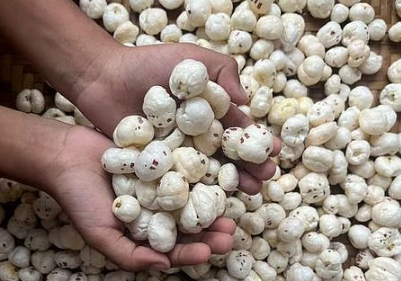
- Makhana, popularly known as the “Black Diamond” due to its black-to-brown outer layer, is a high-value aquatic crop primarily produced in India. The disruption in shipping routes and economic uncertainty in key West Asian markets have led to reduced orders and lower realisation for Indian exporters, affecting thousands of farmers and processors, especially in Bihar.
2. About Makhana (Fox Nut)
- Scientific Name: Euryale ferox (prickly water lily or gorgon plant).
- Common Names: Makhana, Fox Nut, Black Diamond.
- Edible Part: Small, round, dried seeds with a black-to-brown outer layer.
- Origin: Native to South-East Asia and China, now distributed across many parts of the world.
Climatic and Soil Requirements:
-
- Grown in stagnant perennial water bodies such as ponds, oxbow lakes, swamps, ditches, and land depressions.
- Climate: Tropical and subtropical.
- Temperature: 20°C to 35°C.
- Annual Rainfall: 100 cm to 250 cm.
- Soil: Smooth loamy soil.
Major Producing Regions in India:
-
- Bihar is the leading state in both production and processing.
- Other states: West Bengal, Manipur, Tripura, Assam, Jammu & Kashmir, Odisha, Rajasthan, Madhya Pradesh, and Uttar Pradesh.
- Approved under the government’s One District One Product (ODOP) scheme in several Bihar districts.
3. Economic and Nutritional Importance
- High Nutritional Value: Rich in protein, carbohydrates, fibre, magnesium, potassium, and antioxidants. Low in fat and gluten-free.
- Medicinal Benefits: Used in traditional medicine for its anti-inflammatory, anti-ageing, and kidney-toning properties.
- Economic Role: Provides livelihood to thousands of farmers and processors, especially in rural Bihar. It is a major export item in the form of popped makhana.
- Uses: Consumed as a snack (roasted/fried), in sweets, curries, and health foods. Also used in Ayurvedic preparations.
4. Impact of West Asia Conflict
- West Asia has been an important market for Indian makhana exports.
- The ongoing war has disrupted shipping lanes, increased insurance and freight costs, and reduced buyer demand due to economic uncertainty.
- Result: Sharp drop in export volumes and prices, affecting the entire value chain from farmers to exporters.
5. UPSC CSE State PCS Relevanc
Prelims
- Key terms: Makhana (Fox Nut), Euryale ferox, Black Diamond, One District One Product (ODOP), Hydrophyte, Tropical/subtropical aquatic crop.
- Facts: Leading producer — Bihar; Grown in stagnant water bodies; Temperature 20–35°C; Rainfall 100–250 cm; Exports hit by West Asia war (2026).
GS-3 (Economy & Agriculture)
- Agricultural exports; Impact of geopolitical conflicts on Indian agriculture; Value addition in minor forest produce/aquatic crops; ODOP scheme.
GS-1 (Geography)
- Agro-climatic conditions for aquatic crops; Distribution of makhana in India.
Essay / Interview
- “Geopolitical Conflicts and Their Ripple Effects on Indian Agricultural Exports.”
- “Promoting Minor and Underutilised Crops like Makhana for Nutritional Security and Farmer Income.”
- “One District One Product Scheme: Potential and Challenges in Boosting Rural Economy.”
MCQs (Prelims Standard)
- Consider the following statements about Makhana:
- It is the dried seed of the prickly water lily (Euryale ferox).
- Bihar is the leading producer and processor of makhana in India.
- It is primarily grown in flowing river water. Which of the statements given above is/are correct?
(a) 1 and 2 only
(b) 2 and 3 only
(c) 1 only
(d) 1, 2 and 3
Answer: (a)
- Makhana is popularly known as:
(a) White Pearl
(b) Black Diamond
(c) Golden Grain
(d) Red Lotus
Answer: (b)
- Which scheme promotes makhana as a One District One Product in select districts?
(a) PM Fasal Bima Yojana
(b) One District One Product (ODOP)
(c) Paramparagat Krishi Vikas Yojana
(d) Soil Health Card Scheme
Answer: (b)
- The exports of makhana have been adversely affected in 2026 due to:
(a) Ban by European Union
(b) Ongoing war in West Asia
(c) Heavy rainfall in Bihar
(d) New GST rates
Answer: (b)
- Makhana is mainly cultivated in:
(a) Desert regions
(b) Stagnant perennial water bodies
(c) High-altitude dry lands
(d) Coastal saline soils
Answer: (b)
Mains Questions
- “Makhana represents the untapped potential of underutilised aquatic crops in India.” Discuss the economic, nutritional, and ecological significance of makhana and the challenges faced by its export sector. (15 marks / 250 words)
- Examine the impact of geopolitical conflicts on India’s agricultural exports with special reference to makhana. Suggest measures to reduce such vulnerabilities. (10 marks / 150 words)
- “One District One Product scheme can play a transformative role in rural economies.” Analyse this statement in the context of makhana promotion in Bihar and other states. (15 marks / 250 words)
FSSAI Conducts Nearly 4 Lakh Food Safety Inspections in 2025-26
1. Why in News?
- Official sources have revealed that the Food Safety and Standards Authority of India (FSSAI) conducted nearly 4 lakh inspections across food establishments in the financial year 2025-26.
- This significant increase in surveillance and enforcement reflects FSSAI’s strengthened efforts to ensure compliance with food safety norms, protect public health, and maintain consumer confidence in the rapidly growing food sector. The inspections covered manufacturing units, processing facilities, warehouses, retail outlets, and street food vendors.
2. About Food Safety and Standards Authority of India (FSSAI)
- Establishment: Created under the Food Safety and Standards Act, 2006.
- Nodal Ministry: Ministry of Health and Family Welfare, Government of India.
- Mandate: To lay down science-based standards for food articles, regulate their manufacture, storage, distribution, sale, and import, and ensure the availability of safe and wholesome food for human consumption.
3. Key Functions of FSSAI
- Standards Development: Formulates standards for various food products, additives, contaminants, labelling, and packaging.

- Food Safety Management Systems: Provides guidelines (e.g., FSMS, HACCP) for businesses to implement effective food safety practices.
- Licensing and Registration: Manages the central and state licensing/registration process for food businesses (FBOs).
- Surveillance and Monitoring: Conducts regular inspections, audits, sampling, and enforcement actions against non-compliant establishments.
- Consumer Awareness: Runs campaigns like “Eat Right India” to educate the public on food safety, hygiene, and nutrition.
- Accreditation: Accredits and recognises food testing laboratories across India.
- Import Clearance: Regulates the import of food articles through the Food Import Clearance System (FICS).
4. Significance of the 2025-26 Inspections
- Demonstrates FSSAI’s proactive approach towards risk-based surveillance and enforcement.
- Helps identify and curb adulteration, substandard products, and unsafe practices in the food supply chain.
- Supports the goal of “Safe Food for All” and strengthens consumer trust in the Indian food ecosystem.
- Aligns with the broader objectives of Atmanirbhar Bharat and Make in India by ensuring high-quality standards for both domestic and export markets.
5. UPSC CSE & State PCS Relevance
Prelims
- Key terms: FSSAI, Food Safety and Standards Act 2006, Eat Right India, Food Business Operator (FBO), Licensing and Registration, FSMS (Food Safety Management System).
- Facts: Nearly 4 lakh inspections conducted in 2025-26; Established under 2006 Act; Nodal Ministry — Health and Family Welfare.
GS-2 (Governance)
- Regulatory bodies in India; Consumer protection; Food safety governance; Role of statutory authorities.
GS-3 (Economy & Science & Technology)
- Food processing industry; Public health and safety; Quality control in agriculture and food sector.
Essay / Interview
- “Food Safety: The Invisible Backbone of Public Health and Economic Growth.”
- “Regulatory Reforms and Consumer Protection in India’s Food Sector.”
- “From Farm to Fork: Ensuring Safety and Quality in India’s Food Supply Chain.”
MCQs (Prelims Standard)
- Consider the following statements about the Food Safety and Standards Authority of India (FSSAI):
- It was established under the Food Safety and Standards Act, 2006.
- It functions under the Ministry of Health and Family Welfare.
- It conducted nearly 4 lakh inspections in 2025-26. Which of the statements given above is/are correct?
(a) 1 only
(b) 1 and 2 only
(c) 1 and 3 only
(d) 1, 2 and 3
Answer: (d)
- Which of the following is NOT a primary function of FSSAI?
(a) Setting food standards
(b) Licensing and registration of food businesses
(c) Regulating agricultural crop production
(d) Consumer awareness on food safety
Answer: (c)
- The “Eat Right India” campaign is associated with:
(a) Ministry of Agriculture
(b) FSSAI
(c) Ministry of Consumer Affairs
(d) NITI Aayog
Answer: (b)
- FSSAI primarily regulates:
(a) Only packaged food items
(b) Manufacture, storage, distribution, sale, and import of food
(c) Only organic farming practices
(d) Export of agricultural commodities
Answer: (b)
- The Food Safety and Standards Act was enacted in which year?
(a) 2002
(b) 2006
(c) 2011
(d) 2015
Answer: (b)
Mains Questions
- “Food safety is a shared responsibility of regulators, industry, and consumers.” Discuss the role of FSSAI in ensuring food safety in India and evaluate its performance in light of the large-scale inspections conducted in 2025-26. (15 marks / 250 words)
- Examine the challenges faced by food safety regulators in India and suggest measures to strengthen the food safety ecosystem. (10 marks / 150 words)
- “A robust food safety regulatory framework is essential for public health, consumer confidence, and growth of the food processing industry.” Analyse this statement with reference to the mandate and functions of FSSAI. (15 marks / 250 words)
National Quantum Mission: India Demonstrates 1,000-km Quantum Communication Network
1. Why in News?
- The Union Minister has announced that India has successfully demonstrated a 1,000-kilometre quantum communication network under the National Quantum Mission (NQM).
- This breakthrough marks a major leap in secure communication technology, as quantum communication is virtually unhackable due to the principles of quantum mechanics (quantum key distribution). The achievement highlights India’s growing capability in cutting-edge quantum technologies and strengthens its position in the global quantum race.
2. About National Quantum Mission (NQM)
- Launch: Approved by the Union Cabinet in 2023.
- Implementing Agency: Department of Science & Technology (DST), Ministry of Science & Technology.
- Total Outlay: ₹6,003 crore.
- Duration: 2023-24 to 2030-31 (8 years).
- Objective: To seed, nurture, and scale up scientific and industrial R&D in Quantum Technology (QT) and create a vibrant, innovative ecosystem in India.
- Status: One of the nine national missions under the Prime Minister’s Science, Technology and Innovation Advisory Council (PM-STIAC).
3. Implementation Strategy
- The mission follows a Hub-Spoke-Spike model and focuses on four key verticals through dedicated Thematic Hubs (T-Hubs) established at premier institutions:

|
Thematic Area |
Lead Institution |
|
Quantum Computing |
Indian Institute of Science (IISc), Bengaluru |
|
Quantum Communication |
IIT Madras (in association with C-DOT, New Delhi) |
|
Quantum Sensing & Metrology |
IIT Bombay |
|
Quantum Materials & Devices |
IIT Delhi |
Each T-Hub acts as a centre of excellence and collaborates with other academic institutions, R&D labs, and industry partners across the country.
4. Significance of the 1,000-km Quantum Communication Demonstration
- Secure Communication: Quantum communication uses quantum key distribution (QKD), which detects any eavesdropping attempt, making it extremely secure for defence, banking, and critical infrastructure.
- Technological Milestone: Demonstrating a 1,000-km network is a significant achievement, showing India’s capability in long-distance quantum links (fibre-optic or satellite-based).
- Strategic Importance: Reduces dependence on foreign quantum technologies and strengthens national cyber security.
- Global Positioning: Places India among a handful of countries (USA, China, Europe) actively developing practical quantum communication systems.
- Future Applications: Supports development of quantum internet, secure data transmission, and integration with 5G/6G networks.
5. UPSC CSE & State PCS Relevance
Prelims
- Key terms: National Quantum Mission (NQM), Quantum Communication, Quantum Key Distribution (QKD), Thematic Hubs (T-Hubs), PM-STIAC, Hub-Spoke-Spike model.
- Facts: Outlay ₹6,003 crore (2023-24 to 2030-31); 1,000-km quantum communication demonstrated in 2026; Four verticals led by IISc, IIT Madras, IIT Bombay, and IIT Delhi.
GS-3 (Science & Technology)
- Emerging technologies (Quantum Technology); India’s R&D ecosystem; Strategic technologies for national security; Atmanirbhar Bharat in critical technologies.
GS-2 (Governance)
- National missions under PM-STIAC; Inter-institutional collaboration in science & technology.
Essay / Interview
- “Quantum Technology: The Next Frontier of Strategic Competition and National Security.”
- “From Digital India to Quantum India: Building Technological Self-Reliance in the 21st Century.”
- “The Role of National Missions in Driving India’s Science and Technology Leadership.”
MCQs (Prelims Standard)
- Consider the following statements about the National Quantum Mission:
- It has a total outlay of ₹6,003 crore for the period 2023-24 to 2030-31.
- It focuses on four key verticals including Quantum Communication and Quantum Computing.
- India has demonstrated a 1,000-km quantum communication network under this mission. Which of the statements given above is/are correct?
(a) 1 only
(b) 1 and 2 only
(c) 1, 2 and 3
(d) 2 and 3 only
Answer: (c)
- Which institution leads the Quantum Communication vertical under the National Quantum Mission?
(a) IIT Bombay
(b) IIT Madras (in association with C-DOT)
(c) IISc Bengaluru
(d) IIT Delhi
Answer: (b)
- The National Quantum Mission is one of the initiatives under:
(a) Atmanirbhar Bharat Abhiyan
(b) Prime Minister’s Science, Technology and Innovation Advisory Council (PM-STIAC)
(c) National Education Policy 2020
(d) Make in India
Answer: (b)
- Quantum Key Distribution (QKD) is primarily used for:
(a) Increasing internet speed
(b) Secure communication that detects eavesdropping
(c) Weather forecasting
(d) Satellite imaging
Answer: (b)
- Which of the following is NOT one of the four verticals of the National Quantum Mission?
(a) Quantum Computing
(b) Quantum Communication
(c) Quantum Sensing & Metrology
(d) Quantum Agriculture
Answer: (d)
Mains Questions
- “The National Quantum Mission positions India as a serious player in the global quantum technology race.” Discuss the objectives, structure, and strategic significance of the mission, with special reference to the recent 1,000-km quantum communication demonstration. (15 marks / 250 words)
- Examine the importance of quantum communication for national security and economic growth. How does the National Quantum Mission address India’s needs in this emerging field? (10 marks / 150 words)
- “Quantum technologies represent the next frontier of strategic competition among nations.” Analyse India’s efforts through the National Quantum Mission in the context of global developments. (15 marks / 250 words)
High Lead Contamination Found in Soil Near Battery Recycling Units in Delhi-NCR
1. Why in News?
- A study conducted by Toxics Link, a Delhi-based research and advocacy organisation, has revealed alarmingly high levels of lead contamination in soil samples collected near informal battery recycling units across the Delhi-NCR region.
- The findings highlight serious environmental and public health risks associated with unregulated recycling of lead-acid batteries.
- Lead levels in several samples far exceeded safe limits prescribed by environmental standards, raising concerns about soil pollution, groundwater contamination, and long-term health impacts on local communities, especially children and women of child-bearing age.
2. About Lead
- Nature: A naturally occurring heavy metal found in small amounts in the Earth’s crust.
- Physical Properties:
- Soft, silvery-white to bluish-grey metal.
- Highly malleable, ductile, and dense.
- Poor electrical conductivity.
- Highly resistant to corrosion — hence widely used to contain corrosive liquids like sulphuric acid.
- Occurrence: Usually found in ores along with zinc, silver, and copper. The primary ore is galena (PbS). Other common minerals include cerussite (PbCO₃) and anglesite (PbSO₄).
- Major Uses:
- Lead-acid batteries (vehicles, backup power systems, telecom, forklifts) — the largest use.
- Rolled and extruded products.
- Compounds in glass and plastics industries.
- Ammunition (shot and bullets).
- Radiation shielding.
3. Health and Environmental Impacts of Lead
- Toxicity: Lead is a highly toxic heavy metal with no known safe level of exposure.
- Health Effects:
- Affects multiple body systems — nervous, reproductive, renal, and cardiovascular.
- Particularly dangerous for young children (impairs brain development, lowers IQ, behavioural problems) and pregnant women (can cause miscarriage, low birth weight).
- Accumulates in bones and teeth over time and can be released back into the bloodstream during pregnancy or bone resorption.
- Environmental Impact:
- Persists in soil and water for long periods.
- Bioaccumulates in the food chain.
- Contaminates groundwater when improperly disposed.
4. The Delhi-NCR Study by Toxics Link
- Findings: Soil samples near informal battery recycling units showed dangerously high lead concentrations.
- Source: Informal recycling involves breaking batteries, smelting lead plates, and improper disposal of waste acid and residues.
- Risks: Direct exposure through dust inhalation, skin contact, and contaminated vegetables/water. Children playing in contaminated areas are at highest risk.
- Broader Concern: Informal recycling is widespread in urban and peri-urban areas of Delhi-NCR, often operating without proper environmental clearances or safety measures.
5. Significance and Concerns
- Highlights the gap between regulatory standards and ground-level enforcement in hazardous waste management.
- Battery recycling is essential for circular economy and resource recovery, but informal sector practices pose severe health and environmental hazards.
- Reinforces the need for stricter monitoring, formalisation of recycling units, and promotion of environmentally sound technologies.
- Links with broader issues of e-waste, hazardous waste, and soil pollution under the Environment Protection Act and Hazardous Waste Rules.
6. UPSC CSE & State PCS Relevance
Prelims
- Key terms: Lead (Pb), Galena, Lead-acid batteries, Toxics Link study, Informal battery recycling, Heavy metal contamination.
- Facts: High lead levels found near recycling units in Delhi-NCR (2026); Lead is highly toxic with no safe exposure limit; Affects nervous system and children’s development.
GS-3 (Environment & Ecology)
- Soil and groundwater pollution; Hazardous waste management; Informal sector and environmental compliance; Circular economy in battery recycling.
GS-1 (Geography)
- Urban environmental issues in Delhi-NCR; Impact of industrial activities on soil health.
Essay / Interview
- “Informal Recycling and Environmental Justice: The Hidden Cost of Urban Waste Management.”
- “Heavy Metal Pollution: A Silent Threat to Public Health and Ecosystem Sustainability.”
- “Balancing Resource Recovery and Environmental Safety in India’s Circular Economy Efforts.”
MCQs (Prelims Standard)
- Consider the following statements about lead contamination:
- Lead is a naturally occurring heavy metal found in ores like galena.
- Informal battery recycling is a major source of lead pollution in urban areas.
- Lead exposure has no adverse effect on children’s cognitive development. Which of the statements given above is/are correct?
(a) 1 and 2 only
(b) 2 and 3 only
(c) 1 only
(d) 1, 2 and 3
Answer: (a)
- The recent Toxics Link study highlighted high lead contamination in soil near:
(a) Electronic waste dumping sites in Bengaluru
(b) Battery recycling units in Delhi-NCR
(c) Textile dyeing units in Surat
(d) Leather tanning units in Kanpur
Answer: (b)
- Which of the following is the primary use of lead?
(a) Solar panel manufacturing
(b) Lead-acid batteries
(c) Fertiliser production
(d) Textile dyeing
Answer: (b)
- Lead is particularly harmful to:
(a) Only elderly people
(b) Young children and pregnant women
(c) Only adult males
(d) Aquatic plants
Answer: (b)
- The main mineral ore of lead is:
(a) Haematite
(b) Galena
(c) Bauxite
(d) Magnetite
Answer: (b)
Mains Questions
- “Informal recycling of hazardous waste like lead-acid batteries poses serious environmental and public health risks.” Discuss the findings of the recent Toxics Link study on lead contamination in Delhi-NCR and suggest measures for sustainable battery recycling. (15 marks / 250 words)
- Examine the environmental and health impacts of heavy metal pollution, with special reference to lead. What steps should India take to strengthen regulation of hazardous waste management? (10 marks / 150 words)
- “Circular economy practices must not compromise environmental safety.” Analyse this statement in the context of battery recycling and lead pollution in urban India. (15 marks / 250 words)
RBI Proposes to Drop Due Diligence Requirement for MSMEs on TReDS Platforms to Boost Ease of Doing Business
1. Why in News?
- The Reserve Bank of India (RBI) has proposed to remove the due diligence requirement for Micro, Small and Medium Enterprises (MSMEs) to onboard the Trade Receivables Discounting System (TReDS) platforms.
- This move is aimed at simplifying the process, reducing compliance burden, and promoting greater participation of MSMEs in TReDS, thereby improving their access to timely and affordable working capital. The proposal is part of RBI’s ongoing efforts to enhance ease of doing business for small enterprises.
2. About Trade Receivables Discounting System (TReDS)
- Definition: TReDS is an electronic platform that facilitates the discounting/financing of trade receivables of MSMEs by multiple financiers.

- Launch: Introduced by RBI in 2014 to address the working capital challenges faced by MSMEs due to delayed payments from buyers.
Purpose:
-
- Enables MSME sellers to discount their invoices (trade receivables) raised against corporates, government departments, or PSUs.
- Helps MSMEs get early payment against their invoices, improving cash flow and reducing dependence on costly informal credit.
Participants:
-
- Sellers: Only MSMEs can sell their invoices on TReDS.
- Buyers: Corporates, Government Departments, Public Sector Undertakings (PSUs), and other entities.
- Financiers: Banks, NBFC-Factors, and other financial institutions permitted by RBI.
- Key Feature: Participation is voluntary for buyers, sellers, and financiers. However, the Government has made it mandatory for certain categories of companies to register as buyers on TReDS platforms.
3. How TReDS Works
- MSME seller raises an invoice against a buyer (corporate/PSU/Government).
- The invoice is uploaded on a TReDS platform.
- Financiers bid to discount the invoice.
- The lowest bid (best discount rate) is accepted.
- MSME receives funds quickly (usually within 1–2 days).
- The buyer pays the financier on the due date of the invoice.
This process provides collateral-free, invoice-based financing to MSMEs at competitive rates.
4. Significance of the RBI Proposal
- Ease of Doing Business: Removing mandatory due diligence for MSMEs will reduce paperwork and time, encouraging more small enterprises to join TReDS.
- Increased Participation: Expected to boost the number of MSME sellers and improve liquidity in the ecosystem.
- Financial Inclusion: Helps formalise credit access for micro and small businesses that often struggle with traditional bank loans.
- Working Capital Support: Addresses the chronic problem of delayed payments faced by MSMEs.
5. UPSC CSE & State PCS Relevance
Prelims
- Key terms: Trade Receivables Discounting System (TReDS), MSME financing, Invoice discounting, RBI proposal on due diligence.
- Facts: Electronic platform for discounting MSME invoices; Participants — MSME sellers, corporate/PSU buyers, bank/NBFC financiers; Government has made registration mandatory for certain buyers.
GS-3 (Economy)
- MSME sector and its challenges; Working capital financing; Financial inclusion; Ease of doing business reforms; Invoice financing mechanisms.
GS-2 (Governance)
- Government schemes and regulatory reforms for MSMEs; Role of RBI in financial sector development.
Essay / Interview
- “Formalising Credit Access for MSMEs: The Role of Platforms like TReDS.”
- “Delayed Payments and Working Capital Crisis in MSME Sector: Need for Innovative Financing Solutions.”
- “Ease of Doing Business Reforms: From Policy Intent to Ground-Level Impact.”
MCQs (Prelims Standard)
- Consider the following statements about Trade Receivables Discounting System (TReDS):
- It is an electronic platform for discounting invoices of MSMEs.
- Only MSMEs can participate as sellers on TReDS.
- Participation is mandatory for all buyers and financiers. Which of the statements given above is/are correct?
(a) 1 and 2 only
(b) 2 and 3 only
(c) 1 only
(d) 1, 2 and 3
Answer: (a)
- The recent RBI proposal regarding TReDS aims to:
(a) Increase interest rates on MSME loans
(b) Remove due diligence requirement for MSMEs to onboard the platform
(c) Ban invoice discounting
(d) Make participation compulsory for all government departments
Answer: (b)
- Which of the following can act as financiers on TReDS platforms?
- Commercial Banks
- NBFC-Factors
- Insurance Companies Select the correct answer using the code given below:
(a) 1 and 2 only
(b) 2 and 3 only
(c) 1 only
(d) 1, 2 and 3
Answer: (a)
- TReDS primarily helps MSMEs in:
(a) Export promotion
(b) Managing working capital through early invoice realisation
(c) Obtaining long-term project loans
(d) Availing subsidies for technology upgradation
Answer: (b)
- The Trade Receivables Discounting System was introduced by:
(a) Ministry of MSME
(b) Reserve Bank of India
(c) SIDBI
(d) NABARD
Answer: (b)
Mains Questions
- “Delayed payments remain a major challenge for the MSME sector in India.” Discuss how the Trade Receivables Discounting System (TReDS) addresses this issue and evaluate the significance of the recent RBI proposal to ease onboarding norms. (15 marks / 250 words)
- Examine the role of innovative financing mechanisms like TReDS in promoting financial inclusion and ease of doing business for micro and small enterprises. What further reforms are needed for its wider adoption? (10 marks / 150 words)
- “Formal credit access is critical for the growth of the MSME sector.” Analyse this statement in the context of TReDS and other RBI initiatives for MSME financing. (15 marks / 250 words)
US-Iran Ceasefire: Key Impacts on Global Stability, Energy Security and India
1. Why in News?
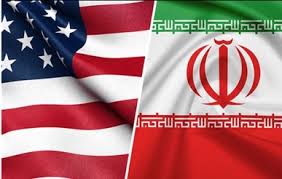
- A ceasefire between the United States and Iran was announced by former US President Donald Trump shortly before his stated deadline. Iran’s Foreign Minister Seyed Abbas Araghchi quickly agreed to the truce.
- The development came 39 days into the conflict and followed a public appeal by Pakistan’s Prime Minister Shehbaz Sharif for de-escalation. The ceasefire provides temporary relief after heightened tensions, including threats to Iran’s energy infrastructure and the Strait of Hormuz, which disrupted global oil flows.
2. Key Takeaways from the Ceasefire
- Trump’s Brinkmanship and De-escalation: Trump used aggressive rhetoric and threats but eventually stepped back with phased pauses in military action. The ceasefire is linked to Iran agreeing to reopen the Strait of Hormuz — viewed by Trump as a major strategic win, especially without direct European military support. Post-ceasefire, he signalled willingness to cooperate with Iran on reconstruction.
- Iran’s Strategic Leverage: Control over the Strait of Hormuz (through which nearly one-fifth of global oil passes) was Iran’s strongest card. It allowed Tehran to expand the conflict into the energy domain, affecting Gulf economies. Iran reportedly charged around $2 million per vessel for selective passage (informally called the “Ayatoll booth”). The two-week reopening of the Strait creates space for negotiations while retaining leverage.
- Iran’s Maximalist Peace Terms: Iran has put forward a comprehensive 10-point plan, including non-aggression guarantees, acceptance of uranium enrichment, lifting of all sanctions, termination of UN resolutions, compensation, and US troop withdrawal from the region. These demands make future negotiations highly challenging.
- Pakistan’s Role as Mediator: Pakistan played a visible diplomatic role in brokering the ceasefire. Islamabad is now pushing to host further talks (“Islamabad Talks”) and position itself as the primary facilitator. While other actors like China may have contributed quietly, Pakistan’s military and political leadership actively engaged with both sides.
3. Relief for the Region
- The 39-day conflict caused heavy casualties (over 3,000 deaths) across Iran, Lebanon, Gulf countries, Israel, and among US personnel.
- Retaliatory strikes disrupted stability in the UAE, Saudi Arabia, Qatar, and Oman.
- The two-week ceasefire offers a critical window for diplomacy and economic recovery in the Gulf.
4. Impact on India
- Energy Security: India depends on the Gulf for about 60% of its energy needs. The conflict disrupted oil and gas supplies, raising concerns about economic slowdown. The ceasefire and reopening of the Strait of Hormuz provide immediate relief.
- Indian Citizens: Nearly one crore Indians live in the Gulf and contribute significantly to remittances. Eight Indian deaths were reported during the conflict.
- Diplomatic Position: India has welcomed the ceasefire and called for lasting peace without publicly acknowledging Pakistan’s mediation role.
- Broader Concern: India highlighted the disruption to global energy supply chains and the importance of free navigation through the Strait of Hormuz.
5. UPSC CSE State PCS Relevance
Prelims
- Key terms: US-Iran Ceasefire, Strait of Hormuz, Free navigation of energy routes, Pakistan’s mediation role, 10-point Iranian peace plan.
- Facts: Ceasefire announced after 39 days of conflict (2026); Iran controls Strait of Hormuz (one-fifth of global oil); India’s energy dependence on Gulf ~60%.
GS-2 (International Relations)
- India’s energy diplomacy; West Asia geopolitics; Role of Pakistan and China in regional conflicts; Ceasefire dynamics and future negotiations.
GS-3 (Economy & Security)
- Energy security; Impact of geopolitical conflicts on oil prices and supply chains; Remittances from Gulf; Strategic importance of Strait of Hormuz.
Essay / Interview
- “Geopolitics of Energy: How Conflicts in West Asia Affect Global Stability and India’s Security.”
- “Ceasefire Diplomacy and the Limits of Brinkmanship in Modern Conflicts.”
- “India’s Strategic Balancing Act in a Turbulent West Asia.”
MCQs (Prelims Standard)
- Consider the following statements regarding the US-Iran ceasefire:
- It was announced after 39 days of conflict.
- Iran agreed to reopen the Strait of Hormuz as part of the ceasefire.
- Pakistan played no role in the diplomatic efforts leading to the ceasefire. Which of the statements given above is/are correct?
(a) 1 and 2 only
(b) 2 and 3 only
(c) 1 only
(d) 1, 2 and 3
Answer: (a)
- The Strait of Hormuz is strategically important because it carries:
(a) Nearly one-fifth of global oil supply
(b) Most of the world’s LNG trade
(c) All major container shipping routes
(d) Only regional fishing traffic
Answer: (a)
- Which country’s Prime Minister publicly appealed for de-escalation before the US-Iran ceasefire?
(a) Saudi Arabia
(b) Pakistan
(c) China
(d) Turkey
Answer: (b)
- India’s energy dependence on the Gulf region is approximately:
(a) 20%
(b) 40%
(c) 60%
(d) 80%
Answer: (c)
- Iran’s 10-point peace plan includes demands related to:
- Lifting of sanctions
- Acceptance of uranium enrichment
- US troop withdrawal from the region Select the correct answer using the code given below:
(a) 1 and 2 only
(b) 2 and 3 only
(c) 1 only
(d) 1, 2 and 3
Answer: (d)
Mains Questions
- “The US-Iran ceasefire provides temporary relief but leaves many underlying tensions unresolved.” Discuss the strategic significance of the Strait of Hormuz and the challenges in achieving a durable peace in West Asia. (15 marks / 250 words)
- Examine the impact of the recent US-Iran conflict and subsequent ceasefire on India’s energy security and its diaspora in the Gulf region. (10 marks / 150 words)
- “Ceasefire diplomacy in West Asia often reflects a complex interplay of brinkmanship, economic leverage, and third-party mediation.” Analyse this statement with reference to the role of Pakistan and the reopening of the Strait of Hormuz. (15 marks / 250 words)
Prototype Fast Breeder Reactor (PFBR) at Kalpakkam Achieves Criticality: A Milestone with Nuances
1. Why in News?
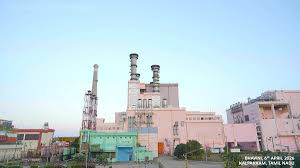
- India’s 500 MWe Prototype Fast Breeder Reactor (PFBR) at Kalpakkam, Tamil Nadu, achieved criticality on 6 April 2026.
- This is a significant milestone in the second stage of India’s three-stage nuclear programme. However, experts caution that criticality is not the final goal but only the initial stage of reactor operation. It signals the beginning of a controlled nuclear chain reaction, but the reactor still needs low-power testing and gradual ramp-up before commercial power generation.
2. What is Criticality in Nuclear Reactors?
- Criticality: The state in which a nuclear reactor achieves a self-sustaining chain reaction. Each fission event produces enough neutrons to trigger further fissions without any external neutron source.
- Three States:
- Subcritical: Reaction dies out over time.
- Critical: Reaction is stable and self-sustaining.
- Supercritical: Reaction rate increases rapidly (carefully controlled during startup).
After achieving criticality, the reactor is operated at low power for extended periods to verify that all parameters remain within safe design limits before progressing to higher power levels.
3. Fast Breeder Reactor (FBR) – Working Principle
- Key Feature: Generates more fissile material than it consumes (breeding ratio > 1).
- Difference from Conventional Reactors:
- Most Indian reactors are Pressurised Heavy Water Reactors (PHWRs) that use thermal (slow) neutrons and natural uranium (0.7% U-235). They utilise only about 1% of the fuel.
- FBRs use fast neutrons and plutonium-based fuel (Mixed Oxide – MOX of Pu-239 and U-238).
- Breeding Process:
- The reactor core is surrounded by a blanket of depleted uranium.
- Fast neutrons from plutonium fission convert U-238 in the blanket into fissile Pu-239.
- This “bred” plutonium can be reprocessed and reused as fuel, significantly improving fuel efficiency (utilisation up to 10% or more).
- Coolant: Liquid sodium (excellent heat transfer, maintains fast neutron spectrum).
- Safety Feature: Negative void coefficient – reaction rate decreases if coolant boils or voids form.
4. India’s Three-Stage Nuclear Programme
Conceived by Homi Bhabha to leverage India’s limited uranium and abundant thorium reserves:
- Stage 1: PHWRs using natural uranium → produce electricity and plutonium as by-product.
- Stage 2: Fast Breeder Reactors (PFBR is the first) use plutonium to breed more fissile material and prepare for thorium use.
- Stage 3: Thorium-based reactors using U-233 (bred from Th-232) for long-term energy security.
FBRs are the critical bridge between uranium-based and thorium-based energy systems.
5. Challenges in Developing Fast Breeder Reactors
- Technical Complexity: Sodium coolant reacts violently with air and water, requiring perfectly sealed systems and strict leak detection.
- Historical Setbacks: Japan’s Monju reactor suffered a sodium leak and fire; France’s Superphénix was shut down due to technical and cost issues. Russia is the only country currently operating commercial-scale FBRs.
- Economic Viability: High capital costs and long gestation periods. The PFBR itself saw cost escalation from ₹3,500 crore to ₹6,800 crore and multiple deadline extensions.
- Public Acceptance and Safety Culture: Requires rigorous oversight, engineering precision, and strong institutional discipline.
6. Significance of PFBR Criticality
- Demonstrates India’s indigenous capability in advanced nuclear technology.
- Moves the country closer to a closed nuclear fuel cycle.
- Reduces long-term dependence on imported uranium.
- Paves the way for commercial FBRs and eventual thorium-based Stage-3 reactors.
- Supports India’s energy security and net-zero goals by 2070.
7. UPSC CSE State PCS Relevance
Prelims
- Key terms: Prototype Fast Breeder Reactor (PFBR), Criticality, Three-stage Nuclear Programme, Mixed Oxide (MOX) fuel, Sodium-cooled reactor, Negative void coefficient, BHAVINI.
- Facts: Achieved criticality on 6 April 2026 at Kalpakkam; 500 MWe; Second stage of India’s nuclear programme.
GS-3 (Science & Technology, Energy)
- Nuclear energy programme; Indigenous technology development; Energy security; Thorium utilisation; Challenges in advanced reactor technology.
GS-2 (Governance)
- Role of DAE and BHAVINI; Strategic projects under state-driven governance.
Essay / Interview
- “Fast Breeder Reactors: The Bridge to India’s Thorium-Based Energy Future.”
- “Nuclear Power as a Strategic Pillar of Energy Security and Net-Zero Transition.”
- “Indigenous Technological Milestones vs Implementation Challenges in India’s Nuclear Programme.”
MCQs (Prelims Standard)
- Consider the following statements about the Prototype Fast Breeder Reactor (PFBR):
- It uses fast neutrons for fission.
- It is designed to produce more fissile material than it consumes.
- It is part of the first stage of India’s three-stage nuclear programme. Which of the statements given above is/are correct?
(a) 1 and 2 only
(b) 2 and 3 only
(c) 1 only
(d) 1, 2 and 3
Answer: (a)
- The PFBR achieved criticality on:
(a) 8 April 2026
(b) 6 April 2026
(c) 15 March 2026
(d) 1 January 2026
Answer: (b)
- Which of the following is used as coolant in the PFBR?
(a) Heavy water
(b) Light water
(c) Liquid sodium
(d) Carbon dioxide
Answer: (c)
- In India’s three-stage nuclear programme, FBRs are crucial for:
(a) Direct utilisation of natural uranium
(b) Breeding fissile material and preparing for thorium use
(c) Export of nuclear technology
(d) Only electricity generation without breeding
Answer: (b)
- The main fertile material used in the blanket of FBRs is:
(a) Uranium-235
(b) Plutonium-239
(c) Uranium-238
(d) Thorium-232 Answer: (c)
Mains Questions
- “The achievement of criticality in the Prototype Fast Breeder Reactor is a significant but early milestone in India’s nuclear journey.” Discuss the working principle of FBRs, their role in the three-stage nuclear programme, and the challenges India faces in scaling up this technology. (15 marks / 250 words)
- Explain how Fast Breeder Reactors differ from conventional Pressurised Heavy Water Reactors (PHWRs). Why are FBRs strategically important for a country like India with limited uranium but abundant thorium reserves? (10 marks / 150 words)
- “Developing advanced nuclear technologies like FBRs requires not only scientific capability but also strong institutional discipline and safety culture.” Analyse this statement in the context of the PFBR project at Kalpakkam. (15 marks / 250 words)
Land Inequality in Rural India: Patterns, Drivers and Policy Implications
1. Why in News?
- A recent study by the World Inequality Lab has highlighted deeply entrenched land inequality in rural India.
- Based on data from the Socio-Economic Caste Census (SECC) 2011, covering around 650 million individuals across 270,000 villages in major states, the study reveals that the top 10% of rural households own 44% of total land, while 46% of rural households are landless.
- The concentration is even sharper at the top: the top 5% own 32% and the top 1% own 18% of total land. These findings have renewed focus on the unfinished agenda of land reforms and their linkages with poverty, agricultural productivity, and social equity.
2. Patterns of Land Distribution in Rural India
- Land ownership in rural India remains highly skewed due to historical factors (colonial land systems, zamindari, princely states), socio-economic hierarchies, and slow pace of post-independence land reforms.
Key Patterns: 
- High Concentration: Top 10% households control 44% of land.
- Widespread Landlessness: 46% of rural households own no land.
- Average Holding Size: Among land-owning households, the average size is 6.2 hectares, but ownership is heavily skewed.
- Village-level Skew: On average, the largest landowner in a village controls 12.4% of village land; in 3.8% of villages, a single landlord owns more than half the land.
State-wise Variations:
- Highest Concentration: Bihar (top household owns up to 20.1% of land in some villages).
- Highest Landlessness: Punjab (73%), followed by Bihar and Madhya Pradesh.
- Gini Coefficient (measure of inequality): Highest in Kerala (~90), followed by Bihar, Punjab, Tamil Nadu, and West Bengal. Lower in Karnataka and Rajasthan.
3. Drivers of Land Inequality
The study identifies multiple interconnected factors:
- Agro-ecological Conditions: Areas with better agricultural suitability and market access show higher land concentration (explains ~18.3% of variation).
- Social Factors: Regions with higher Scheduled Caste populations exhibit greater inequality due to higher landlessness.
- Infrastructure Proximity: Villages closer to towns, highways, and railway stations tend to have higher inequality.
- Historical Legacy:
- Former zamindari areas show higher inequality.
- Former princely states show relatively lower inequality due to lower landlessness.
4. Implications of Land Inequality
- Economic: Reinforces rural poverty, limits access to credit, and reduces agricultural productivity due to fragmented holdings and unequal resource access.
- Social: Deepens caste-based disparities and creates social tensions.
- Political: Affects upward mobility and perpetuates economic exclusion of marginalised groups.
- Developmental: Hinders inclusive rural growth and achievement of Sustainable Development Goals related to poverty and inequality.
5. Way Forward Suggested
- Land Reforms: Strengthening tenancy rights, redistribution where feasible, and updating land records.
- Digitisation: Complete digitisation and transparency of land records to reduce disputes and improve access.
- Cooperative Models: Promoting cooperative farming and land pooling for small and marginal farmers.
- Targeted Support: Enhancing access to credit, inputs, and markets for landless and small farmers.
- Social Equity: Focused interventions for SC/ST and women farmers.
- Policy Integration: Linking land reforms with rural development programmes for holistic impact.
6. UPSC CSE State PCS Relevance
Prelims
- Key terms: Land Inequality, Gini Coefficient, Socio-Economic Caste Census (SECC) 2011, World Inequality Lab, Zamindari system, Landlessness.
- Facts: Top 10% rural households own 44% land; 46% rural households are landless; Highest concentration in Bihar; Highest Gini in Kerala.
GS-1 (Indian Society & Geography)
- Agrarian structure and land reforms; Social inequality and caste; Rural economy and livelihoods.
GS-2 (Governance & Polity)
- Land reforms and their implementation; Issues of equity and social justice; Role of data in policymaking (SECC).
GS-3 (Economy & Agriculture)
- Agricultural productivity and land holding patterns; Rural poverty and inequality; Inclusive growth challenges.
Essay / Interview
- “Land Inequality: The Unfinished Agenda of India’s Rural Transformation.”
- “From Land to Livelihood: Addressing Structural Inequities in Rural India.”
- “Can Economic Growth Alone Reduce Inequality? Lessons from Land Distribution Patterns.”
MCQs (Prelims Standard)
- Consider the following statements regarding land inequality in rural India:
- The top 10% of rural households own 44% of total land.
- About 46% of rural households are landless.
- Bihar has the lowest land concentration among major states.
Which of the statements given above is/are correct?
(a) 1 and 2 only
(b) 2 and 3 only
(c) 1 only
(d) 1, 2 and 3
Answer: (a)
- The Gini coefficient is used to measure:
- (a) Agricultural productivity
- (b) Land inequality
- (c) Irrigation coverage
- (d) Crop diversification
- Answer: (b)
- According to the World Inequality Lab study, which state has the highest landlessness?
- (a) Bihar
- (b) Kerala
- (c) Punjab
- (d) Rajasthan
- Answer: (c)
- Which historical land system is associated with higher land inequality in India?
- (a) Ryotwari system
- (b) Zamindari system
- (c) Mahalwari system
- (d) Permanent Settlement
- Answer: (b)
- The Socio-Economic Caste Census (SECC) 2011 is primarily used for:
(a) Electoral roll preparation
(b) Identifying land ownership patterns and socio-economic status
(c) Census of urban population
(d) Forest cover assessment
Answer: (b)
Mains Questions
- “Persistent land inequality continues to undermine rural development and social justice in India.” Discuss the patterns, causes, and consequences of land inequality as highlighted by recent studies, and suggest measures for equitable land access. (15 marks / 250 words)
- Examine the role of historical land systems and socio-economic factors in shaping current land distribution patterns in rural India. How can land reforms be made more effective in the present context? (10 marks / 150 words)
- “Land is not just an economic asset but a source of social status and political power in rural India.” Analyse this statement in the light of the World Inequality Lab’s findings on land concentration and landlessness. (15 marks / 250 words)
Click here to download the PDF
